


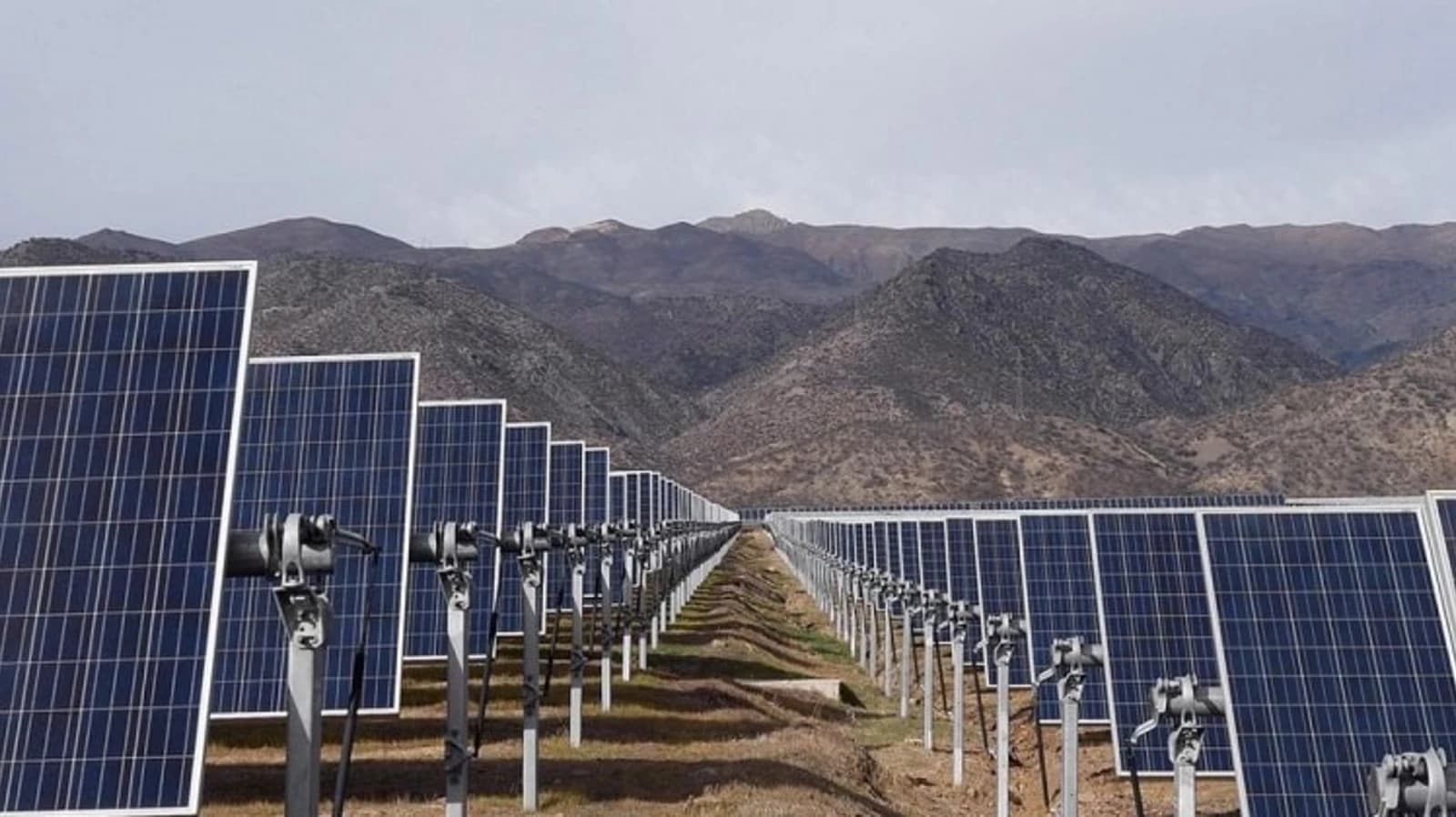
Electricity generation from solar and wind sources reached its highest level of participation in the National Electric System during 2025, consolidating the advance of variable renewable energies as one of the main pillars of the country's energy matrix.
According to operational records from the National Electric Coordinator , these two technologies accounted for approximately 38% of the total energy injected into the system during the year. This, combined with other technologies such as hydroelectric power, means that two-thirds of the electricity generated is renewable. This result reflects the sustained growth of installed renewable capacity, as well as advancements in the operation and coordination of the electrical system, which have allowed for the integration of increasing volumes of variable generation while maintaining security and continuity of supply standards.
In particular, there were times of the year when solar and wind power generation supplied up to 79% of the demand.
The statistical report on the operation of the National Electric System showed that hydroelectric generation decreased by 23.0%, due to the drought conditions that have this year among the five driest in the statistics, while thermal generation using coal increased by 14.5% and that using natural gas by 6.5%.

The year has been marked by the incorporation of storage systems, which add up to electrical energy equivalent to around 2 TWh , more than four times greater than all that was generated with diesel technology.
This technology already has equipment installed for about 1,700 MW, plus another 600 MW in testing.
Next year, approximately 4500 MW that are currently under construction could be added.
In the year's balance, 2025 closes as the year with the highest entry of new generating units after 2021, with a capacity of 3182 MW as of November , where an important part are storage systems.
Furthermore, in the first days of 2026, the retirement of approximately 700 MW of coal-fired thermal capacity in the northern part of the National Electric System will be completed, corresponding to the Mejillones 1 and 2 Thermal Power Plants, as well as the Mejillones Electrical Infrastructure (IEM), which is beginning its conversion to natural gas, representing a new milestone in the country's energy transition process.
This development reinforces the need for increasingly flexible operations and strict compliance with regulations by companies.
The National Electric Coordinator highlighted that these changes pose significant operational challenges, particularly in terms of generation-consumption balance, sufficiency, and variability management.
However, they also open up opportunities to deepen the use of complementary technologies such as storage, demand management, distributed energy resources and transmission.
"The record participation of solar and wind energy in 2025 demonstrates that the Chilean electricity system is moving steadily towards a renewable electricity matrix, but also one that is more demanding from an operational point of view.
"Our role is to ensure that this transition takes place while maintaining the safety and quality standards of supply for all users," said Juan Carlos Olmedo , President of the Board of Directors of the National Electric Coordinator.
In terms of system operating costs, these remained around USD 1.6 billion, a figure similar to that of 2024, even though this year is among the five driest years on record.
In addition, during this year, the Coordinator awarded the construction and development of transmission works, so the estimated investment in new projects is USD 120 million, in addition to the resources for expansions.