


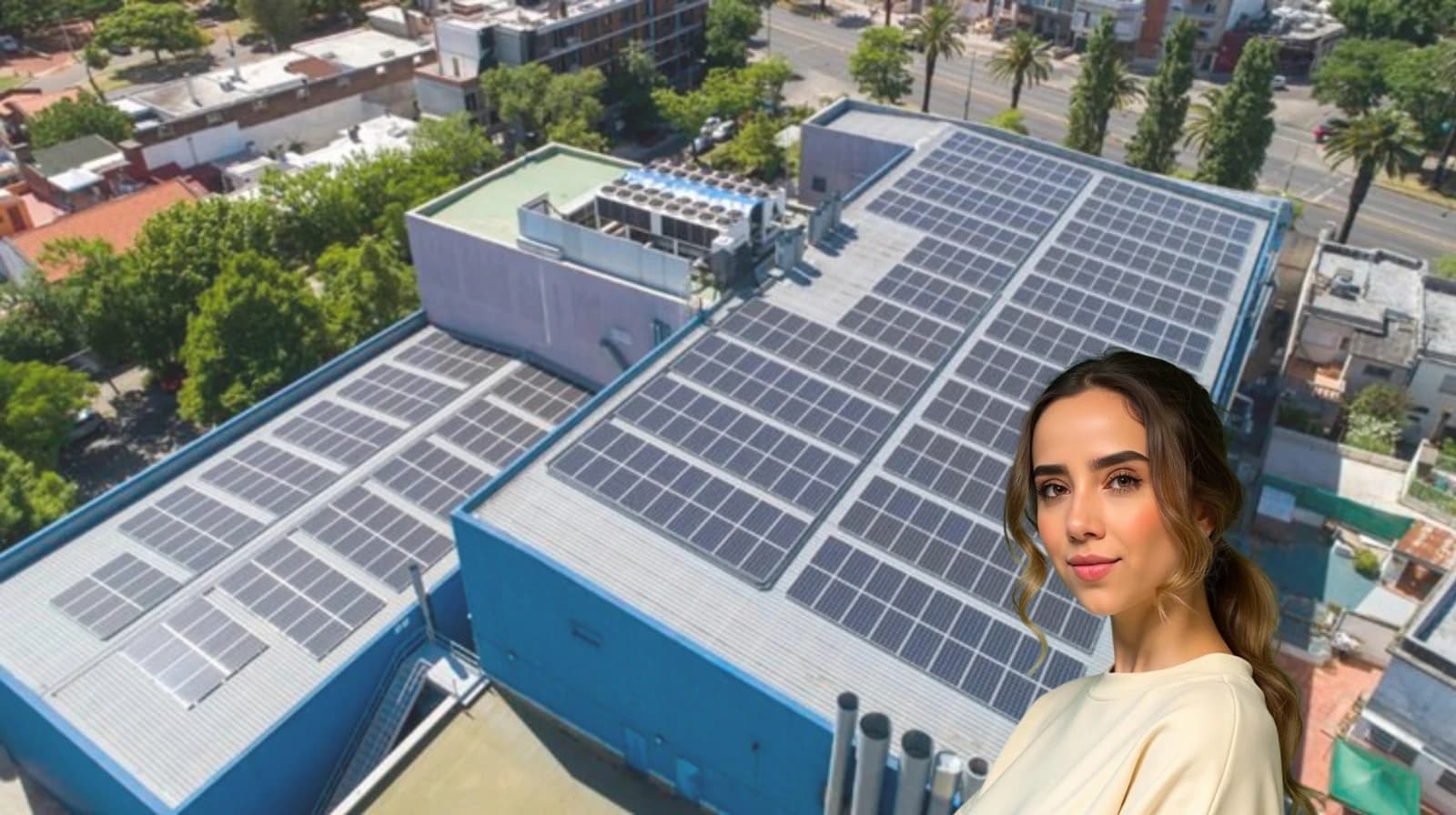
Mexico is moving towards a new stage in national energy policy with the implementation of a reform that impacts distributed generation.
Among the most significant changes are the elimination of net metering and the raising of the threshold for generating without permits from 500 to 700 kilowatts. The elimination of net metering implies a complete redesign of photovoltaic systems, especially for those companies that relied on energy compensation models based on surpluses. "What is being eliminated is the one-to-one method, in which one megawatt injected was equivalent to one subsequently consumed," explained Sofía Díaz Plascencia , a renewable energy specialist, in an interview with Energía Estratégica. She added, "From now on, surpluses will be valued at a regulated price that has not yet been officially published."
"Neither the methodology nor the rates are yet known." While the rates are unknown, he pointed out that the projected value will be lower than the price users pay for their consumption, which considerably reduces the profitability of the systems.
This new scheme requires photovoltaic projects to be sized much more precisely.

"You're no longer going to design projects to cover your entire demand, but rather to avoid injecting energy that you won't consume," Díaz Plascencia explained. In this way, project design will become strictly linked to consumption patterns, with the goal of minimizing wasted energy.
"This creates stability for the system, which is what we're aiming for," he added. Meanwhile, raising the threshold for distributed generation without a permit, from 500 to 700 kilowatts, is a positive sign for the sector, which had been requesting this update for years.
However, Díaz Plascencia stated that, based on recent conversations with market players, the new model is not yet being implemented and requests are returning to 500 kW. The new model is also linked to a key technical aspect: network capacity.
According to the specialist, the elimination of net metering is partly due to the risk of saturation of electrical infrastructures, particularly in areas with a high concentration of solar systems.
"Projects of up to 700 kW, without control or storage, already represent a considerable load for the grid," warned Díaz Plascencia.
Therefore, authorities are imposing new obligations on projects larger than 20 MW, which must include backup systems such as batteries or pay the Federal Electricity Commission (CFE) to guarantee their operational stability. The insufficient transmission lines are one of the main problems facing the country, as they generate congestion, drive up energy prices, and limit the development of new renewable energy projects. According to the National Electricity System Development Program (PRODESEN) 2024-2038 , it is estimated that to incorporate between 15 and 20 GW of renewable energy into the electrical system by 2030 , the country needs to build at least 15,000 kilometers of new transmission lines , in addition to reviewing and modernizing many existing ones, including service substations. Despite this complex scenario, the expert assures that distributed generation will continue to grow, albeit with new rules.
"It's not about installing more, but about installing better," he summarized.
In 2024, Mexico added more than 1 GW in new installations of up to 0.5 MW, reaching 4.4 GW, according to official figures.
According to Gilberto Sánchez , vice president of the National Solar Energy Association (ANES), the country is facing the "anteroom of distributed generation 2.0."
The vice president of the association assures that, despite the fact that the figures were not published, the country would already have 5,000 MW installed by the first half of 2025.
This figure represents 8.15% of the peak demand recorded in the National Electric System (SEN). Under this new regulatory framework, projects must be designed with efficiency and stability in mind.
Looking ahead to the second half of 2025, the sector awaits key definitions regarding injection tariffs, the effective implementation of the 700 kW threshold, and the concrete application of secondary laws.