Latin America and the Caribbean could reach 24 GW of energy storage in 2030 and 46 GW in 2035 , according to projections by the Latin American and Caribbean Energy Organization (OLACDE).
The rollout would require investments of around USD 24 billion during this decade , in a scenario where regulation and remuneration mechanisms still condition the bankability of projects.
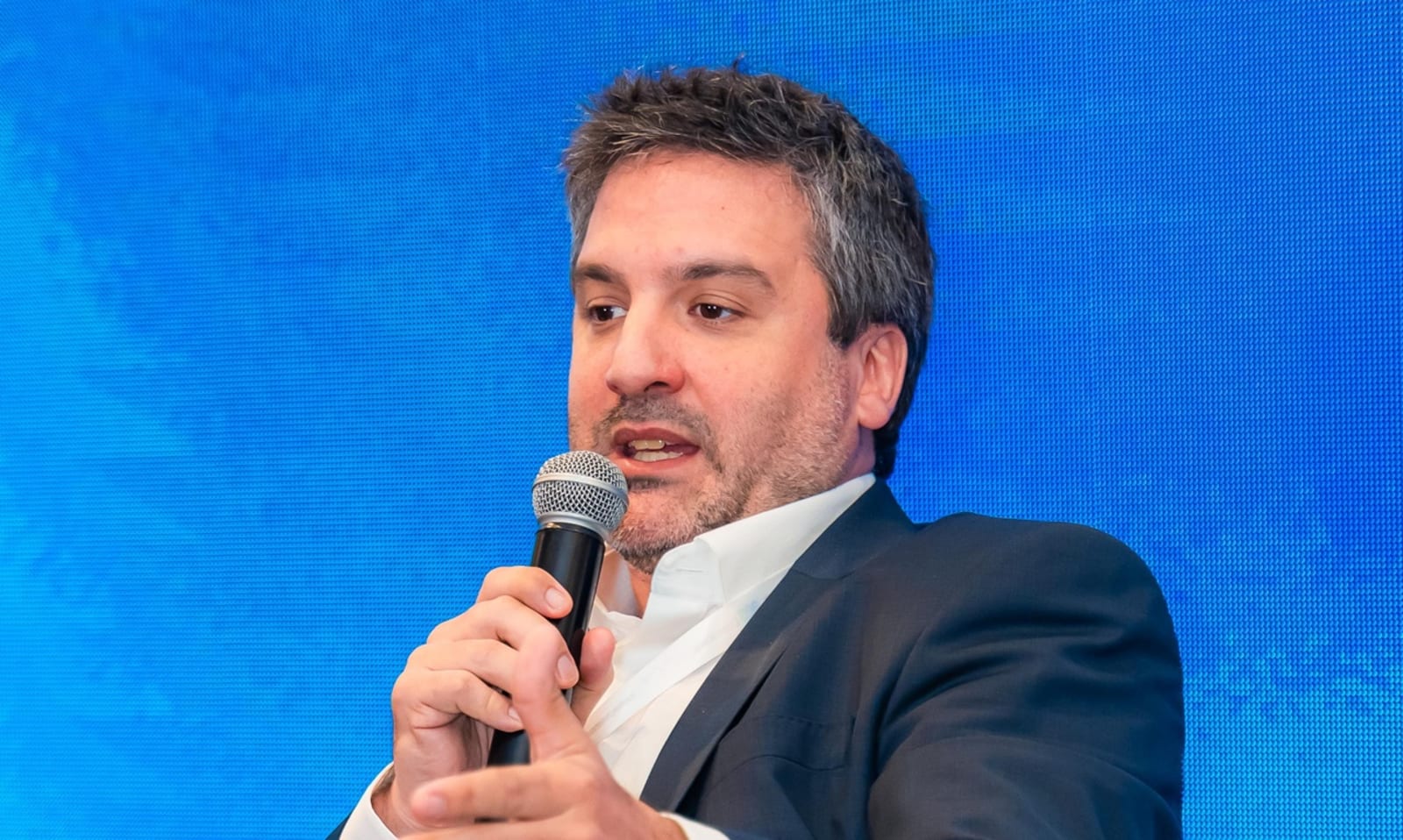
According to Manuel Bervejillo, Director of Global Business Development at Ventus , the expansion of battery energy storage systems (BESS) depends on four factors: the needs of the electrical system, the regulatory framework, the economic remuneration for the services provided, and long-term contracts.
“The developments, where we see them scaling up, are when one aligns the needs of the system with regulation, remuneration, and how that remuneration is also channeled into long-term contracts where governments can provide guarantees,” the executive stated.

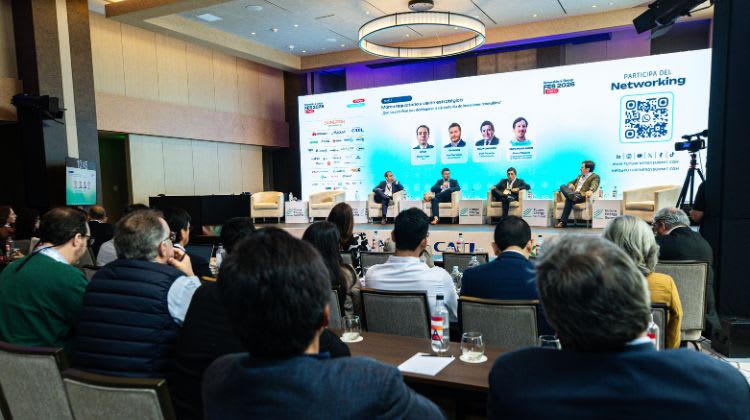
“And that’s where banking comes in and makes the issue bankable, that is, in that alignment of these four factors,” he added during his participation in the Future Energy Summit (FES) Government & Investment.
The problem becomes particularly relevant in countries where storage requirements are beginning to be established to support network stability, but without economic mechanisms that adequately recognize the services provided by these assets.
“As long as there is only regulation and a requirement for percentages to stabilize the system, but no remuneration specifying what that value is, it will not be scalable,” the executive warned.
Uncertainty also extends to business models based on energy arbitrage. The massive incorporation of batteries could alter price differentials between time periods, especially in markets with renewable surpluses, curtailments, and periods of zero prices.
In this context, revenues from power, flexibility, ancillary services and deferral of network investments become relevant to reduce the exposure of projects to fluctuations in the electricity market.
From the developers' perspective, the challenge also extends to the configuration of assets and the distribution of risks among contractors, manufacturers, operators, and financial entities.
Therefore, Ventus works with independent power producers (IPPs) and electric companies from the sizing and structuring stages through construction and operation, including technical coordination with equipment suppliers.
The aspects considered include performance guarantees, key performance indicators (KPIs), and battery degradation over 25-year horizons , parameters that must be considered in the contractual structuring.
“We help them with our engineering expertise and, working closely with manufacturers, we create a very collaborative system that offers guarantees,” Bervejillo explained.
Continue reading
“At Ventus, we have developed the internal capacity for this platform to not only execute projects, but also to provide support during the structuring phases,” he emphasized.
The regional expansion is already translating into concrete initiatives, to the point that the company is involved in hybrid installations in Guatemala and Colombia, in addition to supporting an owner in a 1 GWh development in Chile .
The progress of these projects coincides with an expected reduction in technology costs. According to Wood Mackenzie, the levelized cost of energy storage in Latin America is projected to decrease by 42% by 2060 , driven by economies of scale and regulatory maturation.
Even on an international scale, four-hour systems already have lower levelized costs than open-cycle gas turbines in the 43 markets where Wood Mackenzie compared alternatives.
Ventus exceeds 3 GW EPC and expands its presence in hybrid projects
The company surpassed 3 GW of projects under engineering, supply and construction (EPC) modalities and has accumulated more than 4.5 GW of developed engineering , both for its own initiatives and for third parties.
During a recent 12-month period, Ventus closed contracts for more than 560 MW exclusively in solar photovoltaic and storage projects , worth more than USD 300 million .
Added to this is its growth in operation and maintenance, an activity in which it has more than 1300 MW of renewable assets under management .
In Colombia, it obtained the maintenance contract for the 375 MW Puerta de Oro Solar Park , one of the country's largest photovoltaic installations, despite not having been involved in its construction.
“Colombia remains our main market, where we have already exceeded 1 GW of construction, and in solar construction we are the EPC with the largest market share in Colombia, where there are about 3 GW installed, of which 1 GW is from Ventus, including the first park in the country that incorporates an energy storage system using batteries,” the Global Business Development Director had anticipated in a previous interview.
The figure represents an improvement over the more than 750 MW of completed and under-construction projects previously reported by the company in Colombian territory.
During 2025, the firm also began operations in Ecuador, Guatemala and Costa Rica , expanding its EPC experience to ten Latin American countries.
The growth of the regional portfolio comes as the industry seeks mechanisms capable of transforming the need for network flexibility into predictable income for investors.
With a projected 24 GW of installed capacity by 2030 , the evolution of Latin American storage will depend both on the pace of implementation of new projects and on the ability of markets to establish commercial conditions that allow them to be financed.

 By Energía Estratégica

 By Emilia Lardizabal

 By Ailén Pedrotti