


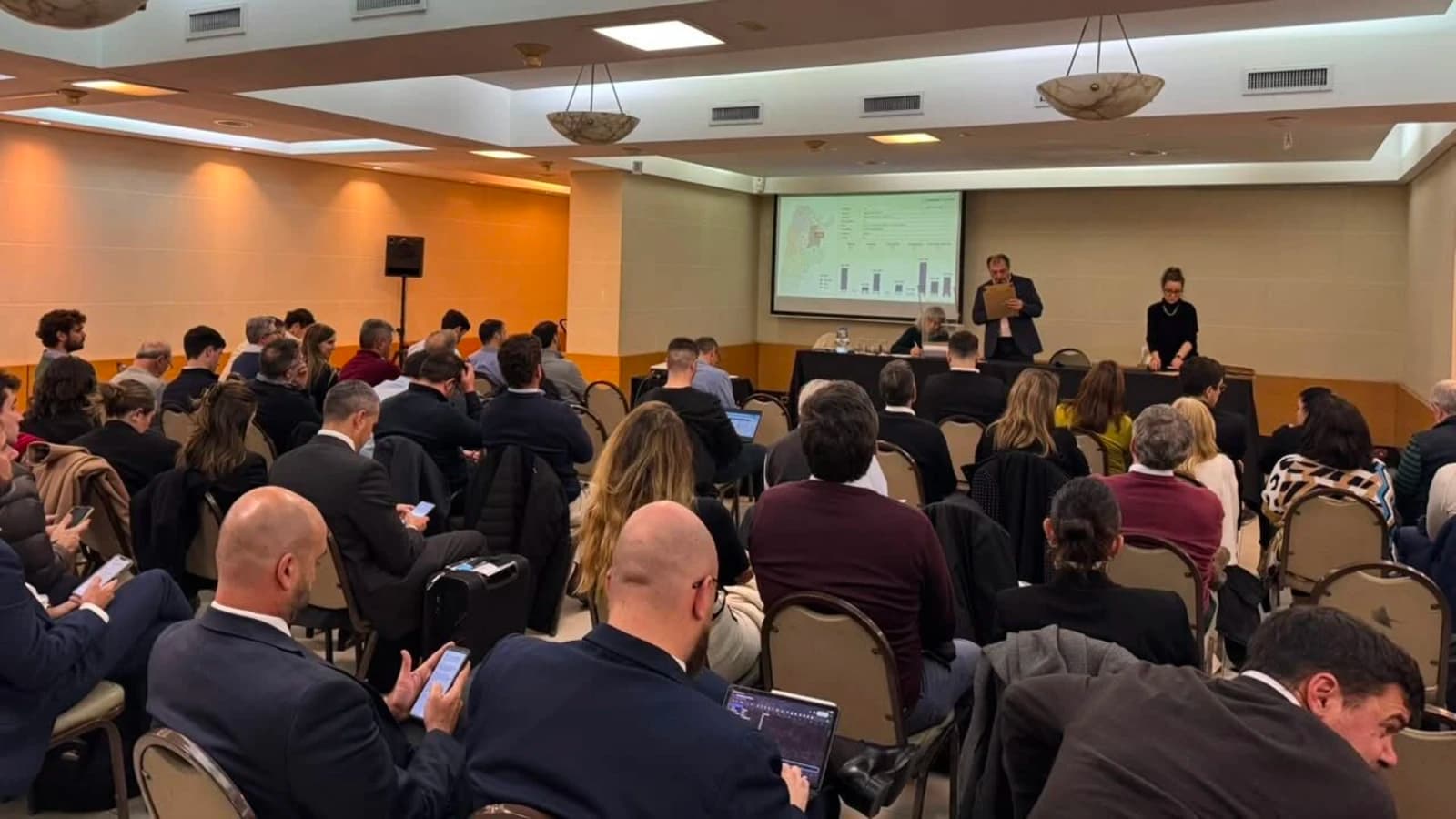
Argentina's Energy Secretariat approved the qualification of 232 of the 235 bids submitted in the AlmaSADI tender, meaning that more than 8 GW of battery energy storage (BESS) projects remain in competition to be awarded the planned 700 MW.
The only projects that failed to pass the qualification stage (due to non-compliance considered insurmountable) were Teslacom Pehuajó , by Teslacom, with a proposal of between 50 and 57.5 MW; BESS Los Conquistadores , by DQD Energy, with 30 MW; and Firmat , by Anjoy, with a capacity of between 10 and 20 MW.
In this way, projects representing between 7272 MW of minimum power and 8230.5 MW of maximum power remain alive, compared to the maximum 8338 MW initially offered on May 27 (equivalent to an average of 35.5 MW per proposal) .
In addition to the total volume, another relevant piece of data is the geographical distribution of the projects. According to the information released during the opening of bids, the Province of Buenos Aires accounts for 2018 MW , followed by the Northeast (NEA) with 1789.9 MW , the Northwest (NOA) with 1435 MW , and the Litoral region with 1112 MW .

The next step in the process will be the opening of financial bids, scheduled for less than a week from now, on June 24. The contract will then be awarded on July 8 and involves an estimated investment of around $700 million .
The strong market participation reflects the growing interest in energy storage in Argentina, driven by the operational needs of the electricity system and by regulations that are beginning to generate concrete signals for new investments.
In that regard, Federico Marhaba , Head of Operations - Energy at BGH Eco Smart , stated during the streaming event " It had to be said and it was said" that the key was regulation and the need for transportation.
“The profitability of batteries stems from the current regulatory environment and the need to increase transport capacity. We saw this with the latest BESS tender, called AlmaSADI, and the amount of power offered, which exceeded expectations. So many companies are entering the market because they see it as profitable,” he stated during the live stream hosted by Energía Estratégica .
Watch the full program of "It Had to Be Said and It Was Said"
More than 7000 MW could be left out of the initial allocation
The main unknown in the market is the fate of the projects that are not selected. Considering that the call for bids aims to contract around 700 MW , even taking into account the planned margin of error, more than 7,000 MW could be left out of the initial allocation.
This scenario is already fueling the debate on new mechanisms for incorporating energy storage into the Argentine electricity system. Among the alternatives is the Additional Reliability Reserve Service (SRC Adicional) , created by Resolution 400 of the Secretariat of Energy and designed to enable future calls for bids for energy storage, thermal, hydroelectric, nuclear, and hybrid power generation.
The Energy Secretariat has already requested CAMMESA to design selection mechanisms to implement this instrument, technically identified as SerCA , which could become the next way to absorb part of the pipeline developed around AlmaSADI.
The sector's expectation is also based on a regional trend. Diego Rodríguez , General Sales & Marketing Senior Professional at Hitachi Energy , also participated in “It had to be said and it was said” and stated that “BESS are the way forward,” while emphasizing that “there is a market in Latin America, there are projects” and that requests for quotes have grown significantly.
Meanwhile, Luis Contreras , managing director of Yingli Solar, confirmed that the company will move forward in energy storage as part of its expansion strategy. "It's clear that photovoltaic modules are the company's core business, but we need to evolve, and the clear business line for that evolution is energy storage," he stated.
For Contreras, the growth of this segment is inevitable. "All utility plants will include storage, there's no question about it," he states, although he also identifies development opportunities in commercial and industrial applications.
With more than 8 GW still up for bid, an approval rate close to 99%, and a volume that far exceeds the needs of the first call, AlmaSADI is consolidating itself as the main barometer of the Argentine energy storage market and leaving open the discussion about new rounds to absorb the surplus capacity.