


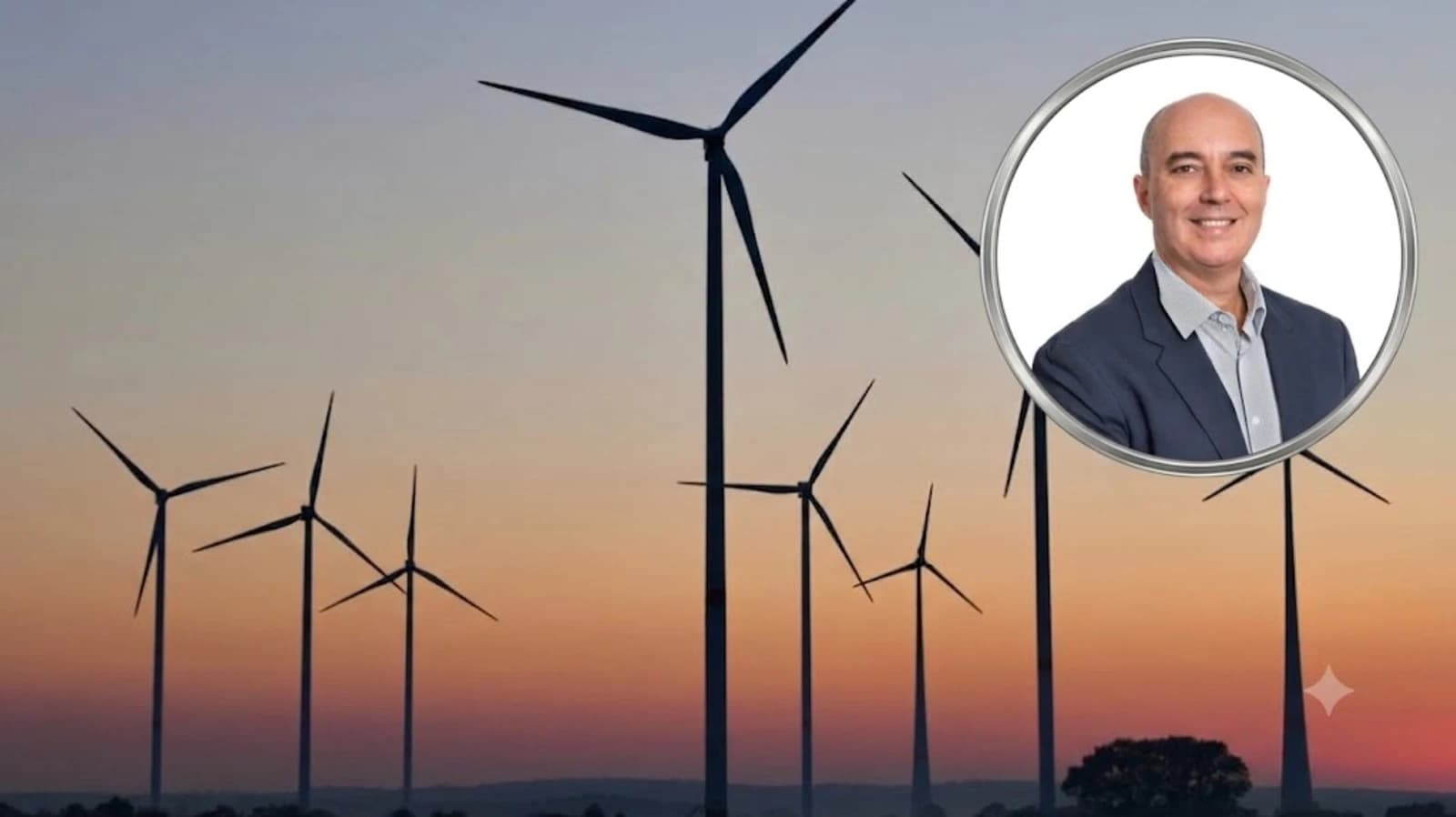
Uruguay ended 2025 with an electricity generation matrix that was 98% renewable and a production of 13,040 gigawatt-hours delivered to the National Interconnected System. Hydropower contributed 46%; wind power, 34%; biomass, 14%; and solar energy, 4%.
On that basis, the country began a new phase of power generation expansion. However, the projects announced so far are being driven directly by the National Administration of Power Plants and Electrical Transmissions (UTE), while private developers await contractual signals before resuming investment.
“Currently, the main challenge is to shorten investment decision times to increase the generating capacity,” said Marcelo Mula , vice president of the Uruguayan Renewable Energy Association (AUDER), in a dialogue with Energía Estratégica ahead of the LATAM Renewables event.
The state-owned utility is developing the Punta del Tigre B photovoltaic park, financed through a $27 million bond issue. UTE identifies the project with a capacity of 25 megawatts in the bond issuance documentation and indicates that it will reach 28 megawatts of installed capacity.

In April 2026, the company announced the start of construction on the Melo solar park, which will have a peak capacity of 100 megawatts and approximately 140,000 solar panels. With an investment exceeding $75 million, it will be the largest photovoltaic project in the country.
According to Marcelo Mula, both initiatives correspond to UTE's own investments and are not associated with new power purchase agreements with private generators.
The current contracts belong to the first transition
The contracts with private generators that remain in force correspond to wind, solar and biomass projects incorporated during the first energy transformation and still have several years ahead, Mula explained.
In parallel, UTE turned to the capital markets to finance its own initiatives. In December 2024, it issued $27 million in bonds for the Punta del Tigre photovoltaic park, targeting small and medium-sized investors.
“UTE has basically financed itself with small savers in Uruguay, through bonds or shares in companies that are owned by UTE, but so far there are no new PPAs,” he said.
AUDER awaits government decisions
According to the association, the next expansion should combine public investments with a mechanism that allows for the presentation and financing of new private projects.
“What we are discussing, and I believe there will be announcements from the Government shortly, is the need to try to move forward again with this PPA format or something similar, where private developers can present initiatives and also begin to incorporate this new renewable power from the sector,” Mula anticipated.
The demand coincides with the review of energy policy being carried out by the Ministry of Industry, Energy and Mining, with a horizon to 2050. The process seeks to update the current framework in the face of changes such as the electrification of transport, storage, green hydrogen and the arrival of new large consumers.
For Mula, this update must resolve not only what capacity will be incorporated, but also under what rules and within what timeframes.
“When I talk about decisions, I'm not just referring to political decisions, but also to regulatory and normative decisions that will streamline and energize this entire market,” he warned.
The role of the private sector, mechanisms for financing new capacity, and the signals that the next energy policy should send will be part of the discussions at LATAM Renewables, which this year will be held under the theme "The Era of Electrification." The event will bring together authorities, public companies, and industry stakeholders to analyze the expansion of generation, storage, and new electricity demands.
According to Mula, the country has the necessary resources to move forward with this transformation, but it must convert that potential into new investments. “In Uruguay, the sun and the wind are our oil,” he concluded.