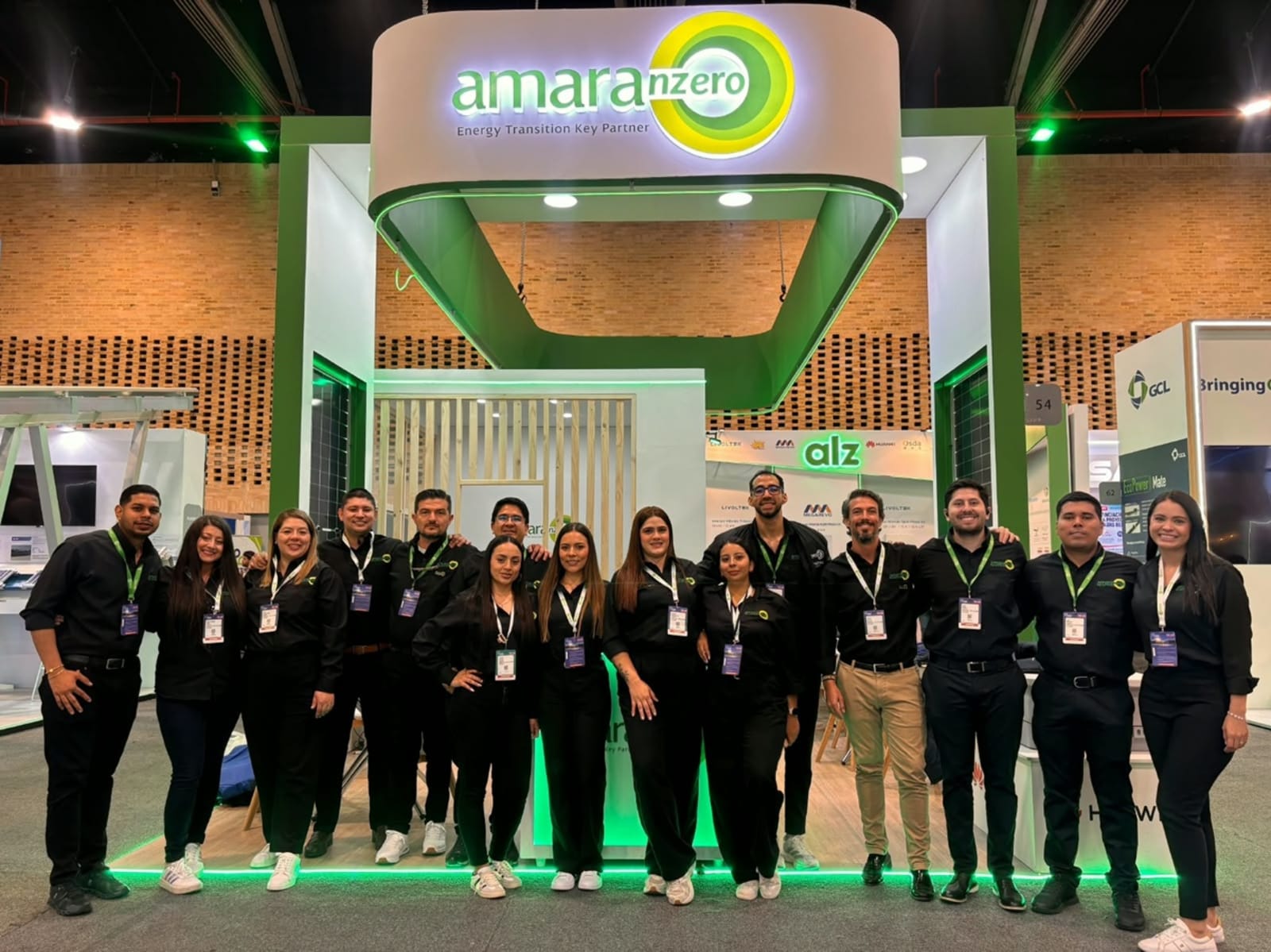
The Spanish multinational Amara Nzero Colombia is preparing an expansion of its business with the aim of marketing and installing more than 60 MWh in storage systems during 2027 .
The strategy includes greater participation in the development of BESS projects, in a market where the company is already registering an increase in its sales of photovoltaic equipment.
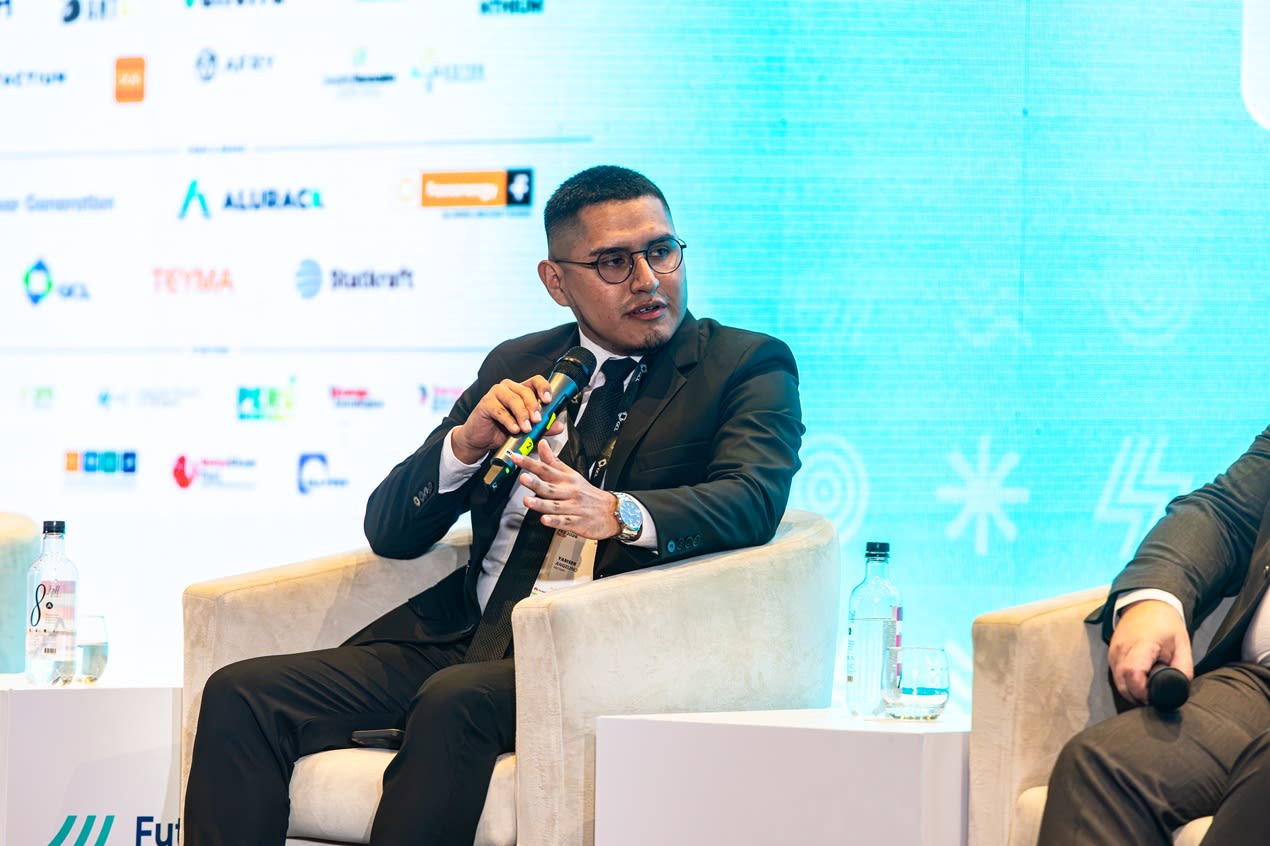
“We had a sales target of USD 14 million in products alone and we are going to close above USD 17 million,” said Omar Hernández , Country Manager of Amara NZero Colombia , in dialogue with Energía Estratégica during ExpoSolar Colombia 2026.
The company recorded approximately USD 7 million during the first half of the year and expects to add another USD 10 million between July and December, driven by increased activity from private investors and the reactivation of projects that had been postponed.

Looking ahead to the next fiscal year, Amara NZero Colombia aims to reach USD 20 million in its traditional distribution business, although warehousing could significantly increase the volume of business opportunities.
“We can go from USD 20 million and have a pipeline of USD 50 million if it takes off,” said Hernández, who conditioned that projection on the development of BESS demand and the regulatory conditions for new investments.
The company is leveraging its experience in Mexico, where it claims to have supplied, installed, and commissioned over 60 MWh of storage. The goal is to transfer this model to Colombia and move towards projects that incorporate installation, commissioning, and support services for private developers.
Mini solar farms, a gateway to the BESS business
One of the opportunities arises from Amara NZero Colombia's own photovoltaic clients. It comes from a company in Norte de Santander, originally dedicated to the construction of buildings and road works , which decided to diversify its investments and enter the mini solar farm business.
The multinational supplied the equipment and assisted the construction company in obtaining tax benefits, which resulted in savings of over 150 million Colombian pesos in VAT, according to Hernández. Furthermore, the facility was prepared to incorporate batteries in a future expansion.
“We are already in negotiations for three more mini-farms,” the executive revealed, referring to the continuation of that business relationship.
The sector has seen strong growth in recent years. Colombia went from four mini solar farms in 2023 to 151 active installations in March 2026 , with approximately 137 MW of installed capacity, according to records from system operator XM.
During the third quarter of 2026, 42 new power generation plants came online, 39 of which were solar. Of these, 28 projects were classified as distributed generation.
Continue reading
For its part, the Mining and Energy Planning Unit (UPME) recorded, as of November 2, 609.82 MW of distributed generation and 740.83 MW of small-scale self-generation , figures that allow us to size the installed capacity in segments where storage solutions could be incorporated.
For Hernández, one of the opportunities lies in shifting some of the photovoltaic electricity generated during the day to times of higher demand, especially around seven in the evening.
“Let’s assume that out of 150, 50 will have a battery,” the executive stated when assessing the potential market among Colombian mini solar farms.
The realization of these investments will depend on their profitability and regulatory conditions. In June 2026, the Energy and Gas Regulatory Commission (CREG) published Resolution 101113 , which established mechanisms for integrating battery storage systems into the National Interconnected System, including aspects of connection, operation, and marketing.
In economic terms, Hernández estimated that a battery intended for a mini-farm could represent an investment of close to USD 1 million, depending on its configuration and capacity.
Industrial demand expands opportunities
The commercial and industrial (C&I) sector constitutes another growth front, especially among companies that need to increase their energy availability without having sufficient grid connection capacity.
Hernández mentioned the case of a medical supply manufacturer located near Bogotá, which resorted to storage to expand its production activity.
“He needed more power, more energy demand, and he solved it with a C&I battery for his production process,” he noted.
The company also identifies similar needs among clients in the agribusiness and food sectors. In some cases, these are companies that already have photovoltaic installations and are evaluating new solutions to manage their consumption and have energy backup.
“Since they can’t expand any further, perhaps because they don’t have any more capacity, they start saying: what if we store it?” Hernández explained.
Electromobility is another application. The executive pointed out that integrated microgrids, combining solar power, batteries, and electrical connections, could facilitate the installation of 240 kW ultra-fast chargers in locations where the existing infrastructure is insufficient.
To address these segments, Amara NZero Colombia is evaluating models that combine technology provision with technical services and financial support for investors. The strategy prioritizes agreements with developers and private companies over direct participation in Colombian auctions.
With this model, the multinational aims to expand its activity beyond the distribution of equipment and turn its portfolio of solar and industrial clients into a base for the development of storage projects during 2027.
 By Florencia Guglielmetti
 By Emilia Lardizabal


 By Ailén Pedrotti