


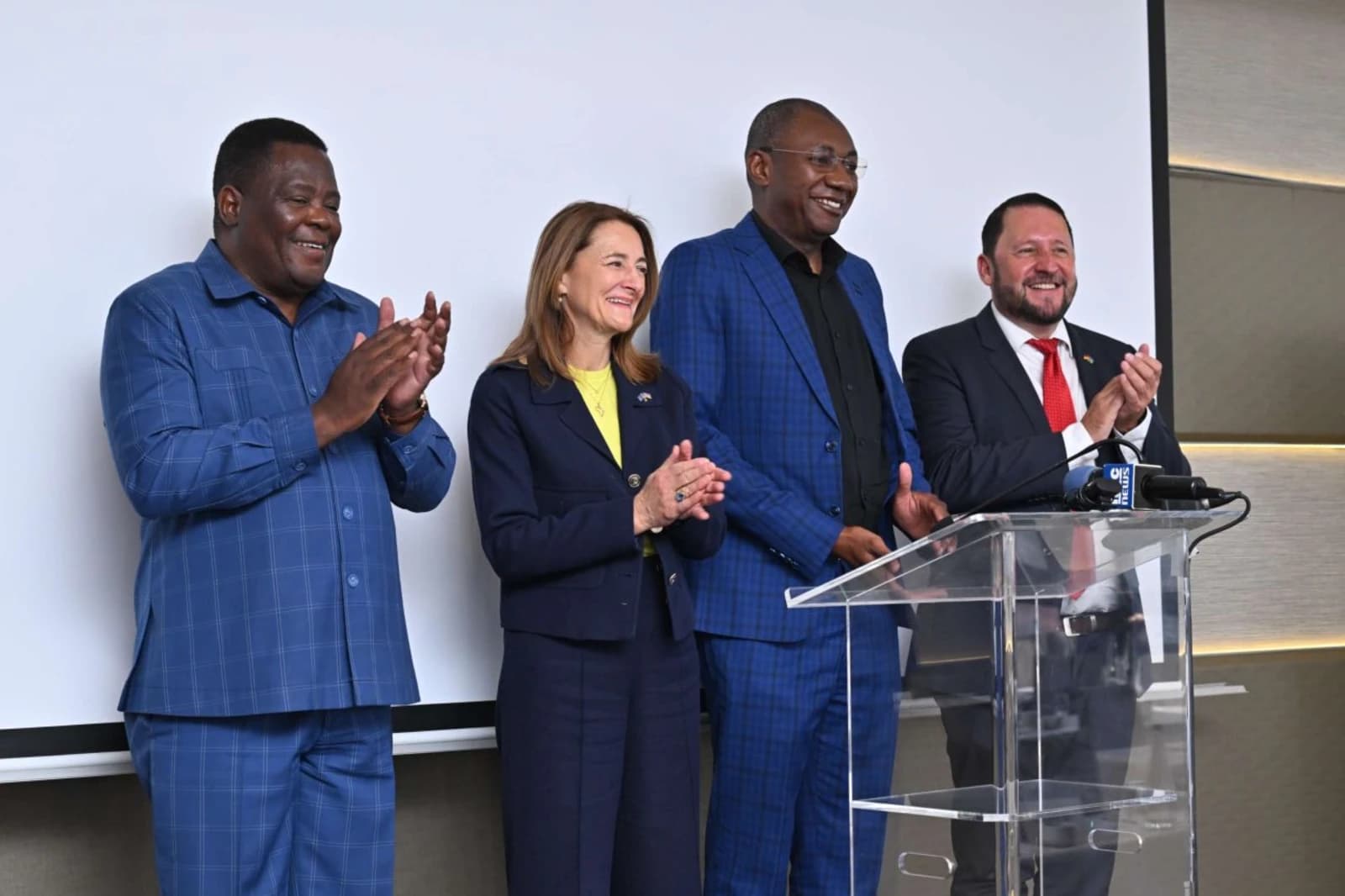
Namibia became the third country in Africa to launch a digital platform to manage the integration of distributed generation into the electricity grid , following in the footsteps of South Africa, which launched its system in 2024, and Eswatini, which did the same a day before its neighbor.
The Electricity Control Board (ECB) , in collaboration with GET.transform, launched Namibia's Integrated Generation Online Application Platform, which will centralize applications related to residential and commercial solar, small independent power producers (IPPs), and battery storage systems .
One of the main changes will be in the timeframes. The previous approval process could take between 90 and 180 days , while with digitalization, generators will be able to obtain approval in approximately one week , as reported during the presentation.
The tool will allow users to upload the characteristics of each system, including its size and equipment, so that the relevant electric utility can determine if it can be safely connected. Applicants will also be able to track the status of their application in real time and, once approved, access applicable mechanisms for grid-connected installations, such as net metering.

The change reflects a transformation already underway within Namibia's electricity system. Households, businesses, and industries are increasingly incorporating their own power generation, primarily photovoltaic, transforming traditional consumers into actors capable of producing and feeding electricity into the grid.
“ We are seeing a steady increase in distributed and renewable generation. It is happening. Nobody can stop it ,” said Robert Kahimise, CEO of the ECB.
The new structure seeks to support this growth with uniform procedures for electric companies and greater predictability for those who want to install their own generation.
Until now, the regulator also lacked consolidated information on the distributed generation infrastructure installed in the country. The platform will allow, for the first time, the collection of data on the location, characteristics, and capacity of the systems , facilitating both planning and regulatory oversight.
“Consumers are becoming suppliers. Across the country, homes, businesses, and institutions are incorporating solar energy systems and other distributed generation capabilities. We don’t know their location or the amount of energy they produce ,” explained Tobias Gerster, GIZ Director in Namibia, representing GET.transform.
This knowledge becomes important as the number of resources connected to distribution networks that were not originally designed to receive large amounts of decentralized generation increases.
The ECB also hopes that a faster and more standardized procedure will improve conditions for attracting investment, without losing sight of the technical requirements necessary to preserve the security of the system.
Kahimise pointed out that the country's electricity legislation did not prohibit generation or distribution by these actors, but market characteristics, including low population density and pressure on tariffs , increased the need to develop a specific mechanism to regulate their incorporation.
From consumers to small grid-connected generators
In practical terms, a home or business that installs solar panels will be able to digitally register its system and submit the necessary documentation for the electric company to evaluate the connection.
If the facility produces more electricity than it consumes, it may subsequently take advantage of the mechanisms enabled to manage those surpluses, in accordance with the applicable conditions.
The system will therefore not function solely as a registration point. It will also be a platform for application, evaluation, and monitoring , streamlining a process that previously could take several months.
“ The goal is not simply to put applications online. The goal is to facilitate, streamline, and make the connection of distributed generation more predictable, while maintaining network security and protecting consumers ,” said Ana-Beatriz Martins, European Union Ambassador to Namibia.
The EU, through GET.transform, and the German Federal Ministry for Economic Cooperation and Development (BMZ) co-financed the development of the initiative.
In preparation for its commissioning, more than 40 workers from the regional distribution companies (REDs), the city of Windhoek, NamPower and ECB itself received training to set up and use the new system.
The tool thus places Namibia within a still small group of African markets seeking to digitize the incorporation of distributed generation , at a time when the expansion of solar, storage and the emergence of new prosumers are beginning to demand faster connection processes and greater visibility over the resources operating behind and in front of the meter.