


Cybersecurity is no longer a secondary issue in renewables. For utilities, large generators, and grid operators, it's no longer enough for a photovoltaic inverter or storage system to be efficient, competitive, and bankable. It must also demonstrate that it is secure, auditable, and capable of operating within international digital security standards.
That's the message behind Sungrow 's new announcement, which highlights the company's achievement of several cybersecurity and data compliance certifications from the British Standards Institution (BSI) , including the BSI Digital Trust Assurance Award . The certifications mentioned by the company include ISO/IEC 27001, ISO/IEC 27701, ISO/IEC 29147, ISO/IEC 30111, ISO/IEC 27017, ISO/IEC 27018, CSA STAR, and ISO/IEC 27019 .
The latter is particularly relevant for the electricity sector: ISO/IEC 27019 is specifically designed for information security controls in the energy industry. The standard covers control and monitoring processes related to the generation, transmission, storage, and distribution of electricity, as well as gas, oil, and heat. ( ISO )
In practice, the move places Sungrow in a discussion that is beginning to gain traction in the purchasing processes of energy companies, network operators, large generators, banks and storage project developers: the digital security of connected renewable assets.

The risk: inverters and batteries are already digital infrastructure
This news shouldn't be interpreted solely as a corporate certification. The underlying issue is broader: renewable energy assets are being transformed into critical digital infrastructure.
A modern solar inverter is not simply a device that converts direct current (DC) to alternating current (AC). It is a connected device with software, communications capabilities, updates, remote monitoring, data sharing, and grid interaction capabilities. The same applies to energy storage systems, electric vehicle chargers, energy management systems, and cloud-based operating platforms.
Sungrow points out that the certifications cover precisely that ecosystem: photovoltaic inverters, energy storage systems, electric vehicle chargers, energy management systems and monitoring platforms .
This point is key for utilities. The more renewable energy penetration grows, the more connected assets contribute to balancing the electricity system. And the more the operation is digitized, the more relevant the following questions become: Who can access the data? How are communications protected? What happens in the event of a vulnerability? How is the software updated? Who has the ability to modify settings? What controls are in place to prevent external manipulation?
The fear isn't just about data theft. In the energy sector, the risk is operational. A cybersecurity incident could affect a plant's production, alter inverter parameters, modify battery behavior, disrupt monitoring platforms, or compromise grid coordination.
That is why cybersecurity is beginning to be analyzed at the same level as efficiency, guarantee, availability, degradation curve or cost per MWh.
Utilities and large generators: the new buying filter
For energy companies and large generators, certifications like those obtained by Sungrow are becoming tools to reduce risk.
In large solar and storage portfolios, purchasing decisions depend not only on CAPEX. Regulatory compliance, data security, operational resilience, software traceability, vulnerability management, and the supplier's ability to respond to incidents also play a significant role.
That's where ISO/IEC 27019 has a differentiating value, because it is not a generic cybersecurity standard: it is designed for the energy sector and for environments where there are control, monitoring and operation systems for critical infrastructure.
BSI, for its part, works with the concept of “digital trust” as a combination of cybersecurity, data integrity, privacy, and governance of digital ecosystems. In critical sectors, this trust becomes a prerequisite for adopting connected technology at scale. ( BSI )
For Sungrow, this allows them to send a clear commercial signal: their solutions not only compete on power, price or performance, but also on compliance and security in the eyes of institutional buyers.
This argument may be relevant in markets where network operators, governments, and large corporate buyers are beginning to demand documented evidence of cybersecurity. It can also be helpful in tenders where the technical evaluation already incorporates digital controls, data storage, cloud security, or incident management.
Storage utility scale: where risk is most sensitive
Large-scale storage is probably the segment where cybersecurity becomes most critical.
In a traditional solar plant, the inverter is already a key element for grid connection. But in a utility-scale BESS system, the software plays an even more critical role: it decides when to charge, when to discharge, how to respond to operator signals, how to provide ancillary services, how to participate in frequency control, how to manage ramps, how to operate in grid events, and, in some cases, how to provide grid-forming or black start functions.
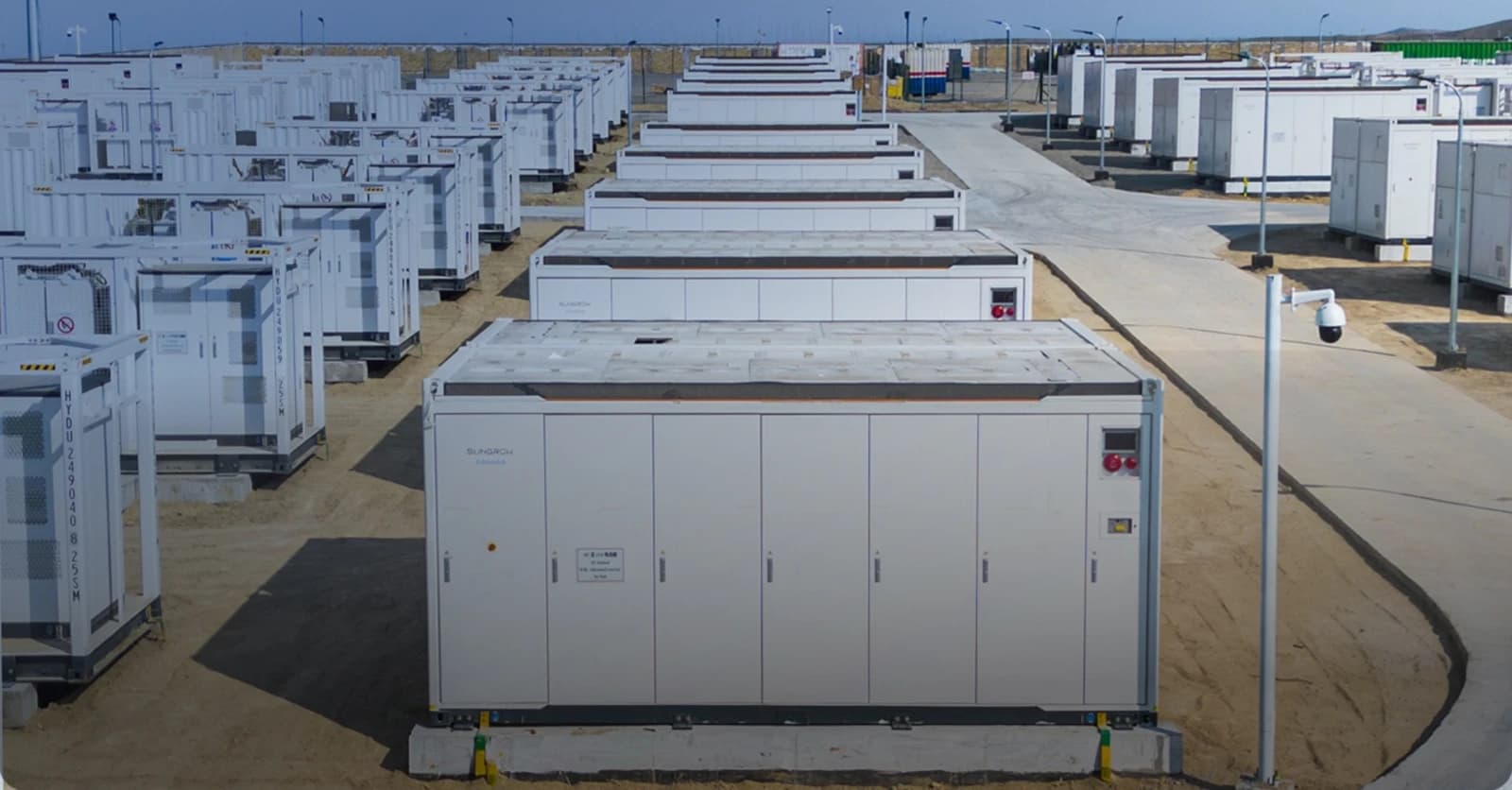
In other words, a battery is not just a container with cells. It is a software-controlled asset, integrated with energy management systems, communication platforms, dispatch algorithms, and grid interaction protocols.
That's why a cybersecurity certification can become a competitive advantage for selling BESS in sophisticated tenders.
Storage buyers no longer just ask about MWh capacity, MW power, warranty, degradation, cooling, or battery chemistry. They also ask about digital architecture, data protection, firmware updates, cloud security, vulnerability response, and regulatory compliance.
This point becomes even more important in hybrid solar + storage projects, plants that provide auxiliary services, or systems that contribute to grid stability. As batteries evolve from backup assets to essential resources for operating electrical systems with high renewable energy penetration, digital trust becomes an integral part of the business.
Europe, data centers and large consumers: markets where it can have more weight
This type of certification can open or facilitate opportunities on several fronts.
The first is Europe , where digital regulation, data protection, and critical infrastructure cybersecurity are of increasing importance. Sungrow had already been working on this issue: in a document on cybersecurity practices for renewables in Europe, the company noted that regulatory compliance is becoming a fundamental threshold for equipment manufacturers to enter international markets, including photovoltaic inverters and BESS solutions for residential, C&I, and utility-scale applications. ( SUNGROW )
The second area of focus is utilities and network operators , who must protect connected assets and avoid systemic risks. In this sector, certification can help reduce barriers to entry for providers that have not yet demonstrated equivalent standards.
The third market is data centers, critical industries, and large C&I consumers . These clients typically have internal requirements for compliance, business continuity, privacy, and digital security. For them, a solar, storage, or electric charging solution cannot introduce vulnerabilities into their infrastructure.
The fourth is public tenders and large financed projects , where banks and technical advisors are starting to look not only at technological bankability, but also at the digital risk associated with suppliers, platforms and control systems.
The strategic reading for Sungrow
Sungrow competes in a global market where Chinese manufacturers are strong in scale, price, and technological speed, but where in some markets there are concerns about data, cybersecurity, remote access, and technological dependence.
Obtaining certifications from a recognized body like BSI allows you to strengthen a narrative of trust with institutional clients. It doesn't eliminate all regulatory or geopolitical debates, but it does provide a verifiable foundation: management systems, cloud security, privacy, vulnerability management, and energy-specific controls.
The company also notes that it applies "security by design" principles and a secure development lifecycle to its product and systems integration processes. This approach is increasingly important to buyers who want to avoid cybersecurity being an afterthought and instead see it as a built-in feature from the design stage.
For the renewable energy market, this news sends a clear message: competition will no longer be solely about the most efficient module, the cheapest inverter, or the battery with the best cost per MWh. It will also be about who can demonstrate that their connected equipment is safe for operating critical infrastructure.
A new requirement for selling renewable energy
Cybersecurity is not marketing. In the coming years, it could become a key entry point for selling to utilities, large power generators, grid operators, data centers, and large-scale BESS projects.
Sungrow is ahead of this trend with certifications that cover not only data protection, but also energy-specific cybersecurity, cloud security, and vulnerability management.
For the sector, the message is clear: renewables are no longer just electrical infrastructure. They are electrical and digital infrastructure. And in this new scenario, anyone wanting to sell technology on a large scale will have to demonstrate not only that they generate, store, or convert energy, but that they can do so safely, in a controlled manner, and reliably for the electrical grid.