


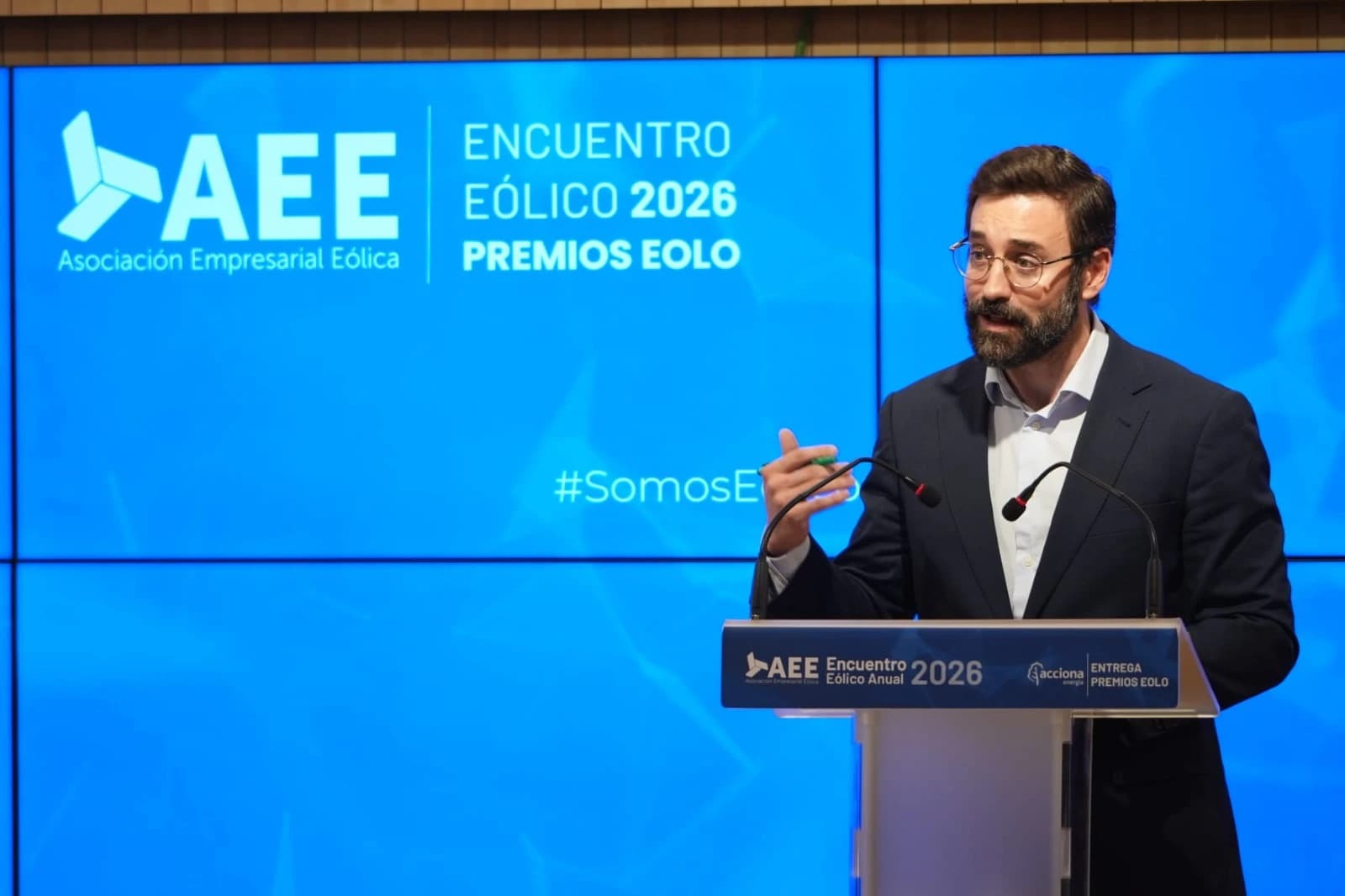
Spain is beginning to outline a new roadmap for the development of renewable energies. At the Annual Wind Energy Meeting organized by the Spanish Wind Energy Association (AEE) , the Secretary of State for Energy, Joan Groizard , announced that the government plans to launch new tenders for renewable energy generation in the coming months , a signal that the sector interprets as the beginning of a new phase for the incorporation of wind power capacity and storage systems.
The initiative aims to prioritize technologies capable of providing greater flexibility to the grid , combining new generation capacity with storage solutions and utilizing some of the available access nodes for new projects. Within this framework, onshore wind energy emerges as a key player , along with pumped-storage hydroelectric plants and, potentially, photovoltaic projects linked to batteries.
While details are still scarce, the advance announcement comes at a crucial time for the Spanish market. In addition to upcoming renewable energy tenders, the sector is also awaiting the launch of the capacity market , a mechanism designed to compensate technologies capable of providing backup and flexibility to the electricity system. Although the European Commission has already given the green light to the Spanish scheme , its implementation still requires final approval of certain regulatory aspects before the first auctions, eagerly anticipated by developers of storage and dispatchable generation, can be held.
The return of these tenders will also mark the return of general renewable energy auctions, following the last auction held in Spain in November 2022, which offered 3,300 MW , distributed between 1,800 MW for solar photovoltaic and 1,500 MW for onshore wind . However, only 45.5 MW of wind power were awarded, leaving nearly 99% of the offered volume unawarded. The low interest was mainly due to the maximum prices set by the government, close to €45/MWh , which developers considered insufficient given the increased costs of investment, financing, and supply.

Since then, the market context has changed significantly. The need to incorporate energy storage, accelerate the repowering of wind farms, and provide greater flexibility to the electricity system has become a central focus of the government's energy planning.
Along these lines, the Government has been consolidating a strategy to modernize the existing renewable energy fleet . In recent months, the Institute for Energy Diversification and Saving (IDAE) increased the second call for proposals for the Circular Repowering program by €220 million , raising its total funding to €512 million . Of this budget increase, €210 million will be allocated to wind power projects and another €10 million to hydroelectric facilities , reinforcing the commitment to utilizing infrastructure already connected to the grid.
In addition, grants have been awarded to upgrade approximately 2.4 GW of wind power capacity , an initiative that will allow for the replacement of older turbines with higher-capacity equipment, increasing electricity production and reducing the environmental impact of existing installations. For the sector, modernizing the wind farm represents a key opportunity to continue increasing renewable energy generation without the need to develop new sites.
Continue reading
Among the measures promoted by the new regulatory framework is the possibility of releasing some of the access capacity that was previously reserved for future generation tenders , so that it can be used for wind farm repowering projects. This will allow existing wind farms to replace turbines with more modern equipment and increase their evacuation capacity, promoting more efficient use of the existing infrastructure.
Meanwhile, the autonomous communities are also beginning to adapt their tools to the new scenario. Extremadura, one of the regions with the largest portfolio of renewable energy projects in the country, announced the launch of an energy capacity map that will be updated regularly to provide information on generation and access possibilities available at different points in the electricity grid. The initiative aims to facilitate the planning of new investments and provide greater visibility into the real connection options for future developments.
The renewed commitment to wind power was reflected during the meeting of the Spanish Wind Energy Association (AEE). There, the Secretary of State for Energy, Joan Groizard , asserted that "wind energy is on the cusp of its most promising phase," emphasizing that this technology will be one of the cornerstones for addressing the challenges of Spain's energy transition.
The official also defended the need to promote an integrated deployment in the territory and stated that "we have all the tools and we have to work together, Administration and sector, to make it possible," referring to the collaboration needed to accelerate the development of new projects.
For her part, Rocío Sicre, president of AEE , stated: " I am convinced that we will continue building an increasingly stronger, more innovative sector that is closer to society. A sector that continues to grow hand in hand with the regions, boosting the competitiveness of our industry and contributing to a safer, more sustainable, and more self-sufficient Spain and Europe. The best era for Spanish wind energy is yet to come."
Meanwhile, the offshore wind sector continues to await clarity. Although the government has raised the possibility of holding the first auction before the end of the year, the sector still lacks an official timetable and the definitive terms of the process, so expectations remain focused on the next regulatory steps.
Energy storage is gaining increasing importance in Spanish electricity planning due to the growth of variable renewable generation. In this context, pumped-storage hydroelectric plants are emerging as a priority solution for providing flexibility to the system, although solar projects with associated storage could also be incorporated.
With this set of measures, Spain seeks to open a new phase of its energy transition , where the growth of renewable capacity will be accompanied by the modernization of the installed fleet, the incorporation of storage and a more efficient use of the existing electrical infrastructure.