

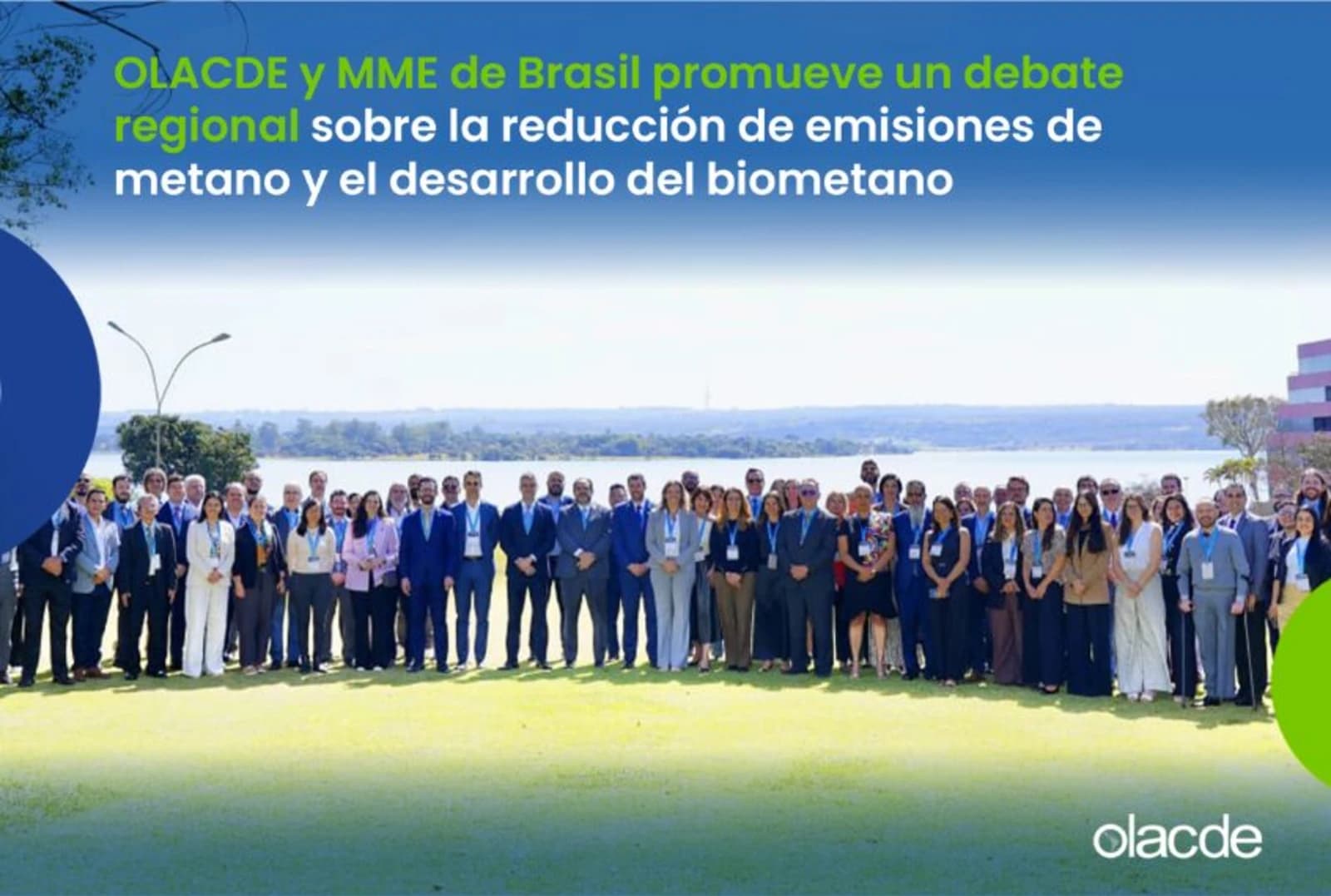
The Latin American and Caribbean Energy Organization (OLACDE) and the Ministry of Mines and Energy (MME) held the III Regional Methane Summit on June 8 and 9. The meeting brought together, in partnership with governments, international organizations, companies, research centers, and specialists from Latin America and the Caribbean, to discuss strategies for reducing methane emissions and opportunities to strengthen the energy transition and sustainable development in the region.
The initiative aimed to strengthen regional cooperation on one of the most relevant issues on the global climate agenda. During the two days of activities, discussions were held on emissions management in the oil and gas sectors, environmental monitoring, regulatory developments, and new technologies for emissions mitigation.
Methane is responsible for approximately 30% of the global temperature increase since the pre-industrial era and has a high global warming potential. In the energy sector, currently available technologies allow for a significant reduction in emissions associated with the production and transportation of fossil fuels, creating opportunities to increase operational efficiency and reduce waste.
In addition to the technical discussions, the Summit also aimed to strengthen the Methane Emissions Observatory for Latin America and the Caribbean (OEMLAC) and the Community of Practice on Methane (COEMLAC), a network that brings together specialists, government representatives, companies and academic institutions from various countries to exchange experiences and promote solutions aimed at reducing emissions.
At the opening ceremony, OLACDE Executive Secretary Andrés Rebolledo stressed that “The expansion of the gas and oil sector in Latin America and the Caribbean must be accompanied by an ambitious methane reduction agenda, which strengthens energy security, regional integration and the competitiveness of our countries in global markets.”
An opportunity for the energy transition
The Third Regional Methane Summit took place against a backdrop of growing international demand for fuels with lower emissions intensity and greater environmental transparency. In this context, methane reduction has become one of the most effective measures for accelerating short-term climate results and increasing the region's energy competitiveness.
For Latin America and the Caribbean, this challenge also represents an economic opportunity. International estimates indicate that a large portion of energy sector emissions can be reduced using readily available technologies, including the recovery and utilization of currently wasted gas. This meeting is expected to help accelerate initiatives capable of transforming that potential into environmental, energy, and economic benefits for the countries of the region.