


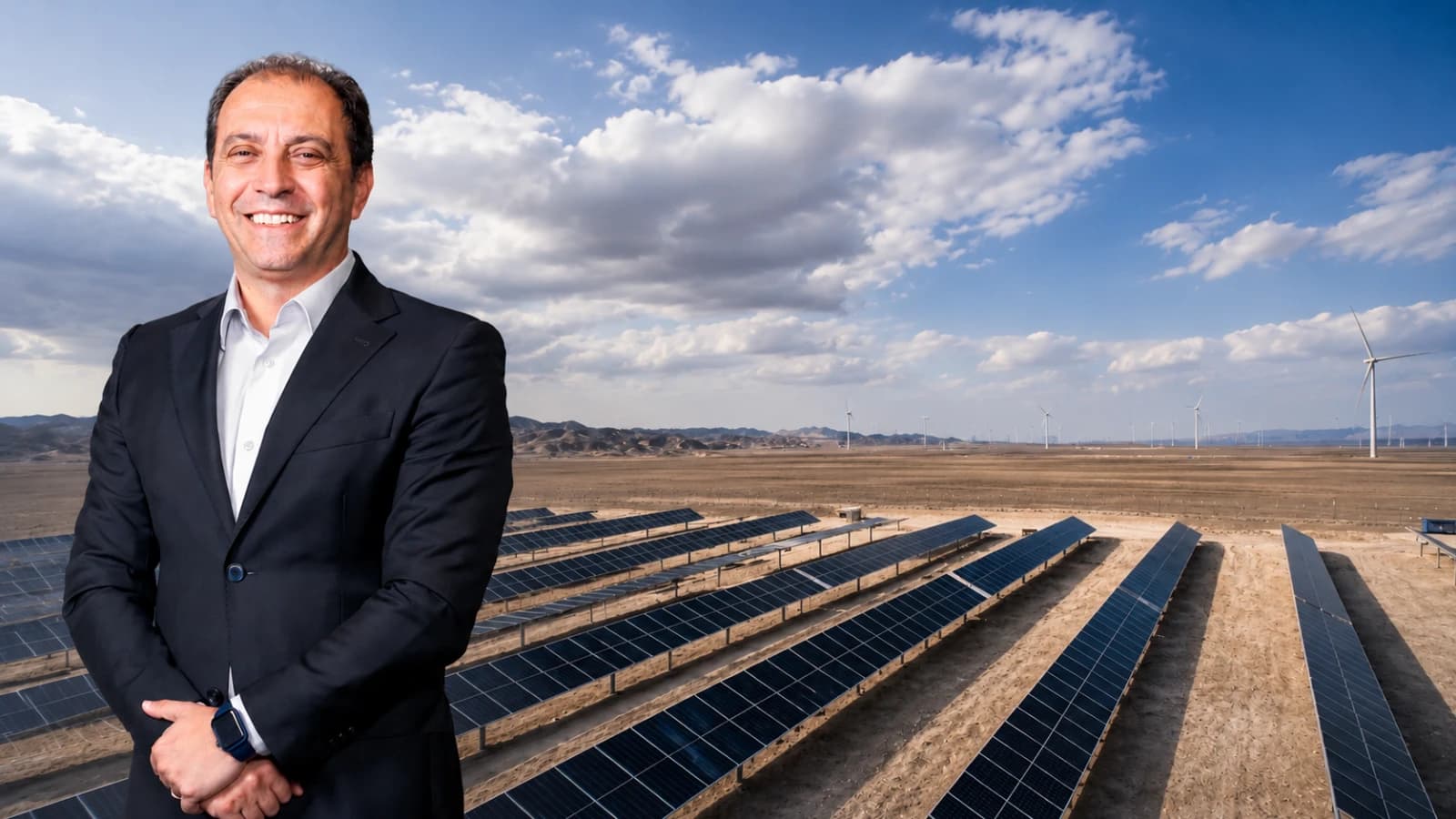
Orygen is preparing a new phase of expansion in Peru with a 3 GW renewable portfolio , comprised of solar, wind, hydroelectric, hybrid, and storage projects at various stages of development. The company aims to advance gradually, as each initiative reaches the necessary technical, environmental, regulatory, commercial, and economic maturity.
“The next two years will be crucial for consolidating the next stage of growth. Several projects are in advanced stages of development, and we expect that during 2026 and 2027, they will reach final investment decisions and obtain the necessary regulatory approvals to begin construction,” Marco Fragale, CEO of Orygen , told Energía Estratégica .
One of the first milestones of this new phase is Wayra Solar , currently under construction and described by the company as Peru's first large-scale solar-wind complex. Fragale expects the project to begin commercial operation during the last quarter of the year. The Wayra Renewable Energy Complex will have a capacity of 400 MW.
The initiative will join Clemesí and Wayra Extension , two assets already part of the company's renewable energy operations. The strategy prioritizes complementarity between energy sources. The company believes that solar photovoltaic and wind power will continue to be the pillars of its growth, although the next leap will require integrating them with batteries.

“The future of the energy sector will be based on the complementarity of technologies. This will allow for better management of the inherent variability of renewables and provide a more stable and reliable supply,” Fragale stated.
The company sees investment opportunities primarily in northern and southern Peru , where it has identified competitive solar and wind resources. However, natural availability will not be the sole criterion for selecting which projects will ultimately move forward.
Transmission infrastructure, proximity to demand centers, environmental viability, and the relationship with communities will also be determining factors.
What is needed to boost investments in storage in Peru?
Within this expansion, batteries will play an increasingly important role . Orygen is strategically evaluating this technology and confirms that it is analyzing and developing hybrid projects that combine renewable generation with battery energy storage systems.
“At Orygen, we were pioneers in installing the first high-capacity battery in Peru with BESS Ventanilla. With that experience, we can say that we are convinced that this technology will cease to be a complement and will become a strategic component of new projects,” said the CEO of Orygen.
He added: “We are convinced that this technology will be one of the main enablers of the energy transition in the coming years, and as Orygen we are prepared to incorporate solutions of this type for the main industries in Peru.”
However, for these initiatives to scale up, Orygen believes it is necessary for Peru to move from general recognition of the technology towards concrete rules on its participation and remuneration .
It is worth recalling that Law No. 32249 was published on January 19, 2025, and amended Law No. 28832 to strengthen the security, reliability, and efficiency of the electricity supply, as well as to promote greater diversification of the energy mix. The law also tasked the Ministry of Energy and Mines with developing the framework for a market for ancillary services.
For Fragale, the approval is a positive sign because it recognizes that a system with greater solar and wind penetration needs technologies capable of responding quickly, compensating for imbalances, and reinforcing the stability of the operation.
In April 2026, the Ministry of Energy and Mines published the draft supreme decree approving the Regulations for Complementary Services and proposing modifications to the wholesale market rules, the Electricity Concessions Law, and the operation of the Economic Operation Committee of the System. As it is still a draft regulation, the sector awaits its final approval.
Continue reading
“To accelerate the deployment of BESS projects, it will be essential that this regulatory framework translates into clear, comprehensive, and predictable regulations,” Fragale stated.
One of the key definitions will be determining the role of energy storage within the electricity system . This involves establishing whether it will be treated as generation, demand, grid infrastructure, or as an asset capable of performing different functions depending on operating conditions.
Remuneration, an outstanding issue for the BESS
“It is important to establish mechanisms that adequately remunerate the services that these technologies effectively provide, such as flexibility, rapid response, frequency control and operational backup,” Fragale explained.
Flexibility would allow the system to absorb or deliver electricity according to its needs, especially in the face of rapid changes in solar or wind power production. Rapid response , meanwhile, would enable interventions in short periods to address deviations between generation and demand.
Frequency control would help maintain the instantaneous balance of the system, while operational backup could sustain the continuity of supply in the face of unforeseen contingencies or variations.
According to the specialist, these capabilities must have a verifiable economic return, since remuneration for multiple services would allow for supplementing income derived from energy arbitrage and improving the bankability of larger-scale facilities.
The company also sees direct applications in energy-intensive industries. “ Today we are fully prepared to offer robust and customized BESS solutions to Peruvian industries ,” the executive stated.
Mining is emerging as one of the sectors with the greatest potential for battery adoption due to its high demands for continuous and reliable power. For these operations, batteries can complement renewable energy contracts, smooth out power fluctuations, and meet specific operational requirements.
Industrial interest is also reflected in the growth of renewable energy purchase agreements. Since 2019, Orygen has delivered 169 renewable energy certificates , equivalent to a total volume of 12.1 TWh .
“What was previously primarily a decision associated with sustainability, today also responds to criteria of competitiveness, risk management and long-term planning,” explained the company representative.
“Today, renewable energy sources don't need support mechanisms or incentives to continue growing. What we need in the electricity market is regulation and infrastructure that support this growth,” he added.
For this reason, Orygen prioritizes the final approval of the Ancillary Services Regulation and the development of the transmission plan. Both elements will determine the country's ability to integrate new variable generation and deploy storage on a commercial scale.
In the long term, the company expects the combined share of solar and wind power generation, currently close to 10% of Peru's electricity mix , to exceed 20% by 2030. Reaching this level will require synchronizing projects, grids, regulations, and flexibility solutions.
“The law is a very important step, but not the end,” Fragale concluded.