The Panamanian Association of Green Hydrogen and Derivatives projects its launch for the first quarter of 2027 , with an agenda that includes expanding current tax incentives for renewables, making electricity contracts more flexible, and creating conditions to ensure demand.
Driven by Solar Earth and strategic partners in the maritime, energy, and industrial sectors, the initiative seeks to accelerate the implementation of the National Strategy for Green Hydrogen and Derivatives (ENHIVE), approved in July 2023, which sets a goal of local production of 500,000 tons of green hydrogen and derivatives by 2030 and two million tons by 2040. The document envisioned the formation of a private partnership during the first quarter of 2024, three years before the now-planned launch.
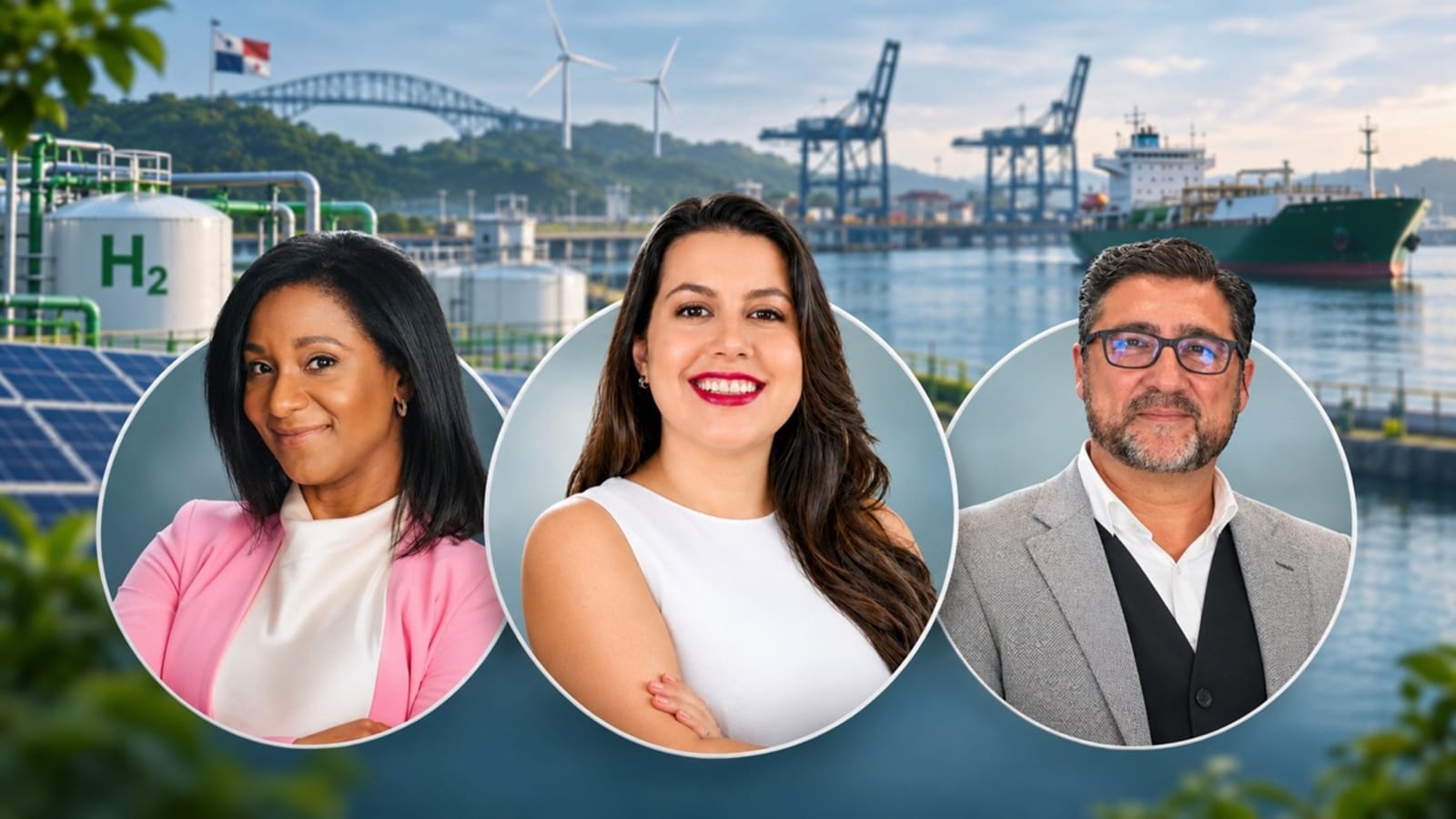
“A project requires coordinating renewable energy supply, technology, permits, financing, and buyers. When these elements progress in isolation, decisions are delayed,” explains José Carlos Antón , CEO of Solar Earth, in an interview with Energía Estratégica .
Currently, the organization is in a prospecting stage to define who its founding members will be.

“In this phase, the 40 most relevant companies, institutions and educational entities in the local and international ecosystem linked to the value chain of green hydrogen and its derivatives in the country are being evaluated,” reveals Rosilena Lindo , global advisor on Energy and Climate.
In parallel, potential partnerships were explored with 16 chambers of commerce and associations. The initiative aims to involve renewable energy developers, technology providers, port operators, large consumers, financial institutions, and representatives from academia.
The launch is projected in a still nascent market. According to the H2LAC regional platform survey, updated in June 2026, Panama has two hydrogen-related projects .
The breakdown of initiatives, as of March 2025, identifies the Ciudad Dorada biorefinery, by SGP BioEnergy, and the Calzada Larga plant, by CEMEX and Grupo Estrella, both listed as being under development.
An agenda to improve competitiveness
One of the organization's key differentiators will be its participation in building the regulatory framework. The country is moving in this direction through Bill 555, approved in its first reading on April 27, 2026, which aims to regulate the promotion and implementation of green hydrogen as a fuel.
Among the priority measures, Lindo proposes "extending the zero tariff import incentives and accelerated amortization, currently in place for wind and solar generation" to electrolyzers, cryogenic tanks, chemical synthesis reactors for green methanol and ammonia, as well as battery storage systems.
This is in addition to the possibility of enabling special customs figures that include the production, mixing and dispatch of clean fuels without additional costs in the interoceanic supply, as well as establishing technical safety standards for their handling in port facilities.
In the electricity sector, the specialist proposes "enabling flexible regulatory schemes for the long-term purchase and sale of renewable energy dedicated to electrolysis projects," ensuring traceability and transmission tariffs that favor the competitiveness of the levelized cost of hydrogen.
It also proposes implementing an official system of guarantees of origin that allows for the verification of the carbon footprint of molecules produced or shipped from Panama.
“There is already dialogue with the National Energy Secretariat. We want to develop a technical agenda with the relevant authorities and explore avenues of collaboration with the Inter-institutional Committee for Green Hydrogen and Derivatives of Panama, CIHIVE,” confirms Antón.
From strategy to effective demand
The entity's formation is projected in an international context marked by difficulties in closing trade agreements and reaching final investment decisions.
“The barriers are still significant, especially due to the lack of competitive costs compared to traditional fuels. This means there is no guaranteed demand, and thus, everything generates a chain of uncertainty,” warns Andrea Arrobo , executive director of the Association.
Faced with this scenario, the organization plans to structure its activity through three committees specializing in public policy, projects, and international positioning .
The first will contribute to the development of a National Technical Document that establishes regulatory priorities, while the second will promote university agreements, skills certifications, and technical training. The third will work to position the country as a hub for the supply of sustainable fuels.
Among the first initiatives that will be strengthened is the development of the first maritime biocorridor, taking advantage of Panama's logistics infrastructure and its connection with international markets.
Between January and September 2026, the country traded 3.93 million tons of marine fuel via barges and supplied 5,521 ships , according to preliminary figures from the National Institute of Statistics and Census (INEC).
Regarding this market, ENHIVE points out that green hydrogen and its derivatives will represent 5% of the maritime supply supply by 2030, 30% in 2040 and 40% in 2050.
“Maritime transport stands out for its potential to generate large-scale demand. At the same time, certain industrial and logistical applications can offer conditions for developing initial local consumption,” Antón argues.
Looking ahead to the 2027-2030 period, the businessman identifies three lines with the greatest potential for realization: hydrogen production linked to industrial consumers, maritime supply of renewable fuels on the Atlantic and Pacific slopes, and the manufacture of e-methanol by utilizing biogenic CO₂ sources from agro-industrial activities.
“Without sufficiently defined consumption commitments, it is difficult to size the facilities and schedule their development,” he explains.
To reduce the risks associated with the initial stages, the entity will also seek to bring developers closer to multilateral financing instruments and technical assistance aimed at studies, engineering and project preparation.
In that sense, one of the objectives for the end of 2027 will be to have a first sectoral information base on demand, capacities and project opportunities , which will allow the identification of the degree of maturity of the initiatives and their infrastructure needs.
“We want to ensure that by the end of 2027, any company interested in developing a project in Panama will find a clearer path, suitable partners, and greater local capacity to execute it. That would be a tangible contribution from the partnership,” concludes the CEO of Solar Earth.
 By Florencia Guglielmetti
 By Energía Estratégica
 By Matías Medinilla
 By Ailén Pedrotti