


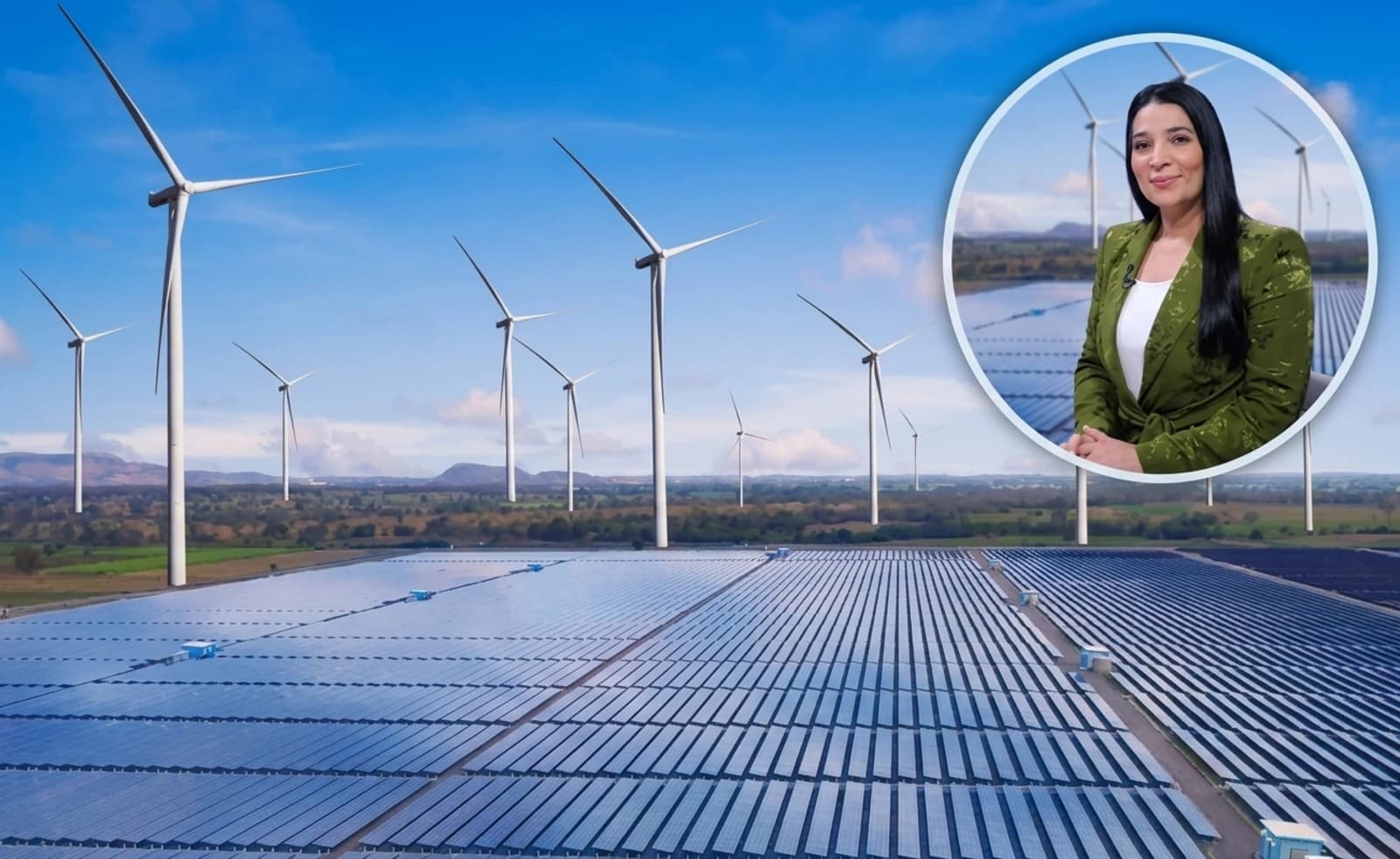
Panama is making progress in developing the National Energy Plan 2026-2040 and is preparing to close the territorial consultation phase before beginning to build the scenarios that will define the sector's new roadmap.
When asked by Energía Estratégica when they expect to complete the document, Berta Burgos , a communications consultant at the National Energy Secretariat, confirmed: “By the end of the first quarter of next year.”
Thus, the horizon is set towards March 2027 , before the deadline communicated when the Government formally launched the process, on March 5, 2026. At that time it had reported that the preparation would take approximately 18 months .
The document will update the long-term energy planning that had as its main antecedent the PEN 2015-2050 , approved in 2016, but will find a matrix substantially different from the one that existed when those scenarios were designed.

Once the territorial tour is completed, the development of scenarios will begin together with external consultants , from which the main policies and their implementation horizons will be defined.
“Then comes the development of the scenarios [...] and then the main public policies that need to be implemented within a certain timeframe begin to take shape and be defined,” Burgos anticipated.
The Secretariat also seeks to ensure that the result can be translated into concrete actions and is not limited to general objectives.
“The most important thing is to have a plan that is executable,” Burgos emphasized, noting that the intention will be to connect the identified priorities with “goals and objectives that are truly achievable.”
Renewables: a very different matrix from the one found by the previous Plan
One of the first topics that emerges from the meetings is the intention to further incorporate clean energy sources.
“People are definitely committed to decarbonization. People continue to demand an increase in renewables,” Burgos noted.
But the starting point of the new PEN is significantly different from that of its predecessor.
In 2014 , the year used as a reference in many of the scenarios of the 2015-2050 Plan , Panama had 2,743.05 MW of installed capacity : 1,537.65 MW hydroelectric, 1,137.64 MW thermal, just 55 MW wind and 12.76 MW photovoltaic .
By the end of 2025 , installed capacity had practically doubled to reach 5,120.19 MW .
The biggest transformation occurred in new renewable energy sources. Photovoltaic power reached 770.65 MW , about 60 times the level recorded in 2014, while wind power reached 336 MW , more than six times the capacity that existed then.
Hydropower capacity also increased to 1847.57 MW , while thermal power capacity reached 2165.97 MW . Together, hydropower, solar, and wind power accounted for approximately 57.7% of the country's installed capacity , compared to 42.3% for thermal power.
The renewable share is even greater when looking at the actual generation.
During 2025, Panama produced 13,570.40 GWh . Hydroelectric power contributed 8,112.84 GWh, equivalent to 59.78% ; photovoltaic power, 1,307.91 GWh or 9.64% ; and wind power, 715.47 GWh, equivalent to 5.27% .
Together, these three sources accounted for 74.69% of gross generation , while thermal power plants contributed the remaining 25.31% .
The comparison with the previous PEN is particularly relevant.
In its alternative scenario , which considered a greater penetration of clean technologies, efficiency measures and fuel substitution, the 2016 document projected that by 2050 66.9% of installed capacity would be renewable and that these sources would contribute 71.6% of electricity generation .
The participation recorded in the 2025 generation was already above that 71.6%, although it does not mean that the long-term scenario has been reached in advance.
On the one hand, it is a snapshot of a specific year, and the Panamanian result continues to be heavily conditioned by hydroelectric availability.
Continue reading
On the other hand, the composition expected by that scenario was considerably more diversified.
The 2015-2050 National Energy Plan (PEN) estimated that by 2050, energy generation would be distributed as follows: approximately 33% hydroelectric, 39% non-conventional renewable, 20% natural gas, 6% coal, and 2% imports . It also projected over 4,051 GWh of solar power, 9,152 GWh of wind power, and 932 GWh of distributed solar power for that year.
The current matrix still shows a different structure: almost six out of every ten GWh produced in 2025 came from hydroelectric plants , while solar and wind power accounted for about 15% of generation.
The challenge of the new Plan, therefore, is not only to increase the aggregate percentage of renewable energy, but also to define how to diversify it, what technologies will lead the next expansion, and what infrastructure will allow the integration of new variable generation without compromising the reliability of the system .
The previous National Energy Plan (PEN) itself already warned about this issue. In the scenario of greater renewable penetration, it indicated that the massive incorporation of solar and wind power would require firm power backup and that distributors, transmission companies, and regulators would have to adapt to higher levels of intermittency and distributed generation.
A decade later, that discussion takes on another dimension: Panama has 770.65 MW of solar and 336 MW of wind power , but ASEP's statistics assign zero firm capacity to both technologies, compared to 1,930.15 MW of firm thermal capacity and 1,129.68 MW of hydroelectric capacity .
It will be precisely in these new scenarios that the Secretariat will have to define to what extent this penetration can continue to increase, what role storage will play, and how renewables will be combined with sources capable of providing firmness.
Service quality is also part of the roadmap
The surveys also show that not all the challenges for 2040 involve adding capacity.
“There is one issue that has come up repeatedly and very strongly, and that is the demand for improved service quality,” Burgos said.
As he explained, price remains a concern for users, but it appears to be directly related to the conditions under which they receive the supply.
"As long as good quality is received, there are no interruptions and no damage is suffered to the equipment, the price is still something that can be tolerated," he said, summarizing the points raised during the meetings.
The concern coincides with recent actions by the regulator.
In June 2026, ASEP imposed fines of more than B/.68.2 million on EDEMET and EDECHI for non-compliance related to service quality indicators recorded between 2019 and 2024.
He subsequently ordered EDEMET, EDECHI, and ENSA to implement a mandatory action plan to address problems including voltage fluctuations, damage to electrical appliances, service delays, and difficulties related to meters and billing.
Thus, a plan designed for the next 15 years must also incorporate problems that users consider immediate.
“We found a population that, despite discussing a long-term plan, has issues that do have a certain immediacy,” Burgos explained.
Universal access remains open
Another issue that connects the new PEN with its predecessor is electrification.
The 2015-2050 planning plan included, as part of its scenarios, moving towards universal service and contemplated the use of renewable solutions for communities far from conventional networks.
The challenge is not yet over.
During the launch of the National Energy Plan 2026-2040, the Government once again placed rural electrification among its priorities and maintains that the more than 50,000 families who still do not have access to the national electricity system are a problem.
The new document will have to determine how to close that gap and what role the extension of networks and decentralized systems will play in areas where conventional infrastructure is more difficult to deploy.
In fact, the Government began this year to evaluate a model for remote communities based on individual photovoltaic systems per home , with consumption measurement and mechanisms designed to guarantee the maintenance of the equipment.