


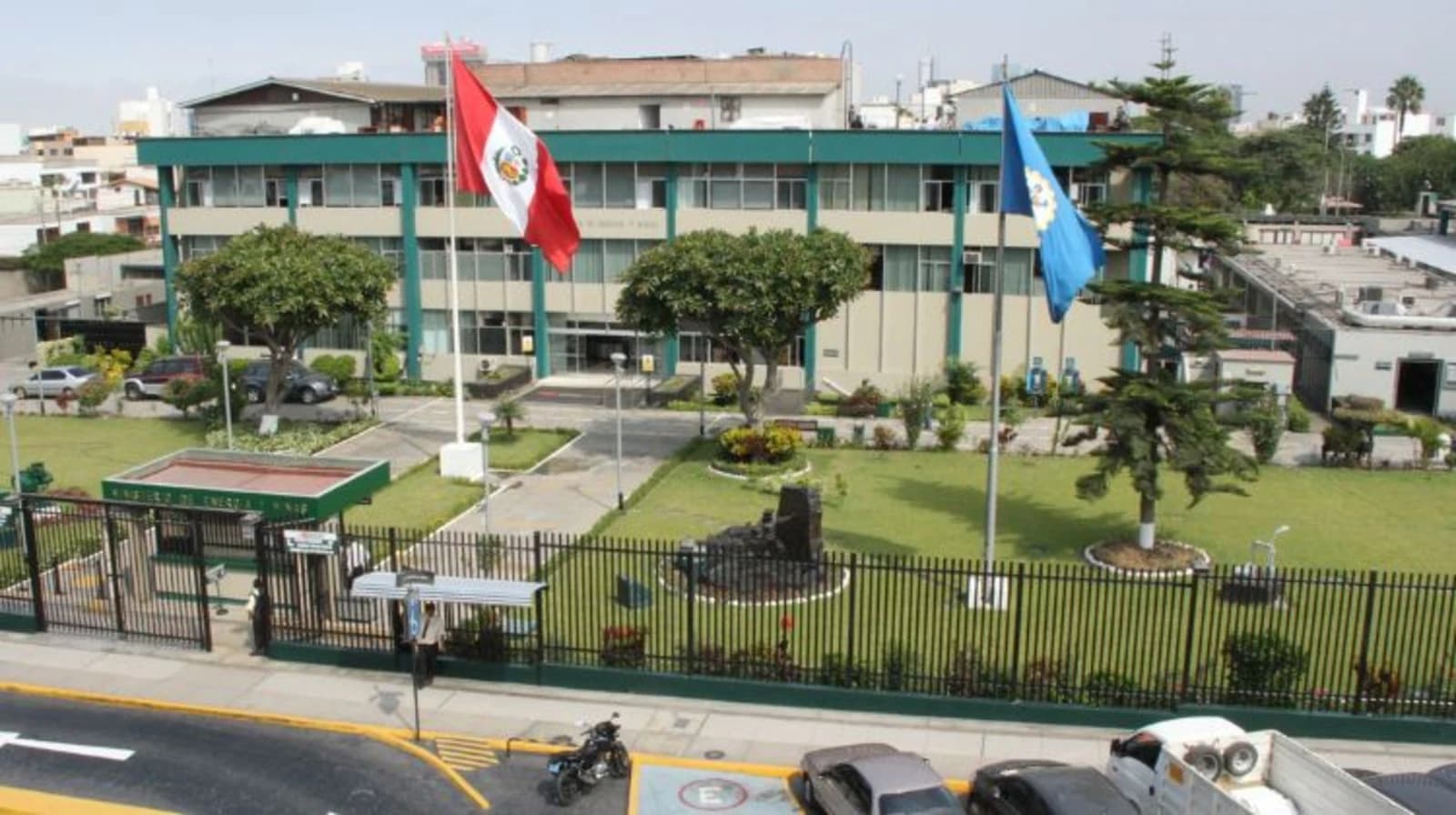
The Peruvian government approved Supreme Decree No. 022-2026-EM , which establishes a new regulatory framework for coordinating the operation of isolated electrical systems involving two or more unconnected generators. The decree, published on October 18 in the official gazette El Peruano , specifies the responsibilities of distribution companies and the conditions for intervention by the Economic Operation Committee of the System (COES).
The regulations implement Article 32 of Law No. 28832 and establish obligations related to operational planning, security of supply, information exchange, and regulatory oversight . They also set deadlines for submitting the technical procedures that will govern the operation of these facilities.
The regulation comprises four titles, 14 articles, three final supplementary provisions, and one transitional supplementary provision . It applies to agents engaged in generation, transmission, and distribution activities in isolated systems with two or more generators that do not belong to the same economic group.
According to article 2, the objective is for operational coordination to be carried out "considering the criteria of minimum cost, preserving the security of the supply of electrical energy and the best use of energy resources."

Within this framework, the regulation differentiates the coordination responsibilities between the distributors and COES, while incorporating specific mechanisms to guarantee compliance with the operational provisions.
COES will be able to assume the coordination of isolated systems larger than 20 MW
One of the main aspects of the regulation is the possibility that the Ministry of Energy and Mines (MINEM) may entrust COES with the coordination of certain isolated electrical systems, provided that the conditions established in the regulations are met.
Article 5 specifies that this intervention will be limited to facilities where two or more generators not linked to each other participate and whose installed generation capacity is greater than 20 MW .
However, reaching that threshold does not automatically mean that COES assumes responsibility. To do so, the distributor must submit a request to the Ministry, accompanied by a cost-benefit analysis demonstrating improvements in the reliability and safety of operations.
Specifically, the text demands "a cost-benefit analysis that demonstrates that the coordination of the operation of the Isolated System by COES improves the reliability and safety of the system's operation."
The application must also include a prior opinion from the Supervisory Agency for Investment in Energy and Mining (OSINERGMIN) . Subsequently, the Ministry may formalize the commission through a ministerial resolution published in El Peruano .
This resolution will determine the date on which COES will assume its functions and, from its designation, the body must present the corresponding technical procedure proposals for their evaluation and approval.
Furthermore, the regulations stipulate the possible revocation of the contract if the required conditions cease to be met. In that case, the corresponding ministerial resolution will take effect six months after its publication , during which time COES must coordinate the transfer of responsibilities to the distributor.
Until a formal designation is made, coordination will continue under the responsibility of the distribution companies.
In this regard, article 5.4 establishes that "the Distributor responsible for the Isolated System is the Coordinator of the Operation, without the need for a prior declaration."
When there is more than one distributor in the same system, the responsibility will fall on the company that has the largest number of users .
Furthermore, the regulations allow the distributor to entrust the material execution of the coordination to another isolated agent through a private contract, although this possibility does not modify the allocation of regulatory responsibilities.
Article 13.2 expressly states that "The Distributor maintains its status as Coordinator of the Operation vis-à-vis OSINERGMIN and the other Isolated Agents."
Thus, hiring a third party does not exempt the distributor from complying with the obligations set out in the new regulatory framework and the corresponding technical procedures.
Five-month deadlines, new operational requirements and oversight
The regulation also sets a timetable for adapting isolated systems to the new provisions.
According to the first final supplementary provision, the distributors covered by the regulations must submit their proposals for technical procedures to OSINERGMIN within a maximum period of five months , counted from the entry into force of the regulations.
Once the documentation is received, the supervisory body will have another five months to approve the technical procedures .
In cases where the Ministry entrusts the coordination to COES, Article 8 establishes a maximum period of five months from the publication of the ministerial resolution of designation for the body to present its proposals, without prejudice to the deadlines provided for in the final supplementary provision.
The procedures will include demand forecasting with daily and weekly horizons, operational scheduling and rescheduling, maintenance planning, and the determination of effective power and variable production costs.
Continue reading
They will also cover the exchange of information between agents and the verification of protection, measurement and control equipment, as well as other aspects that the coordinator or regulator considers necessary.
Article 8.2 states that "Technical Procedures are mandatory rules for the Operation Coordinator and for all Isolated Agents."
In case of non-compliance with the submission deadlines, OSINERGMIN may prepare and approve the procedures ex officio , in accordance with the conditions established by the regulations.
Until these instruments are approved, distributors must coordinate operations considering the minimum cost, security of supply, and the use of available energy resources.
When COES assumes coordination without yet having specific approved procedures, the technical procedures of the National Interconnected Electric System (SEIN) may be applied, insofar as they are technically applicable.
Another key aspect of the regulation concerns the information and risk forecasting obligations that the coordinators must fulfill.
Article 11 establishes the submission of weekly reports on the actual daily operation, including the energy and power demand records corresponding to the previous week.
It also requires the monthly publication of information on demand forecasts and the availability of energy resources for the next twelve months.
In particular, the document must incorporate the anticipated demands and the availability of resources, "indicating whether the system will be subject to rationing."
This obligation introduces a periodic mechanism for monitoring supply conditions, through which possible scenarios of resource insufficiency must be identified.
Additionally, the coordinators must publish annual statistical reports with information on demand, the production of the generation units, the programmed and executed operating costs, as well as the available equipment.
Regarding real-time operation, companies that own facilities must comply with the provisions issued by the coordinator and provide the information necessary for system programming.
Article 10.2 states that agents "may only deviate from the instructions of the Operation Coordinator due to unforeseen situations resulting from force majeure events."
For his part, the coordinator will have the authority to arrange operational maneuvers, determine the system configuration, supervise the operation of the facilities, and direct the restoration tasks after a disturbance.
The regulations also incorporate the monitoring of hydrological variables of hydroelectric plants, the availability of fuel for thermoelectric plants, and other storage technologies that are integrated into isolated systems.
In parallel, mechanisms are established to evaluate and grant technical approval to requests for incorporation, removal or modification of equipment, considering the safety of the facilities and free access to the networks.
Regarding financing, Article 7 stipulates that OSINERGMIN will determine the necessary contributions to cover the efficient costs of investment, operation and maintenance associated with the coordination carried out by COES .
These costs will be borne by the agents of the corresponding system, in proportion to the applicable regulatory parameters and the values recorded during the previous year.
For generators, power and energy injections valued at the Busbar Price will be considered, while for transmission companies, the revenues derived from their services will be used. In the case of distribution companies, their power and energy withdrawals valued under the same criterion will be used as a reference.
Finally, Article 14 establishes that OSINERGMIN will be responsible for monitoring compliance with the new operational provisions .
The provision states that the agency will supervise that the operation is carried out under criteria of minimum cost, safety and quality of service, "with transparency of all information related to the dispatch and operation of the System."
The regulator will also resolve disputes that arise between isolated agents and the distributors responsible for coordination, while conflicts linked to COES will follow the mechanisms provided for in its specific regulation.
With this scheme, the Peruvian Government specifies the operational responsibilities of the distributors and establishes technical, economic and information obligations for the isolated electrical systems covered by the regulations.
For the affected companies, implementation will require adapting coordination mechanisms, preparing technical procedures, and ensuring the availability of operational information within the timeframes established by the new regulations.