

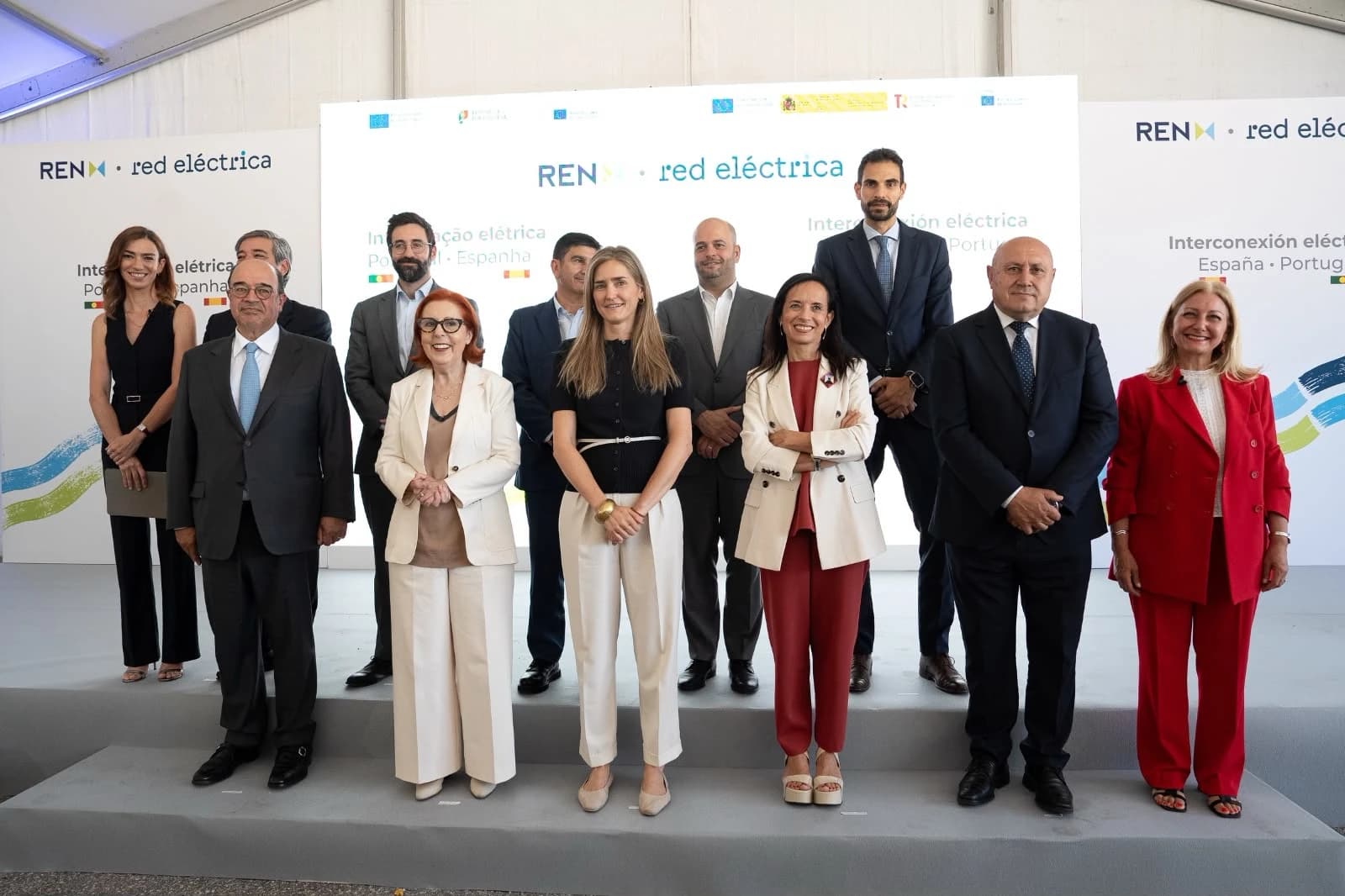
Spain and Portugal took a new step in the integration of their electrical systems with the commissioning of a 400 kV interconnection that increases the exchange capacity between both countries by 1000 MW and strengthens the energy security of the Iberian Peninsula.
The infrastructure, designated a Project of Common Interest (PCI) by the European Commission, connects the transmission networks via Viana do Castelo, Portugal, and the Spanish provinces of Pontevedra and Ourense. Its objective is to improve the flexibility of the electricity system, facilitate greater integration of renewable energy sources, and advance the consolidation of the Iberian Electricity Market.
With this addition, the total exchange capacity amounts to 4200 MW from Spain to Portugal and 3500 MW in the opposite direction , reinforcing the resilience of both electrical systems.
More capacity to integrate renewables
One of the main benefits of the project will be its impact on the energy transition.
According to official estimates, the new interconnection will allow the incorporation of an additional 281 GWh of renewable generation per year , avoiding the emission of approximately 113,000 tons of CO₂ annually .
The infrastructure also improves the system's responsiveness to contingencies and promotes a more efficient use of generation resources available in both countries.
During the inauguration, held in Arbo (Pontevedra), the Portuguese Minister of Environment and Energy, Maria da Graça Carvalho, highlighted that the interconnections "strengthen energy security, increase the resilience of the system and generate concrete benefits for consumers and competitiveness."
For her part, Spain's Vice President and Minister for Ecological Transition, Sara Aagesen, stated that the project represents "an advance in security of supply, competitiveness and sustainability" and constitutes an example of cooperation between the two countries.
A strategic infrastructure for the European Union
The new connection is part of the energy planning of Spain and Portugal and responds to the European strategy of strengthening electricity interconnections between Member States to accelerate decarbonization and reduce energy dependence.
The development was carried out by REN in Portugal and Red Eléctrica , a subsidiary of Redeia, in Spain.
In Portuguese territory, a new 68-kilometer line was built along with the Ponte de Lima substation, while in Spain the project included the Beariz and Fontefría substations, as well as new 400 kV lines connecting the border with the Spanish grid.
The investment exceeded 140 million euros between both countries and had financial support from the European Investment Bank, in addition to being part of the projects eligible for European funds linked to the Next Generation EU program.
Energy integration and regional development
Beyond the exchange of electricity, the infrastructure also seeks to boost the economic development of the border regions.
The expansion of the network will allow the incorporation of new renewable energy projects in Galicia and northern Portugal, as well as strengthening the electricity supply for industries, companies and future railway developments, including the Vigo-Ourense-Lugo-A Coruña axis.
During the development of the project, REN and Red Eléctrica implemented consultation processes with municipalities and local communities to minimize the environmental and social impact of the infrastructure.
In Spain, Redeia allocated around 1.4 million euros to energy efficiency projects, urban rehabilitation, sports infrastructure and digitalization in nine municipalities.
In Portugal, the project is also complemented by territorial compensation mechanisms provided for by Decree Law 18/2024, which will mobilize approximately 2.5 million euros for local development initiatives.
With this new infrastructure, the Iberian Peninsula strengthens a network considered key to absorbing greater renewable generation and moving towards a more integrated, resilient electricity system prepared to respond to the growing electrification of the economy.