Krelo Energy, the new renewable energy platform of the Promigas Group , which emerged after the acquisition of 100% of Zelestra's Latin American operations for approximately $1.1 billion , presented its expansion plan to 2030 in the region at the Future Energy Summit (FES), with Colombia as one of the strategic markets for photovoltaic development and energy storage.
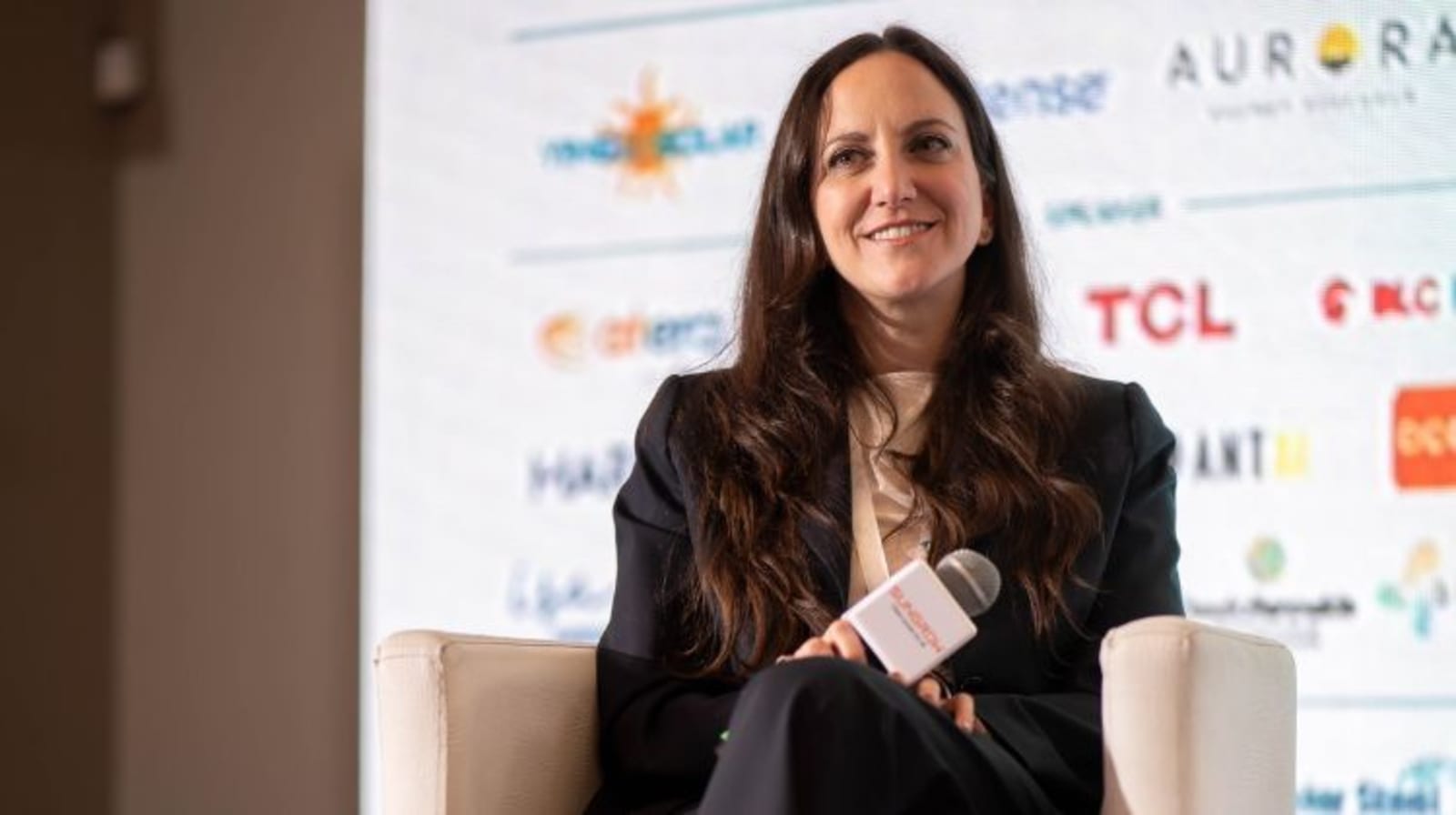
“Krelo is the new brand of the Promigas Group, uniting all the experience and operations that until very recently were known as Zelestra Latin America. It was created with the objective of combining our renewable energy expertise and strengthening our market presence,” explained Chiara Gasparrini, Vice President of Development for Latin America at Krelo Energy, during her participation in the Future Energy Summit (FES) Colombia 2026.
Regarding growth targets, the executive stated: “Our goal to support this is to have 3.5 GW in operation in the region by 2030, of which Colombia will represent approximately 700 to 800 MW.”
These figures include the La Unión and La Mata projects in operation, in addition to a new 100 MW park in the north of the country that "will begin its construction in the coming days," as anticipated at FES.

“To this we add a pipeline of 600 MW in greenfield solar projects. From the outset, we studied the option of battery storage, waiting for all the processes and conditions that the market needs to be enabled, as we see in Chile and Peru,” the executive stated.
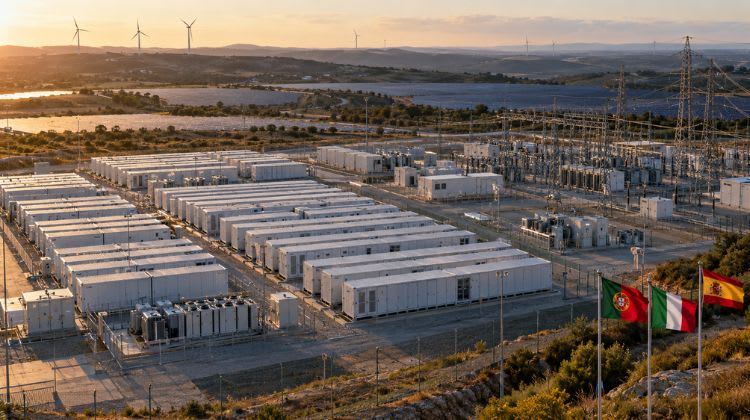
Krelo recently inaugurated Aurora, a solar and energy storage project in Iquique, Chile, which required an investment of US$224 million . The plant has 221 MW of installed capacity, 355,000 solar panels, and 204 battery storage containers , consolidating Krelo's presence in a market that the company highlights for its regulatory advancements in integrating these technologies.
The incorporation of these technologies is part of the company's regional strategy, although their deployment in Colombia is conditioned by the evolution of the regulatory framework and the existence of commercial mechanisms that allow monetizing the flexibility of renewable projects.
In that regard, he warned: “Storage serves to give stability and reliability to the system, but at the moment it does not have a clear remuneration or incentive scheme in Colombia.”
Relive FES Colombia here:
PPAs or new auctions? Krelo sets the conditions for investment
Beyond its project portfolio, Krelo Energy believes it is necessary to strengthen long-term contracting mechanisms in Colombia , through a combination of bilateral power purchase agreements (PPAs) and auctions that provide predictability for developers.
“ We need auction schemes that are also predictable, systems and timelines that can be repeated over time and that represent the possibility of standardized contracts with conditions that facilitate the financing of projects ,” Gasparrini said.
Continue reading
It's worth recalling that in August, Colombia held its long-term electricity supply auction , in which four companies won with six projects totaling 995 MW of solar power and 100 MW of storage. This latest tender set a precedent for energy storage in Colombia by incorporating battery systems into a long-term electricity supply mechanism for the first time.
On its first day, the mechanism allocated 270 MW of photovoltaic capacity and approximately 100 MW of battery storage , with a closing price of 315.87 Colombian pesos per kWh . The contracts will have a duration of 15 years, with supply beginning in 2030 , under a scheme that includes differentiated products based on delivery schedules.
“We saw with the results of the last auction that more projects are needed, and this means that we have to work on other enablers such as strengthening the transmission system network, so that it is consistent with generation,” added the Krelo representative.
Regarding commercial conditions, the directive identifies opportunities to make PPA contracts more flexible in Colombia , taking as a reference the markets of Chile and Peru, where there are modalities that allow differentiating the production and delivery times of electricity.
“ One option could be to have PPAs in dollars (which would be the dream of our sales team), but also to have PPAs with flexibility regarding the delivery and consumption time ,” he explains.
This possibility is relevant for photovoltaic developments with storage, since it would allow supply commitments to be met during peak hours, even at night, by using the energy stored in batteries.
However, Gasparrini warns that the Colombian market still lacks specific economic signals for this technology, despite its potential to bring stability and reliability to the electrical system.
“Having PPAs that cover peak hours would be a great advantage for the Colombian system,” he emphasized.
But the conditions for expanding renewable capacity are not limited to contracting and remuneration schemes. The company also warns of the need to strengthen transmission infrastructure and expedite the allocation of new connection points , so that network expansion keeps pace with generation growth.
Along these lines, Gasparrini refers to the progress associated with Resolution 358 and focuses on the effective implementation of mechanisms that reduce administrative times for developers.
“ We need to see that the one-stop shop is a real, continuous scheme that can offer a short-term response ,” the executive argues.
It also underlines the importance of working with institutions on permitting processes, with the aim of having a stable legal and regulatory framework that provides greater certainty for the execution of investments.
The economic challenge of energy storage persists even with regulatory advances. Although Colombia has specific mechanisms to remunerate certain storage systems designed to meet transmission and distribution needs, hybrid photovoltaic projects still face difficulties in accessing complementary revenue streams that would allow them to recoup their investment in batteries beyond electricity sales.
Finally, when asked about a wish for 2030, the company representative concluded: “I would certainly ask for a power charge for energy storage , which is what would make batteries viable in the short term. Storage is essential today, but looking ahead to 2030, I also hope for policies that enable Artificial Intelligence systems, data centers, and other demands that other countries in the region are already working on.”

 By Energía Estratégica

 By Ailén Pedrotti
 By Emilia Lardizabal
 By Florencia Guglielmetti