


In recent months, reports have emerged about a possible call for bids to incorporate up to 2100 MW in the country, through new electrical projects, with significant participation of photovoltaic solar technology.
While it should be clarified that the initiative has not been officially confirmed, the Ecuadorian Association of Renewable Energies and Energy Efficiency (AEEREE) believes the conditions exist to respond to this potential challenge.
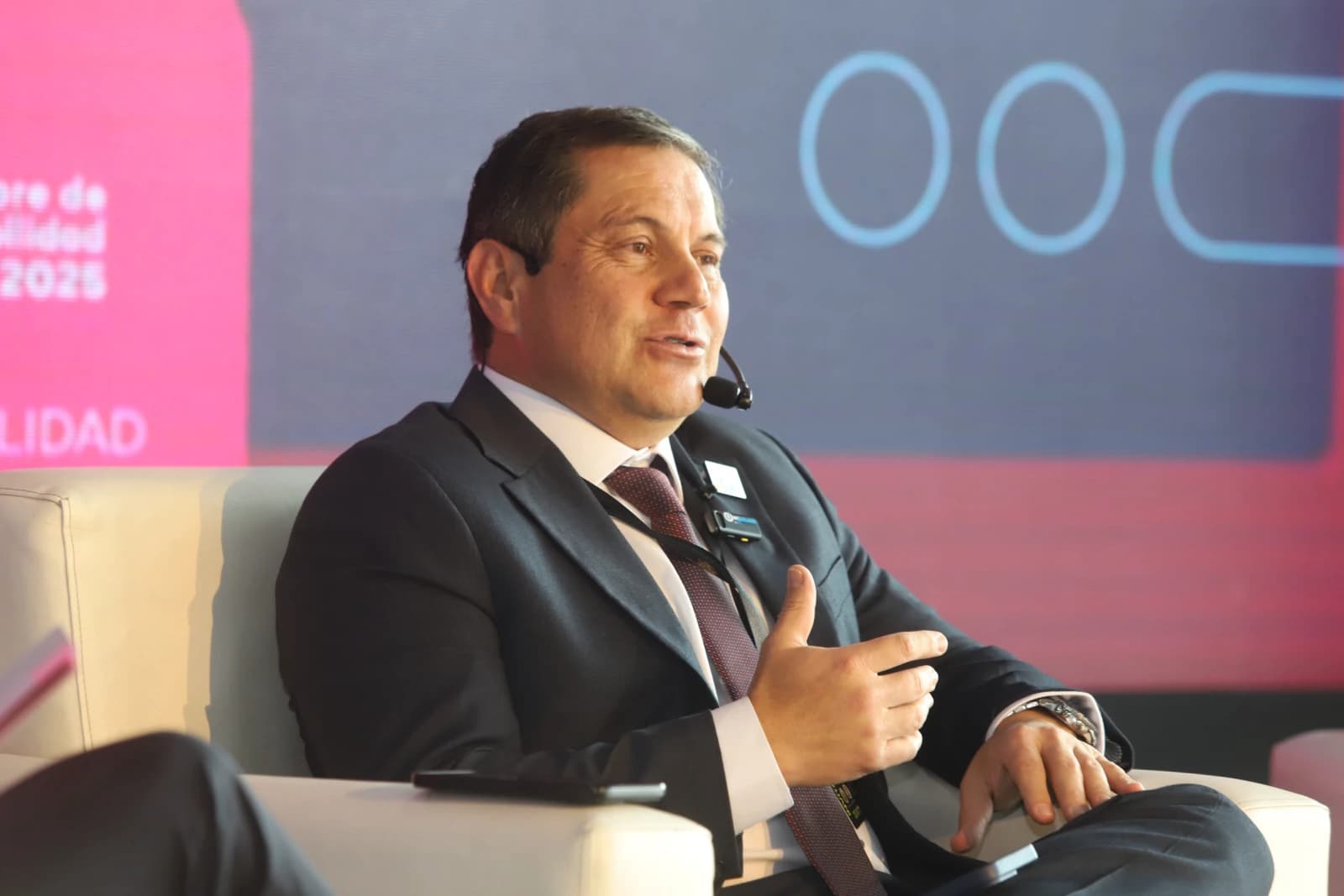
“We believe the market could gradually absorb a volume of that magnitude. There is appetite from developers and a significant potential portfolio of projects,” stated Eduardo Rosero Rhea , president of the Ecuadorian Association of Renewable Energies and Energy Efficiency (AEEREE), in an interview with Energía Estratégica.
It is worth remembering that, after years in which the market was perceived as closed, risky or not very dynamic for private investment, today the country seeks to accelerate the incorporation of new capacity and cover a gap that the Government set at 1,250 MW in two years .

In this context, the private sector is closely watching the design of the upcoming concession and contracting processes, as well as the possible activation of the trust announced for November , an instrument that the Government seeks to use to provide greater support for renewable investments.
The initiative is part of a broader strategy to incorporate private capital into a sector that for decades was dominated by the State, including a regulation that enables projects of up to 10 MW and another that expands the scheme for initiatives between 10 and 100 MW, with defined tariffs to incentivize private capital.
Likewise, despite the optimism, Rosero clarified: “Success will depend on adequate planning, long-term signals, and orderly execution that allows the electrical system to incorporate new capacity without creating regulatory or infrastructure bottlenecks.”
He added: “The sector requires clear rules, streamlined processes, legal certainty, transparent contracting mechanisms, and guarantees that allow access to competitive financing. Adequate institutional coordination is also essential to reduce processing times for permits, concessions, and interconnection.”
Ecuador, from exploration to project structuring
According to Rosero, the chamber is already observing a change in the behavior of national and international companies . The interest is no longer limited to preliminary discussions, but is beginning to translate into portfolio development, studies, and site evaluations.
“We have maintained contact with developers, investors and technology providers mainly from Europe, North America, Chile, Colombia and other Latin American markets, interested in segments such as solar photovoltaic generation, wind power, energy storage, energy efficiency and solutions for industrial self-consumption,” he explained.
The breadth of segments also shows that the Ecuadorian market is not only of interest in utility scale generation.
“Beyond specific names, which are often subject to confidentiality agreements, the relevant thing is that the market has moved from an exploration stage to a project structuring phase,” he said.
The interest Rosero describes did not arise in a vacuum. Ecuador had already identified in previous years a significant potential for attracting private capital to non-conventional renewable energies.
In fact, the updated Electricity Master Plan approved in 2021 projected the possibility of attracting investments of around USD 2.2 billion in photovoltaic, wind, geothermal, biomass and other technology projects by 2031.
There is also concrete evidence of investor appetite in previous projects. The El Aromo and Villonaco II and III projects, for example, attracted the interest of 22 companies from 10 countries and envisioned a 100% private investment estimated at USD 400 million during the construction phase.
However, these facts also explain the current caution in the market: Ecuador not only needs to generate interest, but also to convert it into enforceable contracts, financial closings, and projects underway.
Therefore, the discussion about a possible call for up to 2,100 MW is not limited to the volume offered, but to the country's capacity to arrange permits, concessions, guarantees, interconnection and long-term rules.
“It is important to note that large-scale capital is still waiting for definitive regulatory and contractual signals to finalize investment decisions,” the expert warned.
He concluded: “There is real and growing interest, but most investors are waiting for the concession and contracting processes to be consolidated in order to move towards financial closings and project execution.”