


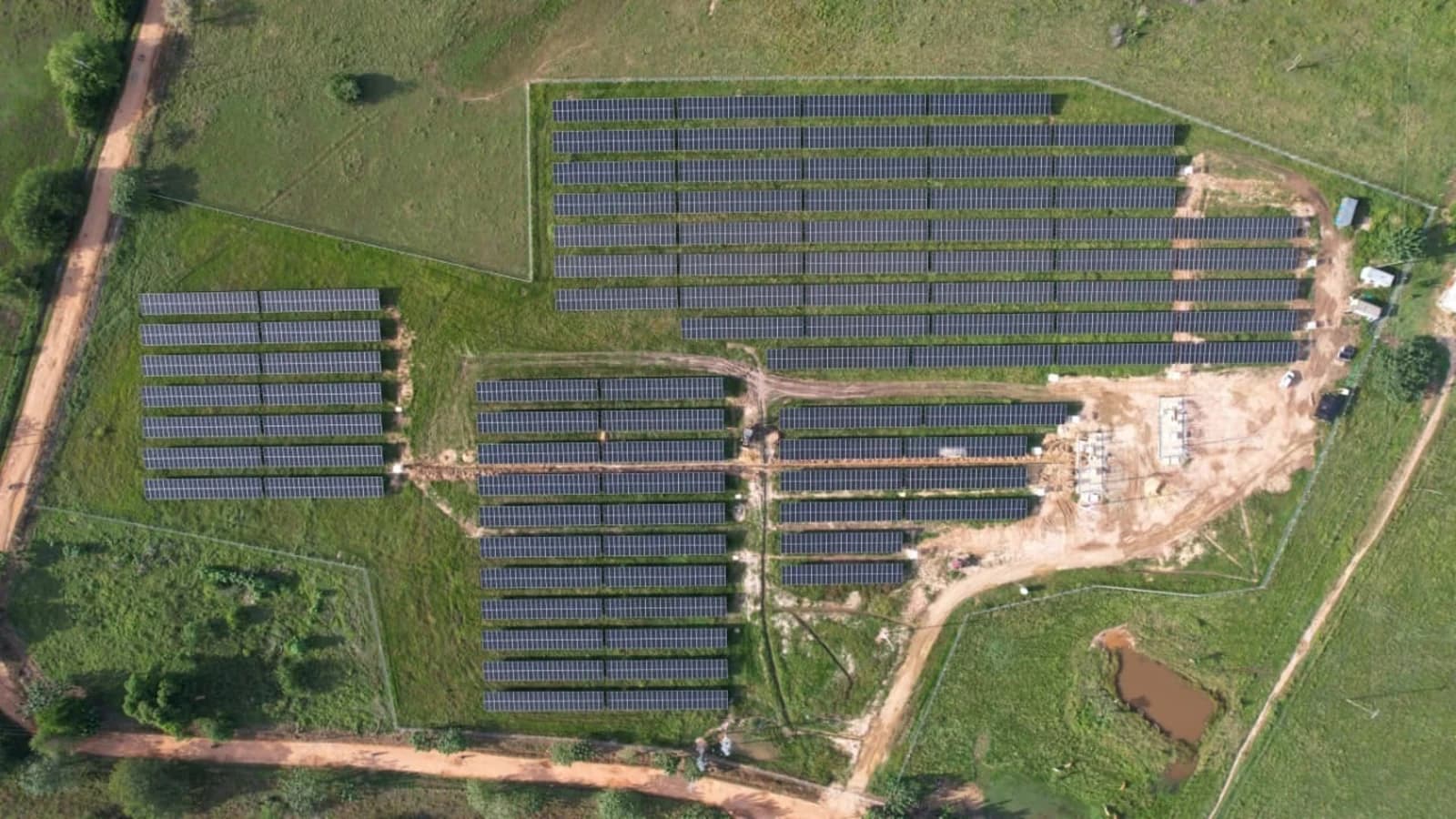
With the arrival of El Niño, reducing energy costs and achieving greater energy independence can be accomplished through the implementation of energy communities, an alternative that is already gaining traction in Colombia. An energy community is an organized group of users—individuals or companies—who voluntarily join together to generate, share, and use renewable energy efficiently. In practice, several users share the energy from a solar plant and benefit from operating their own system, resulting in lower energy bills. According to models and studies developed by Erco Energía, this mechanism can represent estimated savings of between 20% and 35% on the total energy bill. The result depends on several factors, including the user's current tariff, the plant's coverage area, the contract term, and the utilization of the generated energy.
Continue reading
A success story demonstrates the potential of the scheme.
A chain with 30 stores, located in the metropolitan area of the same city and served by the same grid operator, registers an approximate consumption of 194,000 kWh per month and a monthly bill of around $187 million pesos. In this scenario, the same chain of 30 stores, transformed into an energy community and equipped with a 990 kW solar plant, could produce approximately 160,000 kWh per month, equivalent to about 83% of the stores' consumption. The energy would be distributed among the 30 stores, while each would maintain its regular connection to the grid to purchase the remaining energy it needs. According to the simulation, the monthly bill could drop from approximately $187 million pesos to $133 million pesos, with a five-year contract, representing savings of around $53 million pesos per month, equivalent to 29%. With a ten-year contract, the estimated savings would rise to 32%, and with a 15-year contract it would reach 35%, under the assumptions used in the model.
A figure that already has a regulatory framework in Colombia
Energy communities are supported by a regulatory framework that has been consolidating in recent years. Law 2294 of 2023 incorporated this concept into the Colombian legal system, and Decree 2236 of the same year regulated the Collective Self-Generation (AGRC) and Collective Distributed Generation (GDC) schemes. Subsequently, UPME Resolution 501 of 2024 established, among other provisions, conditions related to power, the energy market, and the local distribution system. According to Felipe Basto, in charge of the development and implementation of energy communities at Erco Energía, “Currently, as of 2026, there are fourteen (14) registered energy communities in the country, according to XM data, which demonstrates their potential. Energy communities represent an alternative for companies or individuals seeking to reduce their energy costs, have greater predictability regarding energy prices, and advance the incorporation of renewable sources into their operations.” There are two models for energy communities: the PPA model, where a company like Erco Energía makes the investment, builds, operates, and maintains the plant, and the user sees savings from day one. There is also the EPC model, under which the user finances the plant, and a company like Erco Energía is responsible for designing, building, and operating it.
