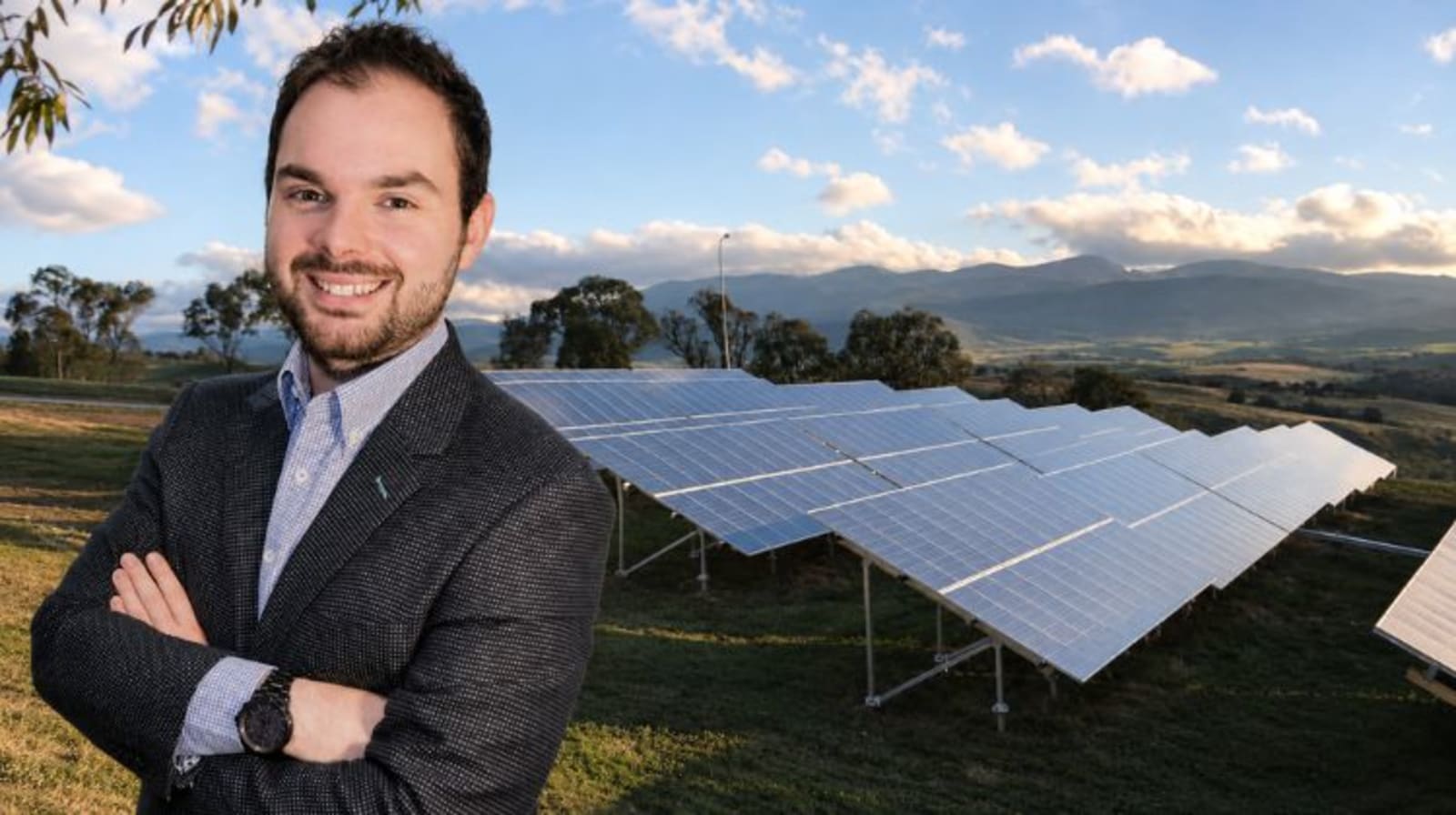
Clenergy closed around 180 MW of European photovoltaic projects during 2026 , distributed among six or seven countries, and seeks to consolidate its regional presence with double-digit growth in 2027 , relying mainly on continued business with its current customers.
This expansion comes in a market seeking new development opportunities, driven primarily by energy storage. According to SolarPower Europe, Europe added 36 GWh of battery capacity in 2025, a 48% increase over the previous year , and forecasts indicate that this figure will exceed 50 GWh in 2026—a trend that could encourage the integration of new photovoltaic capacity.
In a dialogue with Energía Estratégica , Ramón Ibarra Segura, representative of Clenergy , reveals how the company secures contracts against manufacturers with a longer track record, where it identifies growth opportunities, and why it considers it strategic to maintain its presence in Spain, despite the difficulties of the local market.
- We're approaching the end of 2026. How has this year been for Clenergy in Europe?
At Clenergy's European level, it's been a good year, especially at the utility scale. We've grown considerably. You could say it's been Clenergy's breakout year in Europe.

We have closed around 180 MW in different projects, distributed between six or seven countries , with all the technologies we have in our portfolio, both fixed structures and trackers.
- Of those 180 MW contracted, what weight did trackers have compared to fixed structures?
We could say that approximately 60% corresponds to trackers and 40% to fixed structures . In terms of revenue, the share of solar trackers is even higher, because they are higher-value products.
We could be talking about a 60%-40% ratio or even 70%-30%. We're happy with the results.
- And in which countries are they gaining the most presence?
We have closed projects primarily in Italy, Austria, and Germany . We also have operations in Hungary, have identified opportunities in Norway, and closed a project in the Netherlands.
- There's something interesting about these results: while the European market is going through difficulties, you are managing to grow.
We're not as established in Europe as other companies that have been operating here for 15 or 20 years. Therefore, our sales targets aren't as ambitious as those manufacturers'. We've identified opportunities that we could capitalize on and that will close this year. Perhaps some of those deals weren't as attractive to the competition.
Sometimes a company has five 300 MW projects, but that doesn't mean any of them will be for us. On the other hand, a developer with three 15 MW projects could be a client we could start collaborating with. That's why we look for partners and clients in a similar situation to ours, who are establishing themselves and with whom we can grow gradually.
- In other words, they don't necessarily look for the biggest projects, but rather those where they can actually compete.
Generally, bigger is better. There's an engineering aspect that, beyond a certain size, becomes scalable. From 10 or 12 MW onwards, it's practically the same working on a 12 MW project as on a 120 MW one.
We found a good range of work between 10 and 40 MW, because these projects tend to be easier to manage and involve faster business decisions. In many cases, clients have greater decision-making power and don't need to go through such complex due diligence processes. This speeds up operations.
- Clenergy competes with manufacturers that have been in Europe for many years. What ultimately tips the scales in their favor?
I believe the difference lies in the European team and the support we offer throughout each project. We have a good product, but the reality is that technology is increasingly becoming a commodity.
Manufacturers offer relatively similar solutions. Therefore, the difference lies in how you approach each opportunity, whether you address the client's concerns, and whether you dedicate time to optimizing the project.
- Ultimately, a commercial difference that may seem small ends up defining a contract.
Ultimately, we're talking about a 2-3% difference between winning a project or not. Often, this difference is achieved by studying the project in detail.
We've been able to identify opportunities where we can allocate engineering resources, something our competitors might not do because their teams are focused on other markets or projects. Pre-sales, sales, and after-sales service are also crucial. Ultimately, it's the people and the relationships with decision-makers that can tip the scales.
- Battery hybridization is gaining prominence in Europe. Is this changing the needs of photovoltaic developers?
Structurally, no. From a technical standpoint, we don't see any significant changes. The addition of batteries hardly modifies our structural solutions. What does change are the project development timelines, because hybridization requires more processing time.
- So the challenge is not so much in adapting the structure, but in sustaining a commercial offer for increasingly longer periods.
The main challenge is maintaining prices over increasingly longer periods. From the initial quote to the completion of a project, a year or even two can pass.
Continue reading
When hybridization is involved, it becomes even more difficult to know how long it will take. Therefore, the challenge is not so much technological as commercial: maintaining a competitive offering while projects move toward completion.
- In addition to solar structures, Clenergy also offers battery solutions. What is their current market share?
Globally, non-structural business lines represent approximately 10% . They have a larger share in Australia, particularly due to batteries and some cable management solutions. This is also the case in certain Asian markets. We have battery solutions developed for the UK, but they are still undergoing certification.
In Europe, approximately 99% of the business is related to solar structures. For now, our European focus remains on structures.
- Let's talk about Spain. It's one of the major European photovoltaic leaders, but the pace of contracting doesn't seem to be keeping up with other markets.
In Spain, we see very few interesting opportunities that could be finalized during the next year. I'm not saying there aren't any, but those we do find tend to be very large projects, where many companies are competing.
We're going to compete for them, but we're realistic. In some cases, existing business relationships may favor manufacturers who have been in the market for 20 years.
We know the state of the Spanish utility market; it's stagnant. You won't find anyone who'll tell you it's doing well. Projects aren't moving at the pace people expected. It's one of those trough periods the sector has already gone through several times.
- However, Clenergy maintains its presence in Spain
Because the main photovoltaic companies are Spanish. Even though the local market isn't doing well, these companies continue to develop projects in other countries. There are Spanish EPC companies working in Italy, the UK, and Ireland. There are also many companies that are now very focused on Mexico.
That's why it's important to maintain a presence in Spain. The international activity of Spanish developers remains relevant to the European business , regardless of what happens with projects within the country.
- Given this scenario and looking ahead to next year, what are your expectations for 2027?
The goal is to continue growing, even though we know the market is experiencing a downturn. We have a high probability that the clients we've partnered with this year will return. In fact, some already have.
- In other words, some of the growth could come from the same customers, but with larger capacity projects.
Our strategy is to start working with smaller developers and EPCs and grow alongside them.
A client with a 10 MW project this year might have a 15 or 20 MW project next year. So, even while maintaining the same number of projects, we can significantly increase the contracted volume .
- Let's get down to specifics. What growth rate do you consider reasonable for next year?
Our goal is to maintain a double-digit growth path, although we are still internally defining the targets for 2027.
Beyond the numbers, our priority is to ensure our current clients continue to trust Clenergy and work with us again , while also building new business relationships. We want to consolidate the portfolio we've built in Europe and continue growing alongside these developers.
- That growth will also require more resources. I understand they are already preparing for acquisitions in Europe.
Yes. We have open positions, especially for sales roles in Italy and Germany . We're also looking to strengthen our after-sales team, because the more projects you have, the more resources you need to support them.
We recently added a person dedicated to the rooftop business in Spain.
Furthermore, our vice president has moved to Germany, which demonstrates the company's commitment to the European market.
- To conclude, what message would you leave regarding Clenergy's commitment to the European market?
Our commitment to Europe is clear and unwavering. We want to continue establishing ourselves, expanding our team, and working with the clients who already trust us.
Looking ahead to 2027, Clenergy aims to consolidate its European position with double-digit growth expectations , primarily driven by customer loyalty and the continuity of existing projects. The company also plans to strengthen its sales and after-sales teams, particularly in Italy and Germany, to support its expansion and solidify long-term relationships with developers in the region.
 By Ailén Pedrotti
 By Energía Estratégica
 By Emilia Lardizabal