Spain has just modified one of the rules that most condition the development of new electricity demand: the lack of firm capacity at a node will no longer necessarily mean being left out of the grid .
The National Commission for Markets and Competition (CNMC) approved the specifications for flexible access permits for facilities connected to both distribution and transport, developing a figure contemplated in Circular 1/2024 that now incorporates specific technical operating conditions.
The resolution will allow power to be granted when the system cannot guarantee supply during all hours of the year, provided that the consumer accepts previously defined limitations or can modify their demand in response to the needs of the managers.
There is one fundamental condition: this alternative can only be granted when there is no firm capacity available at the node .

For storage, the impact goes one step further.
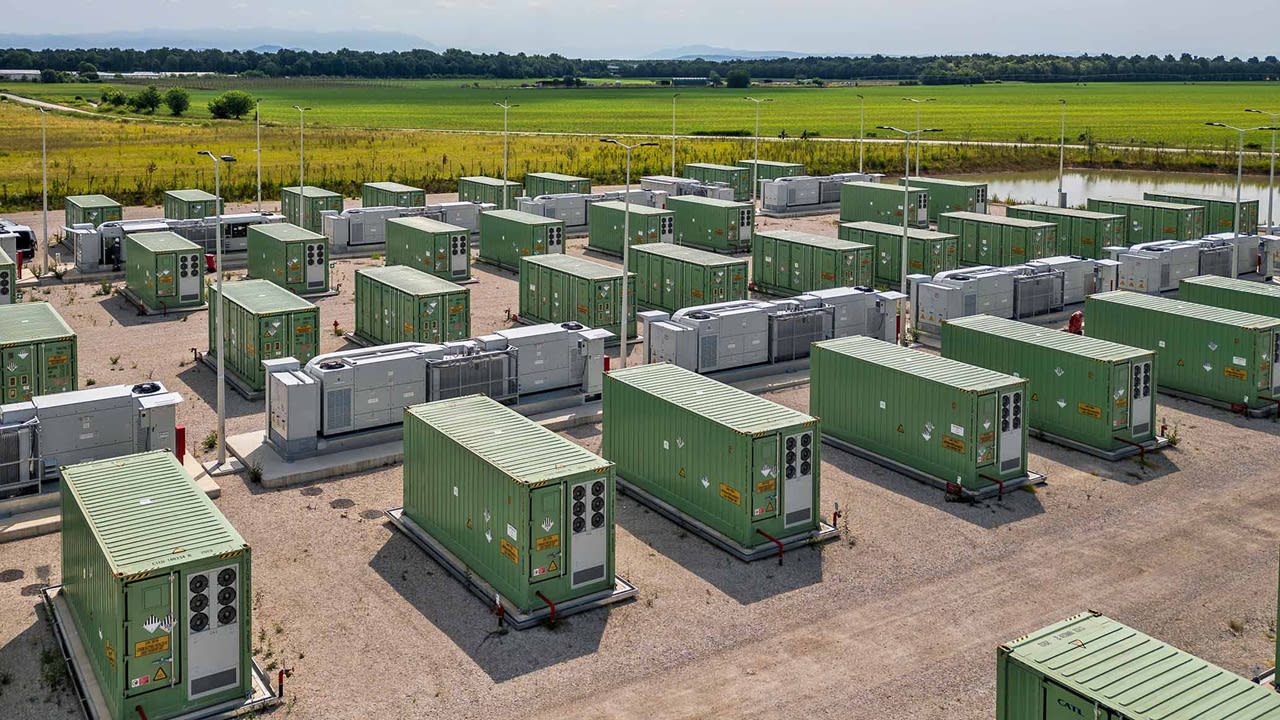
Access requests related to battery operation in demand mode must be analyzed under this flexible framework. This introduces a specific logic for an asset that, precisely because of its ability to shift consumption over time, can adapt its load to the conditions of the electrical infrastructure.
The change also comes at a time of significant growth in the Spanish portfolio.
A survey conducted by Energía Estratégica on the files published in the Official State Gazette (BOE) in July identified storage in 23 of the 55 energy actions , about 42% of the total , compared to 18 of 63 registered a month earlier.
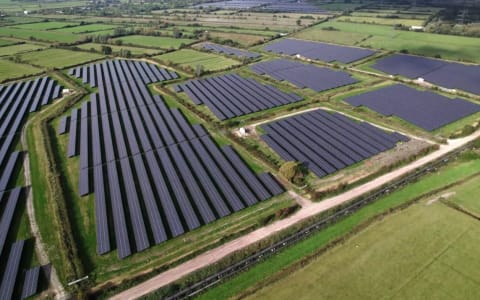
The dominant combination was photovoltaics with batteries, present in 17 cases, while four others corresponded to independent BESS and two integrated storage along with more than one renewable source.
In Alcalá de Guadaíra alone, six developments that obtained prior administrative and construction authorizations have a combined capacity of 278.4 MW of solar power and 237.6 MW of storage .
The administrative leap, however, coexists with the other side of the market: seven withdrawals identified during July represented just over 405 MW .
The signal makes it clear that having projects in the planning stages does not guarantee their completion. Access, connectivity, network availability, and revenue continue to be part of the equation that determines which projects will actually be built.
From time windows to real-time orders
The regulation creates four types of flexible access , differentiated by the way in which the consumer must adapt their use of the network.
Type 0 uses predetermined time patterns.
Flexible power can only draw electricity within authorized windows. Outside of these windows, consumption associated with the permit must be blocked.
Until the CNMC approves new profiles, the initial scheme contemplates operation between 00:00 and 07:59 and between 11:00 and 17:59 . Subsequent patterns must allow for an expected usage equivalent to at least 62.5% of the hours in a year .
In terms of storage, this modality introduces a way that is especially compatible with the possibility of shifting the load to periods where there is more available margin.
Type 1 replaces the fixed schedule with an operating condition linked to contingencies. The distribution manager will be able to remotely disconnect the facilities when the unavailability of certain elements compromises safety criteria.
The study will have to estimate that the consumer will be able to operate for at least 90% of the annual hours , although this percentage represents an expectation and not a guarantee of supply. Capacity under this model will also not be able to grow without limit.
The flexible capacity affecting a single transmission node will have a maximum of 300 MW and may not exceed 20% of the maximum firm capacity allocated there. Furthermore, no more than three facilities may be linked to the unavailability of the same element.
The technological leap appears with type 2 , reserved for flexible power above 1 MW connected to distribution.
Continue reading
These facilities must have the capacity to receive instructions, adjust load, and be remotely disconnected when safety conditions require it.
The difference lies in the timing.
In the case of a preventative restriction, the consumer will have up to 30 minutes to adjust their consumption. If the order is corrective, they must respond immediately or within three minutes .
If the instruction is not executed within the established timeframe, the manager will be enabled to proceed with remote disconnection.
This modality makes modulation capability an operational access condition and opens up an alternative for large batteries and other energy-intensive consumers capable of reacting quickly without requiring permanent reinforcements to cover their maximum demand.
Type 3 , finally, will be applied to the transport network.
Holders will have to exchange information in real time with the system operator, participate in the automatic power reduction mechanism, and have the technical capacity to bring the flexible fraction of their consumption to zero when a reduction order is activated.
BESS will also have to convert permits in Spain
The resolution is not limited to new projects. Storage facilities with existing demand access must be progressively adapted to the flexible regime.
Developments that are not yet operational will have a three-month window from the launch of types 0 and 1 to request conversion.
When type 2 can be used, those projects that meet its requirements will again have three months to migrate to that modality.
These modifications will take priority over new requests as long as they do not increase the power previously granted or change the node under study.
The decision is also not indifferent from an economic point of view.
Storage facilities that do not update their permits within the established deadlines may lose certain exemptions on charges and tolls and, in some cases, be required to pay the capacity reservation fee.
In transport, existing BESS facility permits will be automatically considered flexible, without the need to initiate a conversion.
Spain's bottleneck shifts from regulation to network control
The resolution will take effect on September 1, 2026 , although its implementation will be phased in. Options 0, 1, and 3 can be requested six months later.
Type 2 will depend on each distributor having the necessary visibility, communication and control tools, with January 1, 2028 as the maximum limit.
This means that regulatory openness does not equate to immediate availability.
Managers will have to develop real-time information exchange mechanisms, enabling and testing procedures, systems capable of implementing reductions, and criteria for distributing restrictions when several facilities experience the same congestion. They will also need to make progress in certifying intelligent power management systems and define how to address non-compliance.
Initially, type 1 and 2 permits will be restricted to connection points of 30 kV or more , although the threshold will subsequently be reduced to above 1 kV once the operating procedures have been adapted.
The move takes on special significance in a market where warehousing is gaining administrative volume, but still needs to demonstrate how much of that pipeline ends up being converted into commercial assets.
The 23 battery storage projects registered in July alone show that investor appetite already exists. The new regulations attempt to address another piece of the equation: how to connect part of that demand without designing the grid to simultaneously guarantee all the power requested during every hour of the year.

 By Florencia Guglielmetti
 By Energía Estratégica

 By Matías Medinilla
 By Ailén Pedrotti