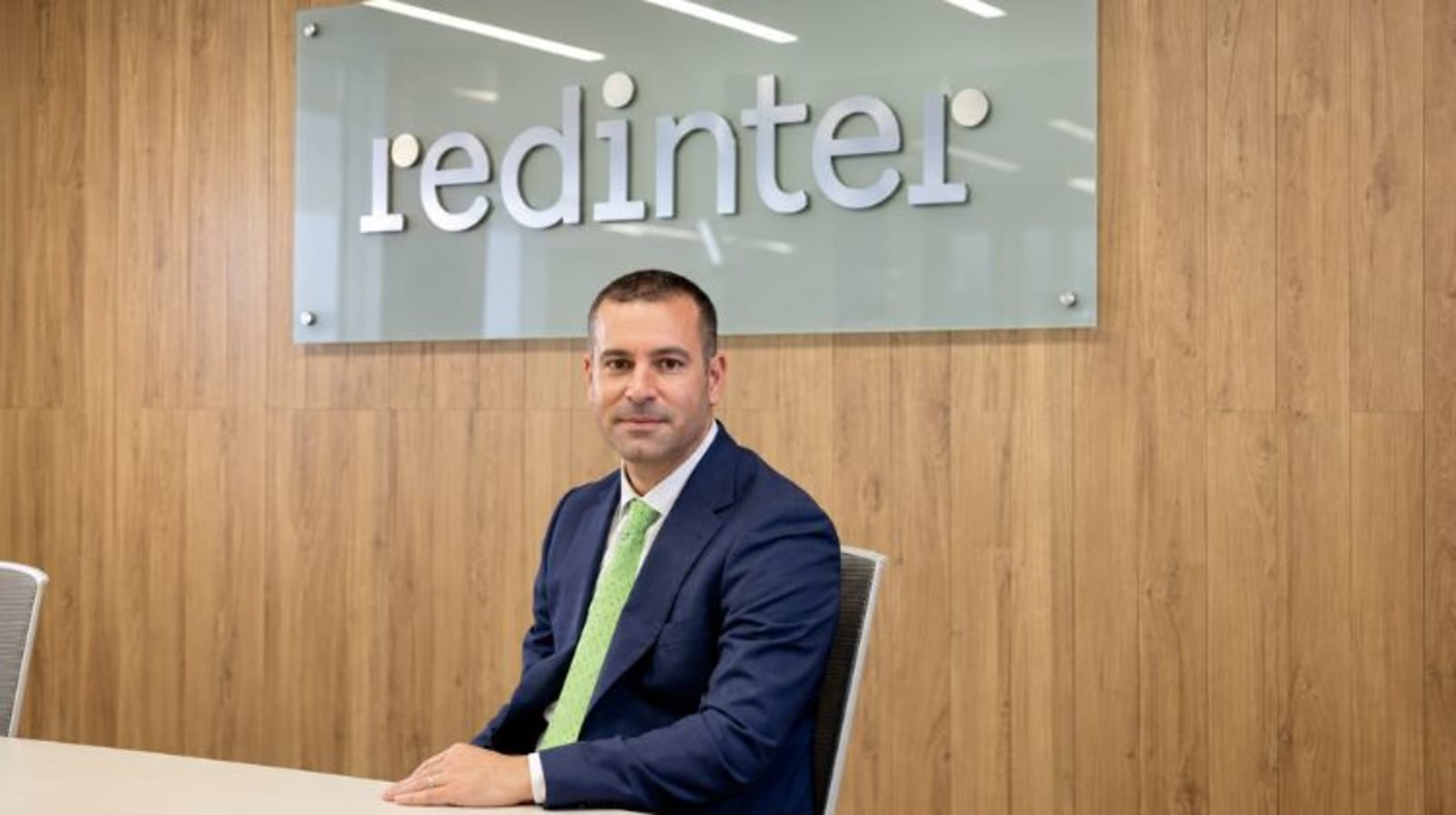
After launching an international tender for USD 4.74 million for a transmission project in Chile , Redinter is putting forward new development opportunities in the north of the country, from reinforcing existing circuits to a possible electrical interconnection with Peru , while also calling for regulatory changes to accelerate the expansion of the networks.
This was stated by David López, Country Manager of Redinter , during his participation in the panel on public policy priorities at the Future Energy Summit (FES) Chile 2026 , where he identified anticipatory planning, supply resilience and certainty about investment remuneration as fundamental pillars for the development of the sector.
The company, which has 1,700 kilometers of transmission lines from Copiapó to Arica and 45,000 kilometers in Spain , believes that electrical infrastructure must anticipate economic growth and not just respond to existing demand.
"And why not, now that it seems to be increasingly being discussed, not only with Peru but also with Bolivia and Argentina: it would be a dream to be able to eventually achieve, in our case because we are located in the Parinacota area and in the north, the interconnection between Chile and Peru," López stated.

The statement places the binational link among the broadcaster's aspirations, although the executive does not announce a formal project, a committed budget, or an implementation schedule.
Beyond its eventual participation in an international connection, Redinter identifies new actions to strengthen the electrical infrastructure of Arica and Parinacota , an area where it warns of operational difficulties that affect the quality of supply.
The interest in these expansions coincides with the bidding activity that the company is carrying out in northern Chile.
As reported by Energía Estratégica, on October 9, Redinter announced an international public tender with a reference investment of US$ 4.74 million , corresponding to the new 1x220 kV line reactor Nueva Pozo Almonte–Roncacho, located in the Nueva Pozo Almonte substation.
The initiative contemplates the awarding of the exploitation rights of an expansion work included in Exempt Decree No. 266 of 2024 , under the provisions of Law No. 21,721 and Exempt Resolution No. 98 of 2025.
The process allows the participation of national and international companies, both individually and through consortia, in accordance with the conditions established in the competition rules.
The infrastructure includes the incorporation of a reactor intended to allow the energization of the line at the Nueva Pozo Almonte end, along with the connection facilities and the technical adjustments necessary for its commissioning.
New routes for Arica and the possibility of connecting Chile with Peru
During FES Chile 2026, López identified the quality of supply in Arica and Parinacota as one of the issues that should take center stage in the upcoming planning processes.
"We are currently tendering for a reactor there. It is an area that has two 220 kV transmission lines that supply the city of Arica Parinacota, and that substation is actually only supplied by one line because there are difficulties in maintaining the voltages when the other one is in service," he explained.
The Redinter representative mentions that this reactor was an industry initiative, aimed at facilitating the operation of both lines and improving the city's supply indicators.
The intervention described for Arica should not be automatically confused with the Nueva Pozo Almonte–Roncacho project, since López does not expressly identify both developments as the same action.
In addition to this technical solution, the company intends to promote the installation of second circuits on existing transmission infrastructure , with the purpose of strengthening the reliability of the regional supply.
"And that's also where we want to keep pushing: we would like to propose the development of the second circuits that are currently in the existing infrastructure to reinforce that quality of supply, which I think is fundamental," the Country Manager pointed out.
The proposal seeks to leverage existing facilities to increase the network's operational capabilities, although the executive does not specify which sections would be involved, their additional capacity, or the necessary investment.
In this context, López stated: "Ultimately, the development of the system should not only consider criteria of purely economic benefit, but also what quality of supply the country wants to have in each place."
Redinter's position thus introduces a discussion about the criteria used to prioritize investments: how to address the needs of regions that require greater security of supply, even when the benefits of an action are not reflected solely in economic terms.
In parallel, the possible interconnection with Peru appears as an opportunity for integration that transcends the strengthening of the Chilean system.
According to the executive, the realization of a link between the two countries would have a significance that exceeds the financial return of the infrastructure, due to its potential implications for the energy development of the region.
Continue reading
Networks Law: Redinter warns about the cost of not anticipating infrastructure
Beyond the specific projects, López believes that the development of Chilean transmission faces some structural difficulties.
“What we see is that what is delaying the development of the networks the most has to do with the lack of synchronization between the planning processes, the deadlines set in said processes, the deadlines for managing sectoral and environmental permits, the alignment with the execution of the works and also the certainty about the return that the private company, the investor, receives from those works,” the executive pointed out.
Faced with this scenario, Redinter identifies in the Networks Law an opportunity to modify the criteria that determine when and how transmission investments should be executed.
The first change it proposes is to move towards anticipatory planning , capable of considering different scenarios of economic and energy development, assigning probabilities to them and evaluating both their benefits and the risks associated with their eventual materialization.
The company argues that this approach would allow consideration of the cost of not having sufficient infrastructure when new industrial demands or generation projects arise.
"We understand that it's not about overinvesting, but we also recognize that the opportunity cost of underinvesting often outweighs the risk of having an infrastructure that may not be operating at 100% of its capacity," López warned.
The approach is relevant for an electricity market in which the expansion of renewable generation, storage and new industrial consumption requires increasing coordination with transmission networks.
"We ultimately see that the transmission network is an enabler of wealth, a backbone of the country, an element that, when developed, attracts growth, attracts wealth, and also equalizes regions and opportunities," he argues.
As background, López recalls the interconnection between northern and central Chile , the realization of which allowed for the creation of conditions for the subsequent growth of photovoltaic generation.
As he explained, before there was any certainty about that infrastructure, solar projects in the north were practically nonexistent. However, the prospect of having that connection fostered exponential growth in the sector.
For Redinter, this case demonstrates the importance of networks arriving before certain productive investments, instead of developing only when new demand is already established.
This reasoning also explains the interest in promoting future international interconnections and strengthening existing corridors in the far north of the country.
The second focus of the company's plan is the reform of the processes for pricing and valuing transmission facilities , with the aim of providing greater predictability to the income of investing companies.
López warns that the costs of goods, services and financing have registered significant increases, a situation that is especially important for capital-intensive businesses with long investment recovery periods.
"We are investors who invest large volumes of capital and also recover our investment in the long term, and that is what we need: to have certainty in the long term that the investments are eventually recovered and that a return is received in accordance with the risks we assume," he explained.
Consequently, Redinter seeks to ensure that regulatory mechanisms guarantee more stable and predictable revenue streams , capable of reflecting the risks associated with the construction and operation of new infrastructure.
The company's objective is to reduce financial uncertainty in projects that require significant initial outlays, but whose economic recovery is spread over several years.
The proposal is also linked to planning and bidding times, since greater coordination between the different stages could help reduce the gaps between the original economic forecasts and the actual execution conditions.
Looking ahead to 2027 , López expresses his expectation of having a new plan that more decisively incorporates resilience and quality of supply, facilitating the development of works needed for the regions.
However, the executive does not present an overall investment budget or implementation dates for the proposed second circuits or a possible interconnection with Peru.
At the close of his participation in FES Chile 2026, the Country Manager summarized his priorities in two issues: the Chile-Peru interconnection and the reform of the pricing and valuation processes .
Ultimately, the challenge identified by the broadcaster is not limited to expanding the installed capacity of the networks, but to determining how far in advance the works should be developed and under what economic conditions they can be completed , in order to support the energy and industrial growth of Chile.
RELIVE FES CHILE HERE:
Following its stop in Chile, the Future Energy Summit (FES) will hold the final event of its 2026 international tour on November 5th in São Paulo, Brazil. The event will bring together leading figures in the sector, from companies such as CATL, Huawei, Statkraft, CTG Brasil, Acciona Energia, and Casa dos Ventos , along with investors and industry associations, to analyze investment opportunities in renewable energy, energy storage, and upcoming electricity auctions. The event will take place at the InterContinental São Paulo Hotel, against a backdrop of anticipated contracting for BESS systems and the expansion of the Brazilian energy market.

 By Emilia Lardizabal

 By Energía Estratégica

 By Florencia Guglielmetti

 By Matías Medinilla