Panama's electricity reform still needs to incorporate rules to remunerate energy storage systems, enable energy aggregators, and develop local markets that expand investment opportunities. These are some of the changes Rosilena Lindo Riggs , former National Secretary of Energy and current COO of Rosedan Energy Consulting, is calling for in light of the progress of Bill 705 in the National Assembly.
In a dialogue with Energía Estratégica , the specialist argued that the proposal, aimed at strengthening oversight and improving the quality of supply, does not contemplate sufficient transformations to accompany the energy transition.
“Its scope continues to focus predominantly on correcting distribution service failures and recapturing economic rents, leaving fundamental reforms towards modernizing the system pending,” he stated.
The initiative, which amends Law 6 of 1997, was approved in its first debate on October 6, after the Committee on Commerce and Economic Affairs analyzed approximately 115 proposed amendments . Its consideration in a second debate is still pending.
Among the aspects that should be incorporated, Lindo Riggs proposed the legal recognition of batteries as an independent complementary service.
“The electricity market urgently needs a tariff system for firm power remuneration, frequency control, flexibility, and line decongestion through large-scale batteries,” he said.
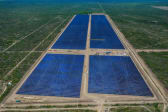
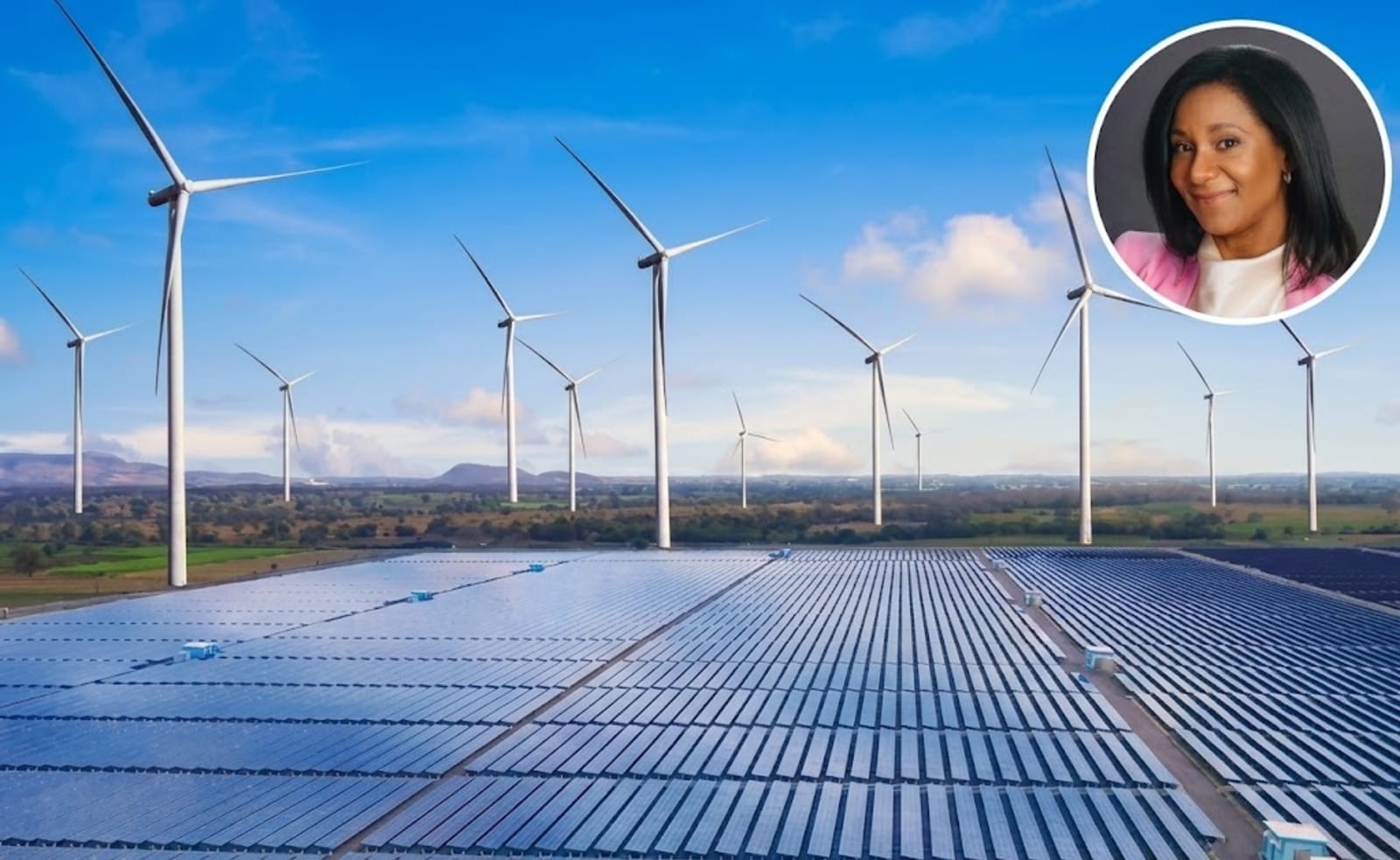
This proposal is particularly relevant in a system that, as of August 2026, had 5107.29 MW of installed capacity , of which 770.65 MW corresponded to photovoltaic generation and 336 MW to wind farms , according to the National Authority of Public Services (ASEP). These two technologies represented 21.67% of the national power capacity .
The former official also proposed incorporating virtual aggregators and advanced demand response schemes, in addition to implementing regulatory sandboxes to test new contracting methods and network usage charges.
“This would encourage diversification and bankability beyond traditional tenders, as well as contribute to decongesting the main transmission system,” he explained.
Another component of their proposal is to facilitate the integration of distributed resources and the creation of energy communities.
In this segment, Panama is experiencing significant growth. According to ASEP, photovoltaic self-consumption exceeded 207 MW in March 2016, with 7,654 customers connected , compared to just 4 MW in 2015.
Legal certainty and limits to generation
Although the reform seeks to preserve the contractual periods in force until October 2028, Lindo Riggs identified risks associated with the recognition of investments made by the distributors.
In particular, he mentioned the modifications to Article 101, which introduce criteria on useful and effectively used assets, along with regulatory targets for non-transferable losses.
“This article requires having methodologically sound technical prudence criteria before the tariff periods, so that there is no misalignment between the executed CAPEX and the recognized tariff base,” he said.
Another point of discussion is the 30% limit for new generation licenses and concessions , a measure aimed at reducing concentration and favoring the entry of independent developers and medium-sized capital.
Continue reading
However, the former secretary warned that this restriction “could also hinder the expansion of actors with the capacity to finance at scale and discourage potential project mergers.”
In this way, he considered it necessary to balance competition measures with the conditions that companies require to expand their participation and finance larger-scale developments.
Who should finance the new networks
Another point raised concerns the model used to finance infrastructure improvements, especially given the growth of large electricity consumers.
The challenge is also reflected in transmission investments. ETESA reported that the expansion of capacity on the Veladero–Panama I and II lines involves more than B/.130 million , within its system strengthening program.
“The financing of the modernization of the electricity grid cannot continue to fall blindly on the volumetric tariff of the regulated end user,” Lindo Riggs warned.
To modify that scheme, he proposed moving towards dynamic tariffs and network credits that recognize the contributions of users capable of offering flexibility or relieving the load on transformers.
“We have to separate the wire from the electron,” he summarized.
The specialist illustrated her point with the infrastructure needs that data centers and other high-consumption activities could generate.
“If a company needs to double the capacity of a substation, that asset should not be included in the general tariff base, but rather considered as a dedicated connection asset financed by the private developer and amortized over the long term,” he explained.
He also mentioned the possibility of using climate funds and non-refundable contributions to co-finance smart grids, advanced measurement systems and digitization, without automatically passing those costs on to the regulated tariff.
The structural reforms that are still pending
Lindo Riggs compared Project 705 to an energy transition legislative initiative he worked on during his tenure, which ultimately was not presented.
“I believe it would be valuable for Panama to have a comprehensive framework for storage and flexibility; to gradually separate energy distribution and retail marketing activities,” he said.
He also considered it necessary to "adapt the economic dispatch rules of the National Dispatch Center to facilitate the increase of a higher penetration of variable renewable sources."
Among the pending issues, he identified the simplification of procedures for developing sustainable rural microgrids in communities without access to electricity and greater institutional participation of the National Energy Secretariat, through a permanent seat on the Cabinet Council.
The legislative discussion thus opens the possibility of incorporating instruments that not only improve the provision of the service, but also establish new conditions for the participation of developers, technology providers and investors in the Panamanian electricity market.
 By Emilia Lardizabal


 By Energía Estratégica
 By Florencia Guglielmetti