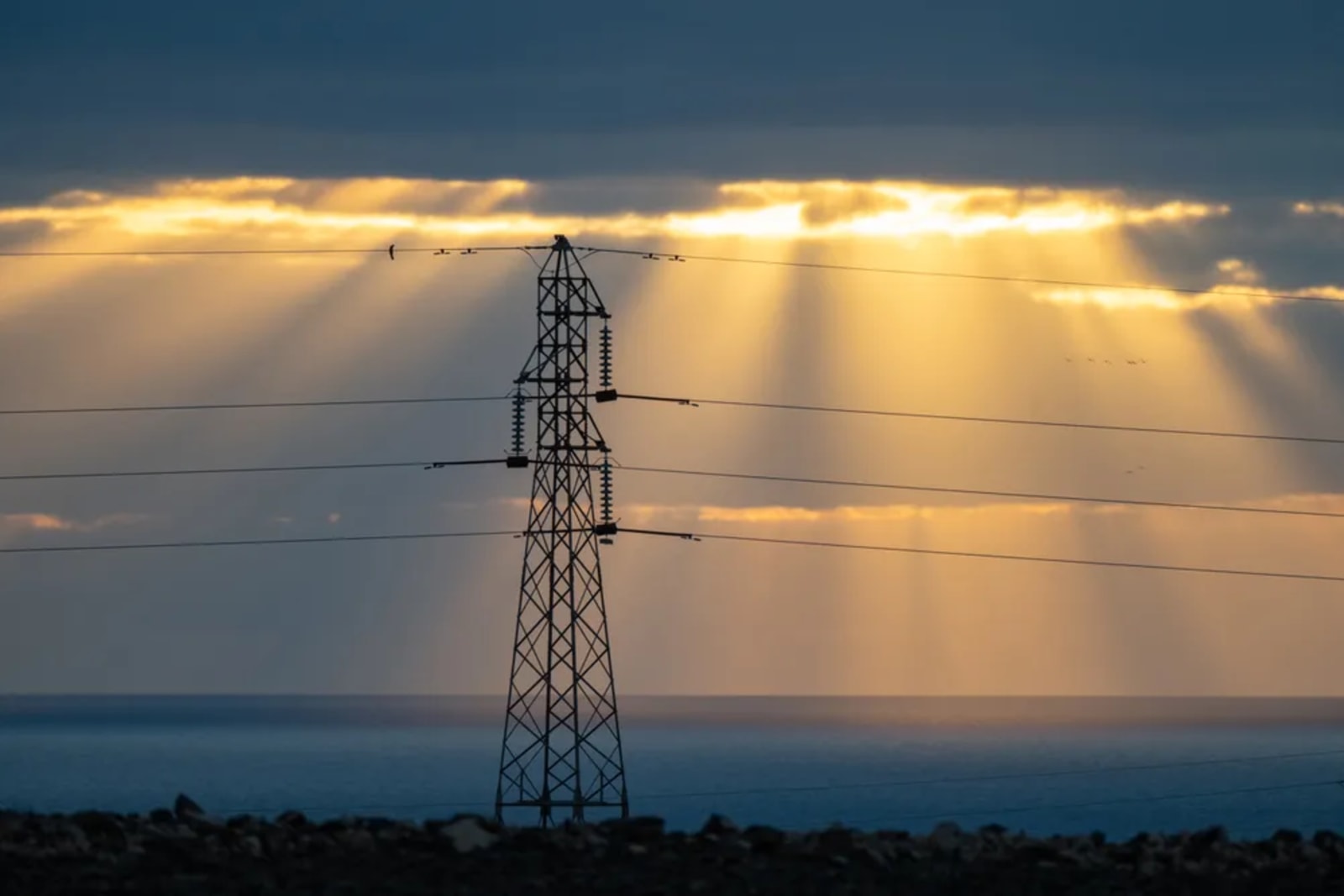
The distribution of the 38.7 million euros associated with the restoration of the electricity system after the blackout of April 28 and 29, 2025 opens a new front between the regulator, the suppliers and the consumers.
The resolution from the National Markets and Competition Commission (CNMC) establishes the criteria for settling these costs, of which €9.1 million had already been paid and approximately €29.6 million remained outstanding . Most of these costs will ultimately be passed on to consumers.
According to Alberto Hernández Vázquez , Deputy Director General of Neuro Energía , the decision conflicts with the principle of causality that governs the electricity sector.
“The consumer had no responsibility whatsoever for the power outage: it was a systemic event, completely unrelated to their behavior,” he stated in declarations to Energía Estratégica .

The company had already formally challenged the mechanism during the hearing process. Its argument is based on the fact that the lawsuit did not cause the incident and, therefore, it should not automatically bear its financial consequences .
The resolution itself acknowledges, according to Hernández Vázquez, that the event that generated the costs was beyond the consumers' control. The debate thus shifts from the total amount to the party responsible for financing it.
Part of the expenditure corresponds to electricity consumption during the recovery process and, under that logic, can be attributed to demand. However, the final amount increased due to the extraordinary nature of the replacement.
The restoration required a proportionally greater participation of synchronous power plants than in an ordinary situation , raising the cost necessary to rebuild the system after the power outage .
Neuro Energía argues that this exceptional component should be covered through the General State Budget , following the treatment applied to other extraordinary costs of the system.
The CNMC did not rule out that possibility as inappropriate, but rather indicated that it lacks the authority to implement it. The decision would therefore fall to other government bodies.
“What we are asking is that this channel be set up by those who have the authority to do so, so that the cost does not fall on the consumer,” argues Hernández Vázquez.
The firm also proposes alternative solutions. These include distributing the impact among those who benefited during those circumstances or transferring it to the agents found responsible once the investigation is complete.
Identifying the causes remains an outstanding issue. Until it is determined what happened and who is responsible, the settlement resolves the immediate payment, but does not definitively end the financial dispute.
Continue reading
Neuro Energía acknowledges, however, a relevant change introduced by the regulator: the amounts recognized for generation were adjusted to real costs, instead of using the offers submitted in the technical constraints market, which were at higher levels.
Even with that correction, the potential economic damages suffered by specific agents and the eventual recovery of the amounts demanded by the lawsuit remain open.
“Once those responsible have been identified, the claimants should be compensated,” Hernández Vázquez demands.
The bill also reopens the competitive battle
The effect of the distribution will not be uniform across the electricity market. Neuro Energía warns that independent energy retailers may be more exposed than large, vertically integrated groups .
The problem isn't limited to the financial outage. Adding an extra charge related to the blackout can strain the relationship between the energy supplier and its customer, especially when the consumer also suffered the consequences of the power cut.
“The end consumer will not understand why, having been harmed by the blackout, they should also have to pay for it,” the executive points out.
Independent companies will have to pass on or absorb a cost originating outside their core business, with the resulting negative impact on their sales. Groups that combine generation and distribution, on the other hand, have a greater capacity to offset the impact internally.
According to Hernández Vázquez, this difference creates an asymmetry that can harm the segment that contributes most to competition in the retail market , by offering alternatives to the main integrated companies.
The discussion also takes on a long-term regulatory dimension. The criteria applied to the April blackout could become a benchmark for future systemic incidents.
Neuro Energía rejects the consolidation of an automatic rule according to which the demand must finance any extraordinary event before establishing its origin.
“It would not be reasonable to consolidate as an automatic doctrine that the claim assumes the cost of any systemic incident without having previously established causality,” he warns.
The dispute over the 38.7 million thus leaves a question that goes beyond the current settlement: if another widespread failure occurs, who will pay for the recovery while responsibilities are still being investigated ?
For Neuro Energía, the order should be the reverse of that applied on this occasion: clarify the causes, identify those responsible and recover the costs from them, preserving the consumers and the marketing companies that did not participate in the origin of the incident.
 By Emilia Lardizabal
 By Energía Estratégica
 By Matías Medinilla
 By Ailén Pedrotti