The recent publication of the electricity distribution network capacity maps confirmed what the Spanish renewable energy sector had been pointing out for some time: 83.4% of the nodes are saturated , which prevents new connections for both generation and large consumption.
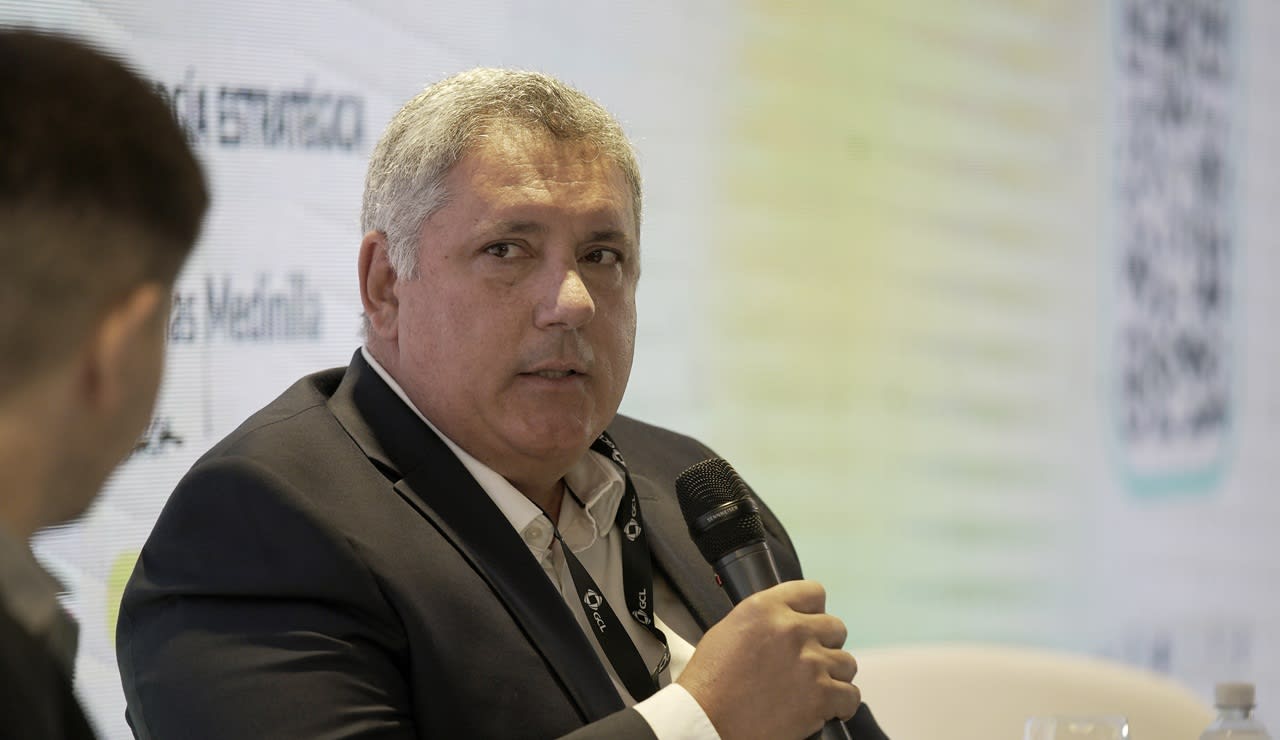
This data, revealed by Red Eléctrica, highlights the gap between the available grid and the country's energy transition and industrialization goals . "We have encountered evidence that we already knew: there is a deficiency in the grid, both in distribution and transmission ," stated Abelardo Reinoso , an electrical grid specialist and partner at Malaika Net Energy, in an interview with Energía Estratégica.
From his perspective, the problem is not limited to technical infrastructure, but rather to a regulatory and planning model that has not adapted to the pace or volume of investment that Spain needs to attract.
According to the consultant, the current system based on five-year planning doesn't allow for responding to the speed required by large industrial, logistics, digital, or energy projects. "It's not just that there's a lack of infrastructure; it's that the regulations don't support, incentivize, or allow for agile planning ," Reinoso warned.
In that regard, it suggests that Spain could be blocking up to 60 billion euros in investments due to a lack of grid infrastructure, and warns that many companies are already considering setting up in other European countries with better electricity availability and greater regulatory certainty .
"We are losing investments that are going to Marseille, Milan or Lyon."
Because there is available network coverage and regulatory clarity there, he emphasized.
One of the key points is the remuneration framework for distributors , currently under review by the CNMC (National Commission for Markets and Competition) .
Reinoso explained that distribution companies have no incentive to invest in advance and that the current system does not allow the network to be adapted to the new demand profile.
"If tomorrow a company comes along wanting to electrify a process or set up a data center, it's crucial to be able to offer them a connection within a reasonable timeframe."
Otherwise, he will opt for other destinations, he said.
In addition, the planning of the transport network, structured in five-year cycles, makes it difficult to respond quickly to new centers of industrial or urban growth.
Furthermore, the specialist pointed out that the legal deadlines for access and connection are not always met, which introduces uncertainty and complicates decision-making for investors.
Reinoso also pointed out the urgency of implementing a more dynamic and territorialized planning model , which links the growth of demand with the actual capacity of the infrastructure.
In his opinion, the development of the network must be aligned with strategic sectors such as electromobility, data centers, housing and decarbonized industrial processes , all of which are currently impacted by the saturation of the nodes.
Another key area that needs addressing is the speculative use of connection points.
Since 2020 , around 50 GW of power has been allocated for demand , much of which is not being used.
Speculation with connection points must end.
"If they are not used in a timely manner, they must be released for those who are ready to build," he proposed.
As immediate measures, he highlighted the need to make available positions in substations, allow shared use between demand and generation, make access criteria more flexible, and prioritize projects with greater technical and financial maturity. He also believes that mechanisms such as flexible access , recently introduced in Circular 1/2024, can provide solutions if applied correctly: "The important thing is to understand that not all power is needed 24/7, and that the system can take this into account," he explained.
Looking towards the short term, the consultant analyzed: "In 2026 we are not going to see major changes if we continue with this model.
Networks are not built in two years.
What we can do now is maximize the use of what we already have. "This isn't a technical problem, it's a strategic problem."
"Either we support growth with a network, or we'll see it happen elsewhere," the specialist concluded.
 By Energía Estratégica

 By Emilia Lardizabal
 By Ailén Pedrotti