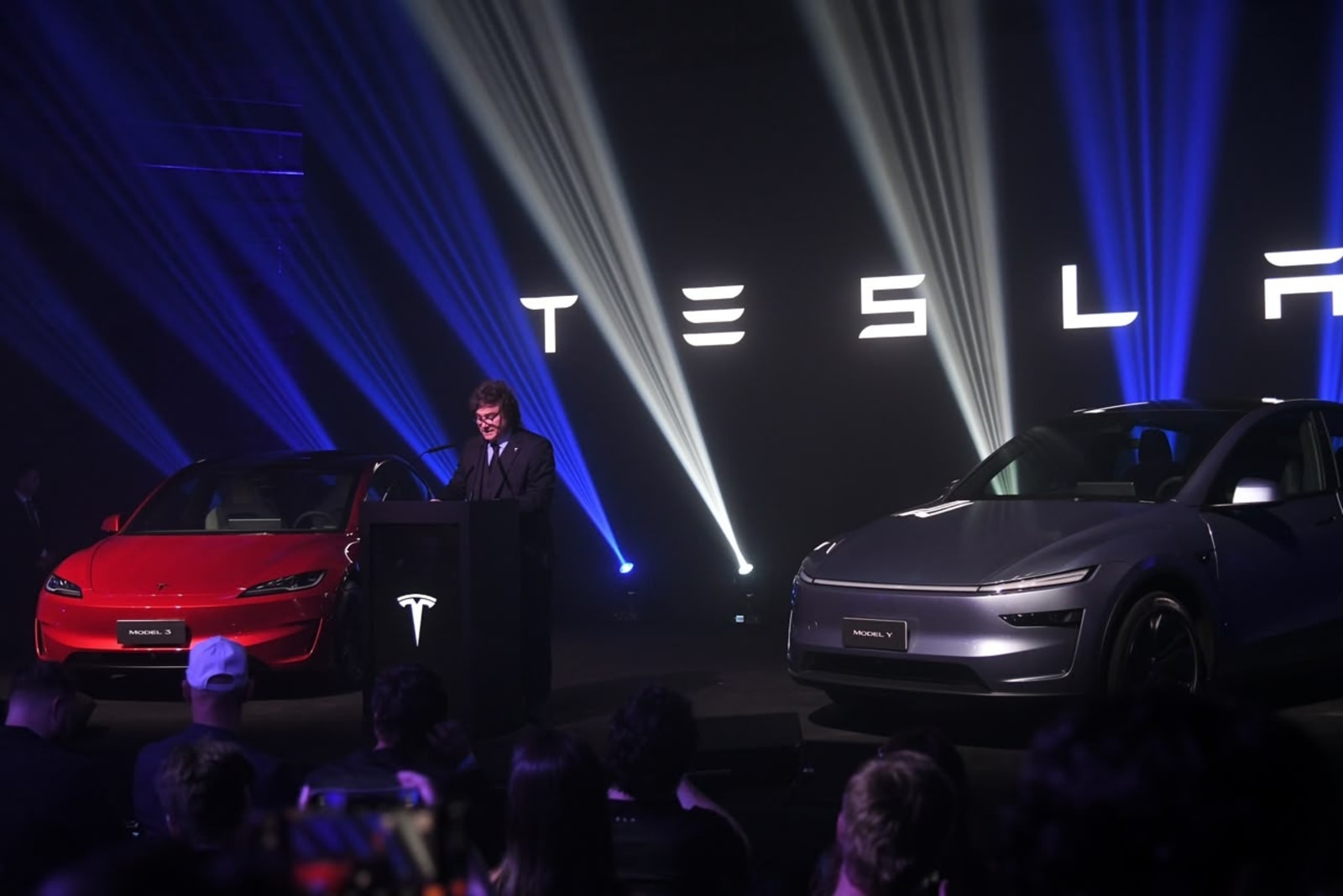
Tesla officially launched its commercial operations in Argentina on Friday, November 20th, opening orders for the Model 3 and Model Y , two all-electric vehicles with final prices ranging from USD 41,590 to USD 54,590 . The first deliveries are scheduled for March and April 2027, while the company begins deploying its sales, showroom, and after-sales service infrastructure.
The American automaker is launching operations in a market undergoing a transformation due to the increased availability of imported models, the rise of Chinese manufacturers, and tariff incentives for electrified vehicles . However, its entry does not imply direct competition with this entire market: unlike many of the brands present in Argentina, Tesla does not sell hybrid vehicles .
This distinction is relevant to understanding the scope of its arrival. According to data from the Association of Automotive Dealers of the Argentine Republic (ACARA), between January and September 2016 , 66,265 new vehicles with hybrid or electric powertrains were registered, representing a year-on-year growth of 267.4% .
During that period, both technologies achieved a combined market share of 16.1% in patents . However, this aggregate growth does not exclusively represent an expansion of pure electric vehicles, the segment Tesla is targeting.

How much do Teslas cost in Argentina?
The initial range consists of three versions of the Model 3 sedan and two of the Model Y SUV , all manufactured in China.
The Model 3 Rear-Wheel Drive is offered from USD 41590 , while the Premium Long Range version amounts to USD 47090 and the Performance version reaches USD 54590 .
Meanwhile, the Model Y Premium Rear-Wheel Drive has a starting price of USD 44,590 and the Premium Long Range variant is sold at USD 50,590 .
The amounts correspond to the final values announced during the launch, which include destination, documentation and reservation charges.
In terms of range, the base Model 3 boasts 534 kilometers under the WLTP cycle , while the Premium Long Range version reaches up to 750 kilometers . For the Model Y, the entry-level variant offers a homologated range of 466 kilometers.
The company also incorporated financing alternatives to facilitate access to its vehicles.
Through Banco Santander , buyers can apply for secured loans in pesos with terms of up to 60 months , an annual nominal rate of 32.90% and a total effective annual financial cost of 47.94% , not including insurance, according to the conditions announced during the launch.
Meanwhile, Banco Comafi and The Capita Corporation announced a 36-month leasing alternative, with a special rate of 25% and a limited launch quota.
Milei highlights the opening of the market and the agreement to install superchargers
The official launch took place at Arenas Studios, in the Buenos Aires neighborhood of La Boca, with the participation of President Javier Milei , company executives, and a video call intervention by Elon Musk.
During his speech, the president linked Tesla's arrival to the economic openness policies promoted by his administration.
“Competition brings order, fosters innovation and lowers prices,” said Milei, who maintained that the entry of new brands expands the alternatives available to Argentine consumers.
Along those lines, he stated that the prices of new cars decreased by 26% in relative terms compared to the rest of the prices in the economy between November 2023 and June 2026.
The President also mentioned the investments announced by Renault, Volkswagen, and Toyota to argue that opening up imports can coexist with new domestic manufacturing projects.
However, one of the most relevant aspects of his intervention for the electromobility sector was related to energy infrastructure.
Milei highlighted the agreement between Tesla and YPF to advance the installation of superchargers , with the aim of facilitating long-distance travel through fast charging stations.
The agreement, initially announced in June 2026 through a letter of intent, contemplates the exploration of projects linked to both charging infrastructure and energy storage.
Although the president publicly referred to the initiative again, no definitive numbers of stations, locations, or an implementation schedule have yet been communicated .
Direct sales and new market demands
Another distinctive element of the business strategy is the absence of a conventional dealer network .
Tesla channels the configuration, reservation, and purchase of its cars through its digital platform, while physical spaces are primarily intended for display, test drives, and serving potential customers.
The company launched its retail presence with a space in Unicenter Shopping , while the opening of another location in Alcorta Shopping was scheduled for Monday, November 23. Additionally, the development of delivery and after-sales service facilities in Munro was announced.
This approach represents a difference compared to traditional manufacturers and numerous Chinese brands, which use dealer networks and importers to market their vehicles in Argentina.
However, the operation's performance will depend on factors beyond the purchase price, including the availability of spare parts, after-sales coverage, and access to charging infrastructure .
A new competitor in an already crowded market
Tesla's arrival coincides with the growth of Chinese manufacturers like BYD and with a greater diversification of technologies available in Argentina.
The regulatory context also changed during 2026 with the update of the import regime for electrified vehicles.
Through Decree 1128/2026 , the Government raised the maximum FOB value for pure electric vehicles to USD 35,000 , while conventional and plug-in hybrids were subject to a limit of USD 18,000, and light hybrids to one of USD 16,000.
The scheme allows for up to 50,000 units per year with a 0% extra-zone tariff , provided they meet the technical and commercial conditions established by the regulations.
In this scenario, Tesla's entry expands the range of pure electric vehicles, although it doesn't automatically shift demand toward that technology. Hybrids offer a different option for those looking to reduce fuel consumption without relying on external charging points.
Therefore, the challenge for the American automaker will be to transform the initial interest in the brand into concrete operations from 2027 onwards , in a market where the growth of electrified vehicles still responds to very different technologies, prices and usage needs.
The agreement with YPF could go far beyond superchargers
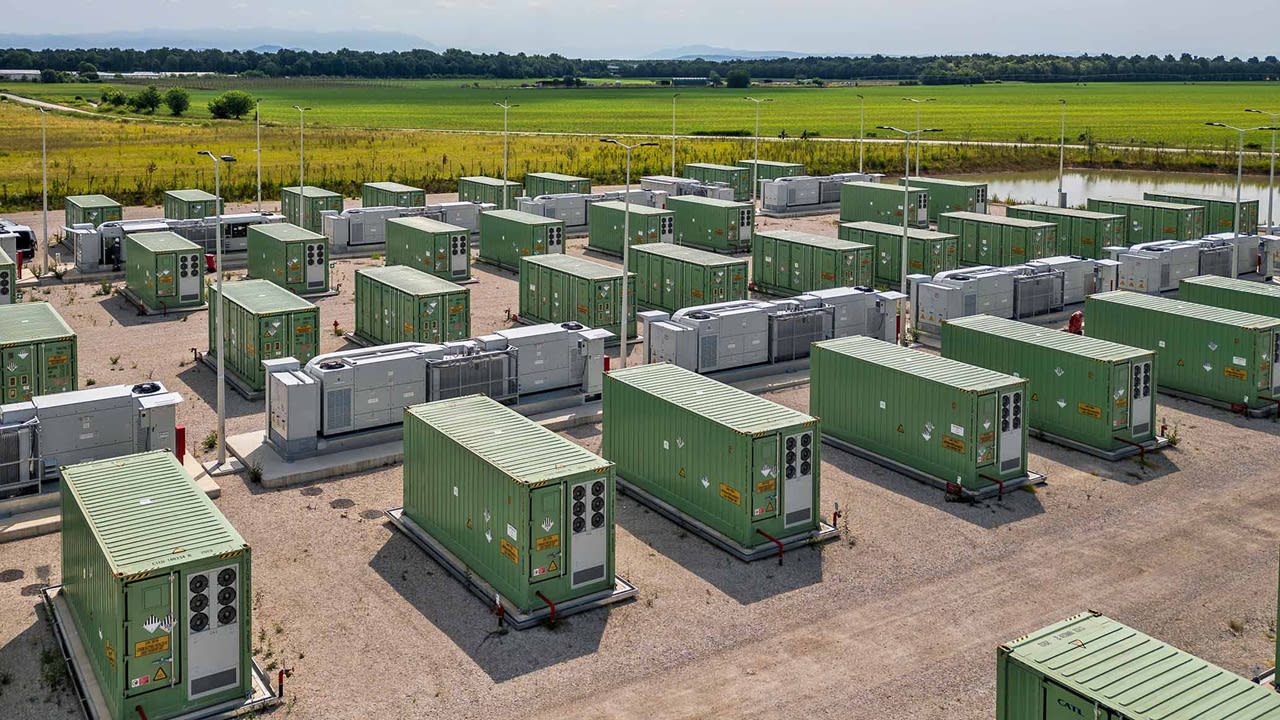
The installation of fast chargers at YPF service stations was the most visible aspect of the agreement announced in June. However, the letter of intent also opened the door to battery banks and other energy developments , a component that could be implemented on a larger scale.
“It seems to be more of a battery business than a charger business,” Claudio Damiano , an energy expert, had predicted months earlier during the Mobility Portal's Off the Record streaming event.
As he explained, a relevant fact is that the negotiations were led by Michael Snyder, a key figure in Tesla's energy division , and not solely by the automotive division.
“That also explains why the agreement has the opportunity to install very large battery banks to reinforce the service during peak times of the networks,” he said at the end of June of this year.
Storage can be especially useful for backing up high-power chargers without requiring major expansions of the distribution infrastructure from the outset.
“It allows the impact on the grid to be much lower, especially in the early stages, when the use of the charger will be very low,” Damiano explained at the time.
Furthermore, these systems can be moved later to other charging points as the use of electric corridors increases.
The understanding also occurs in an Argentine market that has begun to develop larger-scale BESS projects through specific tenders and new private initiatives.
Therefore, the alliance between Tesla and YPF could end up combining electromobility, charging infrastructure and storage , expanding the scope of an agreement that was initially interpreted mainly as a focus on superchargers.
 By Florencia Guglielmetti
 By Energía Estratégica

 By Matías Medinilla
 By Ailén Pedrotti