


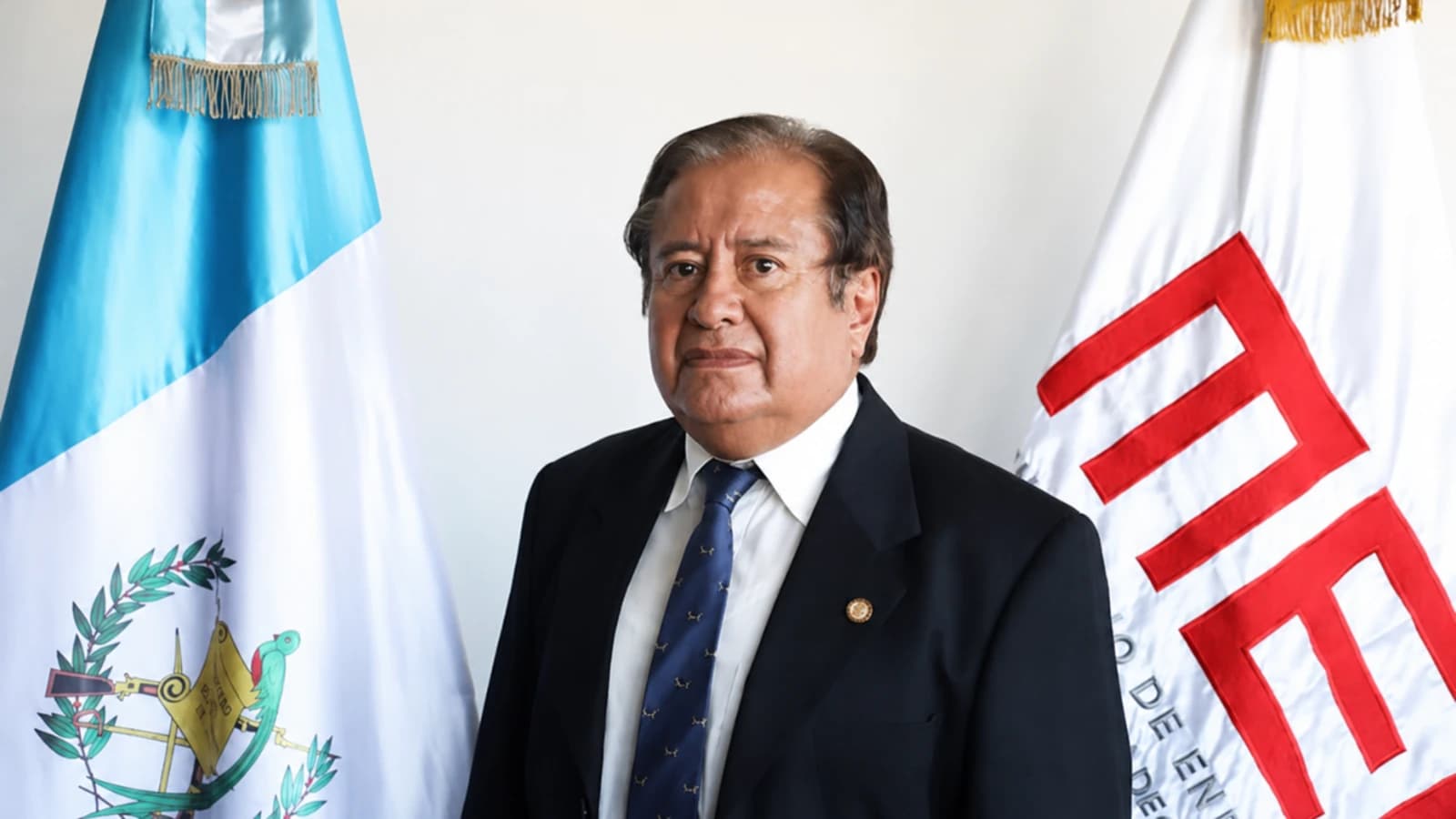
Guatemala is once again making changes to the leadership of its energy sector: President Bernardo Arévalo replaced Víctor Hugo Ventura Ruiz as head of the Ministry of Energy and Mines (MEM) this Thursday, just weeks after the change in the Vice Ministry of Energy.
This is the second change in the energy leadership in less than two months , following the departure of Juan Fernando Castro and the appointment of Luis Arturo Mérida Peralta , in a context where the market is closely following the next steps of future tenders, after the recent award of PEG-5 .
Ventura himself confirmed his departure in a letter to ministry staff. In it, he stated that he would be leaving his post to work with the president on strategic issues related to energy and mining.
"As of today I will leave my position as Minister of Energy and Mines and will begin working directly with President Bernardo Arévalo on national strategic issues in the energy and mining sectors," he wrote.

According to information obtained by Energía Estratégica , his replacement would be Erwin Rolando Barrios Torres , currently the Vice Minister of Hydrocarbons. Sources within the sector indicate that the change would not alter the roadmap for the electricity market. In fact, they believe the new leadership would seek to expedite decision-making, particularly regarding PET-4 , while PEG-6 will continue to depend on the National Electric Energy Commission (CNEE) and the distribution companies.
In May, the replacement of then Deputy Minister Juan Fernando Castro took place Just one day after his participation in FES Guatemala , where he had warned about the challenges the electrical system will face after PEG-5 , he highlighted, among other points, the need to move forward with new transmission infrastructure to support the integration of renewable energy generation and avoid future bottlenecks. He also anticipated that the country would need new calls for bids to support the expansion of the system.
The sector's expectations stem largely from the outcome of the "historic" PEG-5 tender, considered one of the most competitive in recent years in Guatemala. The process awarded 1,258 MW after 73 rounds of negotiations and 93 bids , with purchase prices below those of existing contracts, as recently highlighted by the CNEE ( National Energy Commission).
The regulator attributed this performance both to a clear definition of the distributors' contracting needs and to the high level of competition achieved during the process. Furthermore, approximately 73% of the awarded capacity corresponded to renewable technologies, totaling roughly 918 MW , while solar thermal energy storage systems (BESS) led the way in contracting with 671 MW , solidifying a shift in the composition of the future electricity mix.
With that background, the focus now shifts to the upcoming tenders. During FES Guatemala , both then-Minister Víctor Hugo Ventura and the president of the CNEE , Marcela Peláez , anticipated that the country would continue expanding its electrical system. While Ventura left open the possibility of moving forward with a new tender following the success of PEG-5, Peláez confirmed that the regulator is working on PET-4 and PEG-6, the latter aimed at adding 300 MW of firm power to strengthen the system's reliability.
The legacy left by Ventura
Ventura's departure brings to an end a 30-month tenure in which the MEM promoted a large part of the reforms that now structure Guatemala's energy planning.
Continue reading
One of the main milestones was the return of large-scale generation and transmission tenders. In his farewell letter, the former minister highlighted that the ministry resumed these processes thanks to the indicative planning developed during his tenure and maintained that "the results of PEG-5 will place the country at the forefront of renewable development, especially in solar and storage sources."
For Ventura, the recently awarded tender "will undoubtedly constitute the largest investment program in the country," opening a new stage for the development of renewable projects and storage systems.
He also reviewed the progress made in electricity transmission. He explained that the results of PET-3 will allow for the execution of projects to complete high-voltage loops in the highlands, strengthen the connection with Petén, and lay the groundwork for a future interconnection with Belize.
Another key focus of his administration was rural electrification . The former minister highlighted the acquisition of USD 370 million in financing for projects to be implemented by the National Electrification Institute (INDE), resources which, he stated, will bring the country closer to achieving universal access to electricity. He also emphasized the introduction of regulations for isolated power solutions and microgrids for remote communities.
The international agenda also occupied a central place during his administration. Guatemala regularized its participation in the International Atomic Energy Agency (IAEA) and began cooperation to evaluate the long-term integration of nuclear energy. Furthermore, he assumed the presidency of the Central American Electricity Market Board (CDMER) for the second half of 2025, promoted regulatory updates for the Regional Electricity Market (MER), advanced initiatives to resume geothermal exploration, and began preparing a strategy for the integration of natural gas.
Ventura also recalled that during his tenure the ministry faced three international crises associated with the regional drought, the volatility of the oil market and the effects of the El Niño phenomenon, in addition to promoting measures to strengthen the mechanisms of transparency and probity within the MEM.
In this scenario, the appointment of Erwin Rolando Barrios Torres will be closely followed by developers, investors, and suppliers, who are awaiting signals about the timeline for both processes, considered strategic to maintain the pace of growth in the electricity sector over the next few years.
Meanwhile, Ventura will remain involved in shaping energy policy from the Presidency. At the end of his letter, he asked for support for his successor and stated: "There are important, challenging, and difficult tasks ahead that will be overcome with your collaboration and the leadership of the new Minister, Engineer Erwin Barrios."
