

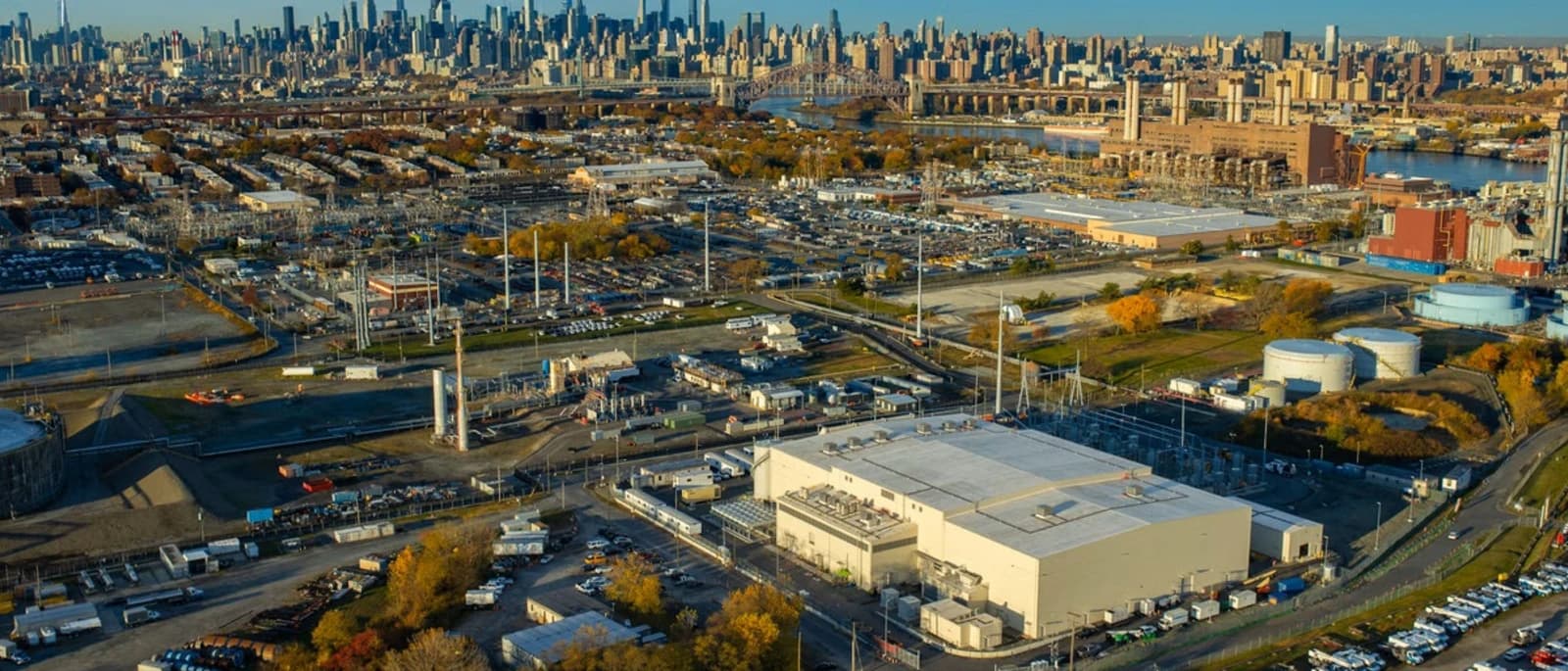
New York City officially put into operation one of North America's most ambitious clean energy infrastructure projects: a 1250 MW transmission line that directly connects hydroelectric power from Canada to the city.
Hitachi Energy , a world leader in electrification, together with Hydro-Québec , a Canadian leader in hydroelectric power generation and large-scale power transmission, and Transmission Developers (TDI) , a developer of innovative clean energy transmission projects and a Blackstone portfolio company, announced the start of commercial operation of the Champlain Hudson Power Express (CHPE) project, a connection to the city center based on high-voltage direct current (HVDC) technology.
By directly connecting New York City to Hydro-Québec's network of more than 60 hydroelectric power plants, CHPE has the capacity to supply enough renewable energy to power one million homes and cover about 20% of the city's electricity needs.
At the heart of the project is HVDC Light®, Hitachi Energy's technology based on Voltage Source Converters (VSCs), a state-of-the-art solution designed to transmit electricity over long distances with minimal environmental impact. Thanks to the use of advanced power electronics, the system precisely controls voltage and energy flow while minimizing transmission losses.
Unlike conventional transmission infrastructure, CHPE was designed to be almost completely integrated into the environment. Transmission cables were installed underground and underwater, crossing Lake Champlain and the Hudson and Harlem Rivers, preserving the landscape, protecting ecosystems, and strengthening the infrastructure's resilience to extreme weather events.
HVDC Light technology is also characterized by its highly compact infrastructure requirements, allowing converter stations and their associated systems to be located directly in high-density urban environments. This helps alleviate grid congestion and deliver clean, reliable power where it is most needed.
“We partnered with Hitachi Energy from the early stages of CHPE, building a relationship based on deep technical knowledge, trusted collaboration, and ongoing support. The advanced HVDC Light® technology, combined with solid project execution, has been instrumental in bringing this initiative to fruition. Together, we have delivered a reliable and resilient transmission infrastructure for New York, strengthening energy security, service affordability, and the progress of the communities we serve,” says Justin Sauber, CEO of Transmission Developers (TDI) .
On the other hand, Niklas Persson, CEO of Hitachi Energy's Grid Integration Business Unit, asserts that "CHPE will contribute to transforming the way New York City is powered, transporting clean electricity over hundreds of miles to the heart of the city. Furthermore, by transforming a former fossil fuel generation site in Astoria—historically associated with air pollution and respiratory health problems—this project will help improve air quality, strengthen New York's energy infrastructure, and ensure a reliable electricity supply."
It is estimated that CHPE will reduce carbon emissions by approximately 3.9 million metric tons per year, equivalent to taking 44% of the vehicles on New York City roads off the road. By replacing fossil fuel-based generation, the project will contribute to New York State's goal of achieving 70% renewable electricity by 2030.
The commissioning of CHPE also represents a significant technological milestone. It becomes the second major HVDC connection project to a city center operating at ±400 kV in the world, after the project developed by Hitachi Energy in Mumbai, the first to reach this voltage level.
In a context where cities face sustained growth in electricity demand and are moving towards increasingly ambitious decarbonization goals, CHPE demonstrates how clean energy can be efficiently transported across borders to major urban centers, becoming a model for the next generation of large-scale renewable energy integration projects.