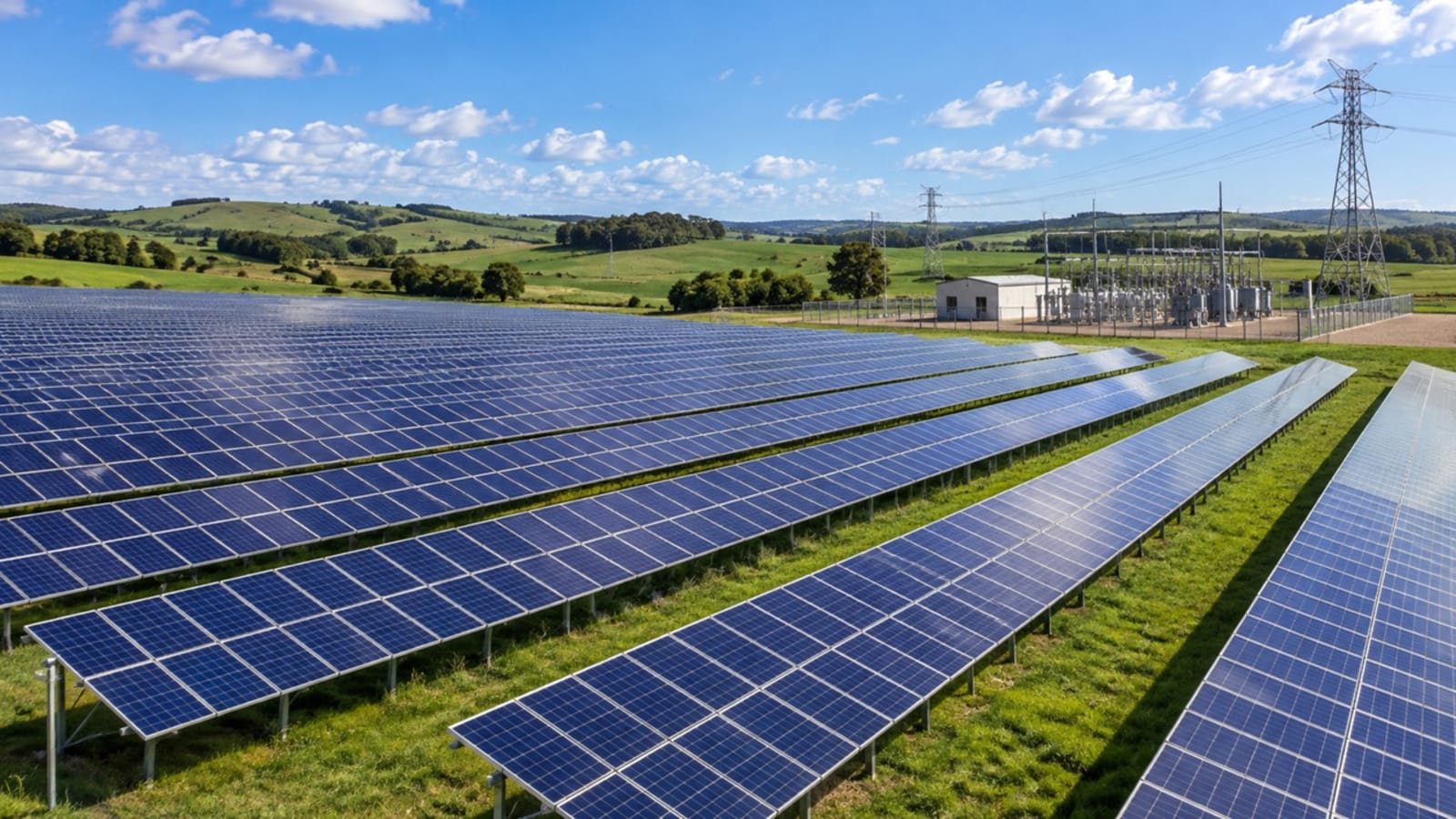
Uruguay's National Administration of Power Plants and Electrical Transmissions (UTE) plans to mobilize around USD 75 million of private investment through its new 99 MW solar tender , an estimate that the company confirmed in dialogue with Energía Estratégica and that marks the magnitude of the resources it seeks to attract to expand its generation capacity.
“It is expected that the current companies that own existing parks will submit their bids first, but we also expect that new participants will join the call,” UTE stated regarding the profile of potential bidders.
The planned investment equates to approximately USD 758,000 per MW of injection capacity, although final disbursements will depend on the projects awarded. Greater business participation could increase competition and offer better commercial terms for electricity supply.
When asked about the impact of the call for bids, the company explained: "The installation of photovoltaic parks is the most convenient generation expansion option in economic terms; that is, it is projected as the least expensive way to supply demand."

This assessment, however, does not include all the infrastructure maintenance costs that UTE faces due to its status as a vertically integrated company. Nor was a specific estimate provided of the savings that could be achieved through the new contracts.
Another change introduced concerns the remuneration structure of power purchase agreements (PPAs), which will have a duration of 20 years.
“The contract does indeed incorporate a price reduction at the end of the period during the last 5 years, in order to reflect the downward trend in the costs of new technologies,” explained the state-owned company.
During that final five-year period, the base payment will be equivalent to 40% of the originally offered price, subject to the established adjustment mechanisms. Developers must consider this provision when calculating projected revenues and the recovery of their investments.
Continue reading
The projects and the context of expansion
The P104220/2026 procedure comprises three power plants, each with an injection capacity of 33 MW, located in Tacuarembó, Florida, and eastern Uruguay. Proposals may be submitted until January 27, 2027, with separate awards for each facility.
The expansion strategy combines private capital with the state-owned company's own projects. Among the latter is the Melo solar park in Cerro Largo, with a capacity exceeding 75 MW and an approximate budget of USD 75 million.
The push for this technology is also linked to the composition of the country's electricity mix. According to the Ministry of Industry, Energy and Mining (MIEM), 98% of the electricity generated in 2025 came from renewable sources , although photovoltaics contributed only 4%, compared to 46% from hydropower and 34% from wind power.
For interested parties, the tender specifications establish conditions related to the connection and use of electrical networks and the recognition of auxiliary services. Furthermore, the criteria for determining national participation will be specified in a circular, a relevant aspect for Uruguayan suppliers.
UTE confirms progress in its first BESS projects
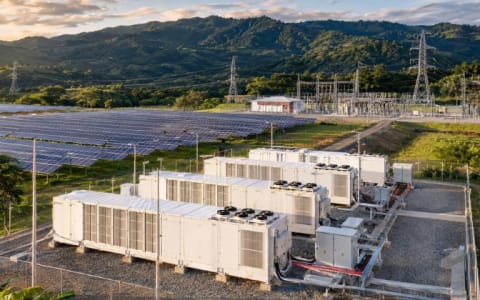
Regarding storage, UTE confirmed to Energía Estratégica that the tenders for the San Gregorio and Sarandí del Yí parks have already been carried out and that it expects them to become operational by July 2027 .
“Since they are different things, the aim was to avoid complicating the bidding process by incorporating another technology. Furthermore, the new contractual scheme has already been applied in the first two storage parks currently under construction,” the company explained regarding the exclusion of batteries from the photovoltaic procedure.
The company also confirmed that it will continue to incorporate this technology through future calls for proposals, although it did not disclose capacities or investment amounts for the following stages.
The receipt of proposals in January 2027 will reveal the specific interest of developers and the prices that will determine the economic outcome of the new solar contract.


 By Emilia Lardizabal
 By Florencia Guglielmetti