

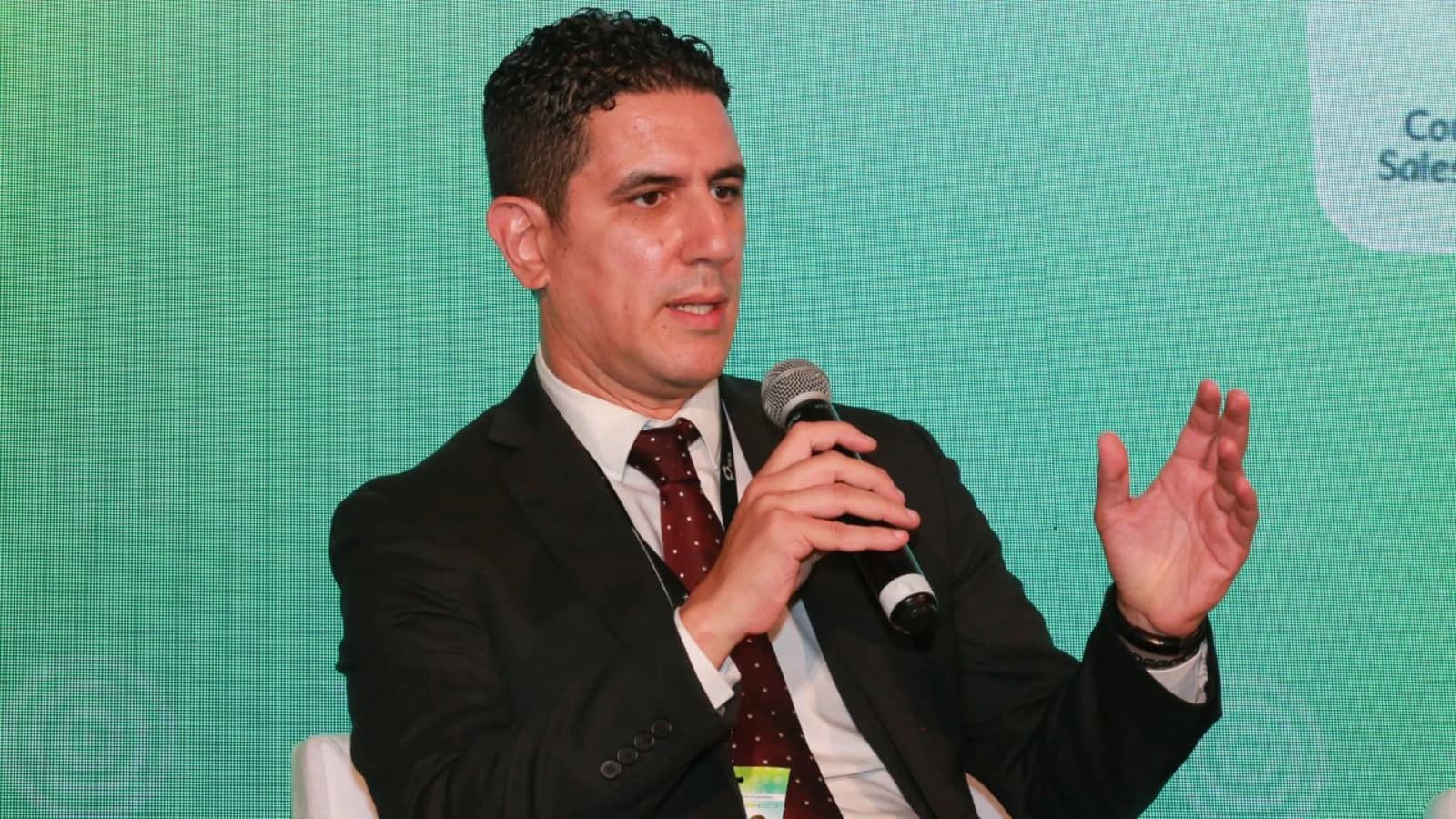
Vestas believes that the future of renewable energy in Mexico will depend less on the speed at which new gigawatts are added and more on the market's capacity to sustain investment over the next decade. Amid the sector's recovery and the energy targets set for 2029, the company is betting on gradual growth that will allow for the consolidation of a competitive industry, avoiding new cycles of rapid expansion followed by periods of stagnation.
“It’s better to have a market with 1.5 GW or 2 GW per year over ten years than to have 9 GW in two years and then go back to zero,” stated Mehdi Hadbi , Country Head Mexico & Sales Director North Latam at Vestas, during his participation in the Future Energy Summit (FES). For the executive, the challenge lies not only in adding renewable capacity in the short term, but also in creating conditions that attract investment, employment, and technology transfer in a sustained manner.
The company's position is significant considering it has 2.7 GW of wind power in operation in Mexico and has maintained a presence in the country for three decades. Based on this experience, Hadbi warned that markets characterized by boom-and-bust cycles tend to discourage industrial investment and favor the emergence of players with a speculative focus.
"We've seen it in every country. They're attracted to these boom cycles, they go there, they take everything they can, and then they disappear," he stated. In his view, a stable path is much more favorable for developing local capabilities and strengthening the entire value chain of the sector.
"At first, wind power was an energy source that required a lot of investment and also incentives from the government to be competitive. Over time this changed, the technology advanced a lot and now it is an energy source that combines well with other types of generation to have a diversified energy mix," he added.
In that context, Hadbi points out that Mexico presents particularly attractive characteristics for wind technology, although with very different conditions depending on the region.
"Mexico is truly a continent. There are platforms that are valuable in the northeast, but these same platforms aren't suitable in Oaxaca. In Yucatán, it's a completely different platform," he stated. Therefore, the company works with different technological models to adapt to each resource and help its clients improve the competitiveness of their projects.
Calls for proposals, certainty, and the challenge of transforming projects into investments
Vestas's vision comes at a time of renewed activity in the Mexican market. Over the past few months, the government has launched new calls for proposals for renewable energy, storage, and self-consumption projects, in an effort to accelerate investment and revitalize the sector.
Among the most relevant developments, 56 projects driven by 40 companies remain in contention within the mixed-investment generation call promoted by the Federal Electricity Commission (CFE) , whose objective is to incorporate 7,500 MW of capacity before 2030. At the same time, the Ministry of Energy (SENER) reported that it is currently evaluating a portfolio of more than 10 GW of generation and 3 GW of storage , associated with investments estimated at 270 billion Mexican pesos.
For Hadbi, the existence of projects was never the main problem. "It wasn't a surprise that there were 100 or more wind projects because there were projects, and we knew that beforehand. What was lacking was a framework that allowed these projects to emerge," he explained.
Continue reading
The company acknowledges that the new rules of the game have begun to reduce some of the uncertainty that has dominated the market in recent years. "There were signs that have now become reality," the executive noted, referring to the new mechanisms and hybrid schemes implemented by the authorities.
However, he believes the next challenge will be transforming that pipeline into projects that are actually built and financed. To achieve this, he emphasizes the need to reduce the uncertainty factors still perceived by developers, manufacturers, and financial institutions.
"For me, a risk is anything you can put a cost on. If you can quantify it, you put it in your financial model. The problem arises when what we call risk starts to become something unquantifiable, like a permit whose deadlines you don't know; this is already uncertainty," Hadbi analyzed.
According to the executive, this difference partly explains why private tenders received a more moderate response than projects developed under mixed schemes with the CFE . "There were many risks that were not understood and became uncertainties that no one could quantify: not the manufacturer, not the developer, not the banks," he pointed out.
He stated that while risks can be distributed among different actors in a project, uncertainty often paralyzes investment decisions because no one is willing to assume costs that are impossible to estimate.
Despite this, Vestas says it sees positive signs after several years of slowdown. The company has resumed active participation in business processes, restarted its analysis of new technology platforms, and begun preparing for a potential new phase of wind farm construction.
This optimism is also reflected in the return of specialized talent to the country. During the years of lower local activity, some of Vestas' Mexican teams worked in markets such as Brazil, Chile, and Argentina.
"We are bringing back Mexicans who built parks here for years and whom we had to relocate to Brazil, Chile, or Argentina at some point. Now we are bringing them back to Mexico so they are ready for the construction of new parks," he stated.
Beyond the goals set for 2029, Hadbi insists that the fundamental discussion must focus on the long-term sustainability of the market. In his view, stable growth creates better conditions for attracting manufacturers, developing local suppliers, and promoting genuine technology transfer.
Looking ahead, the executive hopes the conversation will shift from whether or not the projects will be completed. "I expect that in a few months we'll be talking about energy efficiency and other more technical issues because the projects are already under construction," he stated.
"The positive thing is that there's finally something, there are rules of the game. You may like them more or less, but they are the rules," he concluded. And he left one last message for the Mexican market: " My wish remains the same: a market of 1.5 GW over ten years rather than 9 GW in two years."