


The rapid expansion of data centers dedicated to artificial intelligence (AI) threatens to overwhelm the electricity supply capacity in the Americas. Wärtsilä warns that transmission constraints, interconnection delays, and equipment delivery times could jeopardize the development of new facilities by 2030.
The company identifies this phenomenon as speed to powerless, a scenario in which digital infrastructure grows faster than the availability of reliable power , compromising the operational and economic viability of projects.
“The race to build data centers in the Americas is extraordinary in its pace and scale. But the energy supply is not keeping up,” says Risto Paldanius, Wärtsilä’s vice president for the Americas.
The warning comes from the report Beyond the Grid: Building the Power System for AI in the Americas, which analyzes supply constraints in the United States, Brazil, Mexico, Chile and Argentina, using information from the Lawrence Berkeley National Laboratory, the International Energy Agency and national planning agencies.

Among the main indicators, the document points out that the United States had approximately 2,600 GW of generation and storage capacity pending connection to the grid by the end of 2025, which represents a challenge for developers who depend on conventional infrastructure.
“Waiting lists for interconnections stretch for years, transmission capacity is becoming saturated in corridors where data centers are concentrated, and equipment delivery times are pushing deliveries to 2030 and beyond,” Paldanius notes.
In this context, the executive argues that the main problem lies not in a possible drop in investments, but in the inability to support their growth with sufficient energy infrastructure.
“The risk is not that the market will slow down, but that it will grow faster than it can be reliably supplied,” he warns.
Self-generation and savings of up to $37 million annually
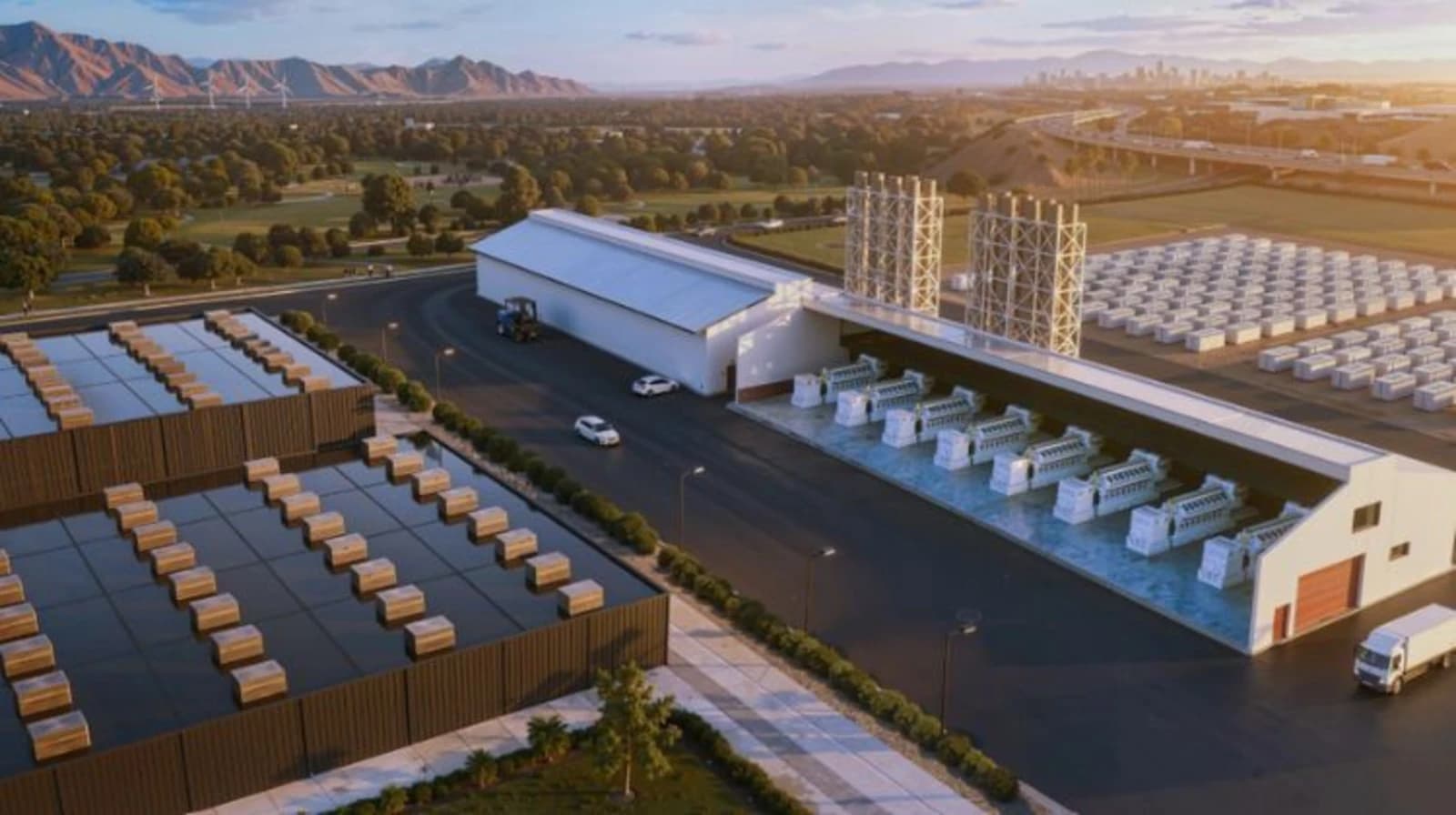
Faced with these restrictions, Wärtsilä proposes a transformation in the energy design of data centers through the incorporation of macro-grids, totally or partially isolated systems with a maximum installed demand exceeding 100 MW on the site itself.
These configurations would allow the development of self-generated electricity without ruling out a future connection to the conventional grid, facilitating hybrid supply schemes.
The analysis also compares the levelized cost of electricity over 20 years between reciprocating internal combustion engines and aeroderivative gas turbines.
The company's research includes a 20-year levelized cost of electricity (LCOE) comparison between reciprocating internal combustion engine (RICE) systems and aeroderivative gas turbines. Based on the assumptions used in the analysis, reciprocating internal combustion engines offer a 6% advantage in LCE, costing approximately US$65.9/MWh compared to US$70.2/MWh. This represents annual savings of US$37 million for a 1 GW¹ data center, driven primarily by their higher thermal efficiency and modular redundancy.
Furthermore, Wärtsilä points out that aeroderivative turbines can experience power reductions of up to 27% under high ambient temperature conditions.
Continue reading
In contrast, reciprocating motors maintain their nominal power between -45°C and 45°C, with virtually zero consumption of process water to produce electricity, a relevant feature for installations located in water-stressed regions.
“It’s not a binary choice between on-site power generation and the electrical grid,” Paldanius explains.
According to the executive, the alternative consists of integrating modular generation capacity, clean energy supply contracts, and conventional connections when available.
“The most resilient data centers will combine modular on-site generation using reciprocating internal combustion engines (RICE) with flexibility, incorporating grid supply when available, clean energy contracts, and long-term planning for future interconnection,” he says.
Energy challenges in Latin America
The report identifies various obstacles to the growth of data centers in the continent's main markets.
In Mexico, the differences between the construction timelines for digital facilities and the expansion of the electrical infrastructure are driving interest in self-consumption models, particularly in technological hubs like Querétaro, where there are also restrictions on water availability.
Brazil, for its part, faces potential delays of several years in expanding transmission capacity to digital development corridors. Added to this is the proposed Redata tax regime, which, according to the document, was under Senate review at the time of the analysis and influences technological decisions.
In Chile, the saturation of transmission corridors and the consequences of the national blackout of February 2025 reinforce the importance of having firm capacity and resilient energy systems.
Meanwhile, Argentina presents opportunities associated with its natural resources and the Incentive Regime for Large Investments (RIGI), although insufficient investment in electrical networks and regulatory uncertainty represent risks for new developments.
In the United States, the main challenges are interconnection delays, transmission congestion, and permitting processes, especially in the PJM and ERCOT regions. Significant growth is also anticipated in California, Arizona, and the Pacific Northwest.
For Wärtsilä, energy planning must consider the competitiveness of these infrastructures over the coming decades, rather than simply ensuring their initial commissioning.
“Companies that adopt this hybrid approach now will be the ones that continue to operate efficiently in 2035,” Paldanius says.
In this way, the company argues that the availability of reliable, flexible and economically competitive energy will be a determining factor for the expansion of artificial intelligence infrastructure in America, in a scenario of increasing pressure on electrical systems.
Wärtsilä Energy is at the forefront of the transition to a 100% renewable energy future. We help our customers and the power sector accelerate their decarbonization processes through market-leading technologies and extensive expertise in power systems. Our solutions include flexible motor power plants, energy storage and optimization technologies, and services for the entire lifecycle of our installations. Our motors are future-proof and can operate on sustainable fuels. Our track record includes 81 GW of installed power plant capacity and more than 130 energy storage facilities in 180 countries worldwide. Approximately 35% of our operational installed base is covered by service contracts.