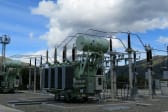
Yingli Solar is fully entering the storage business. The company will incorporate batteries into its portfolio under a horizontal integration strategy, as confirmed by Luis Contreras, managing director at Yingli Solar , during his appearance on “Se tenía que decir y se dijo” , the Energía Estratégica streaming program.
“It is clear that the photovoltaic module is the company’s core business, but we need to evolve and the clear business line for evolution is the battery,” Contreras stated.
The move marks a turning point for a historic manufacturer in the sector, with more than 27 years of experience and more than 80 GW of modules distributed worldwide .

But this is not an isolated case.
JA Solar, Jinko Solar, Canadian Solar, Trina Solar, Risen Energy, Seraphim and LONGi are also accelerating different strategies to capture value beyond the panel.
Some are moving forward with their own storage subsidiaries, others through acquisitions, technology alliances, or integrated platforms for utility, C&I, and hybrid applications.
The explanation lies in the changing landscape of the solar business. “The market model, regardless of the region, has changed. We came from a phase where there were only renewables, only non-dispatchable photovoltaics. Now there is grid saturation and a highly volatile price situation in many markets,” the executive stated.
JA Solar, Jinko, Canadian and Trina accelerate their own recipes
Yingli is the latest visible move in a race that's already underway. Major solar manufacturers are moving towards energy storage with different strategies, but with the same market understanding: stand-alone panels are no longer enough to compete in this new renewable energy era .
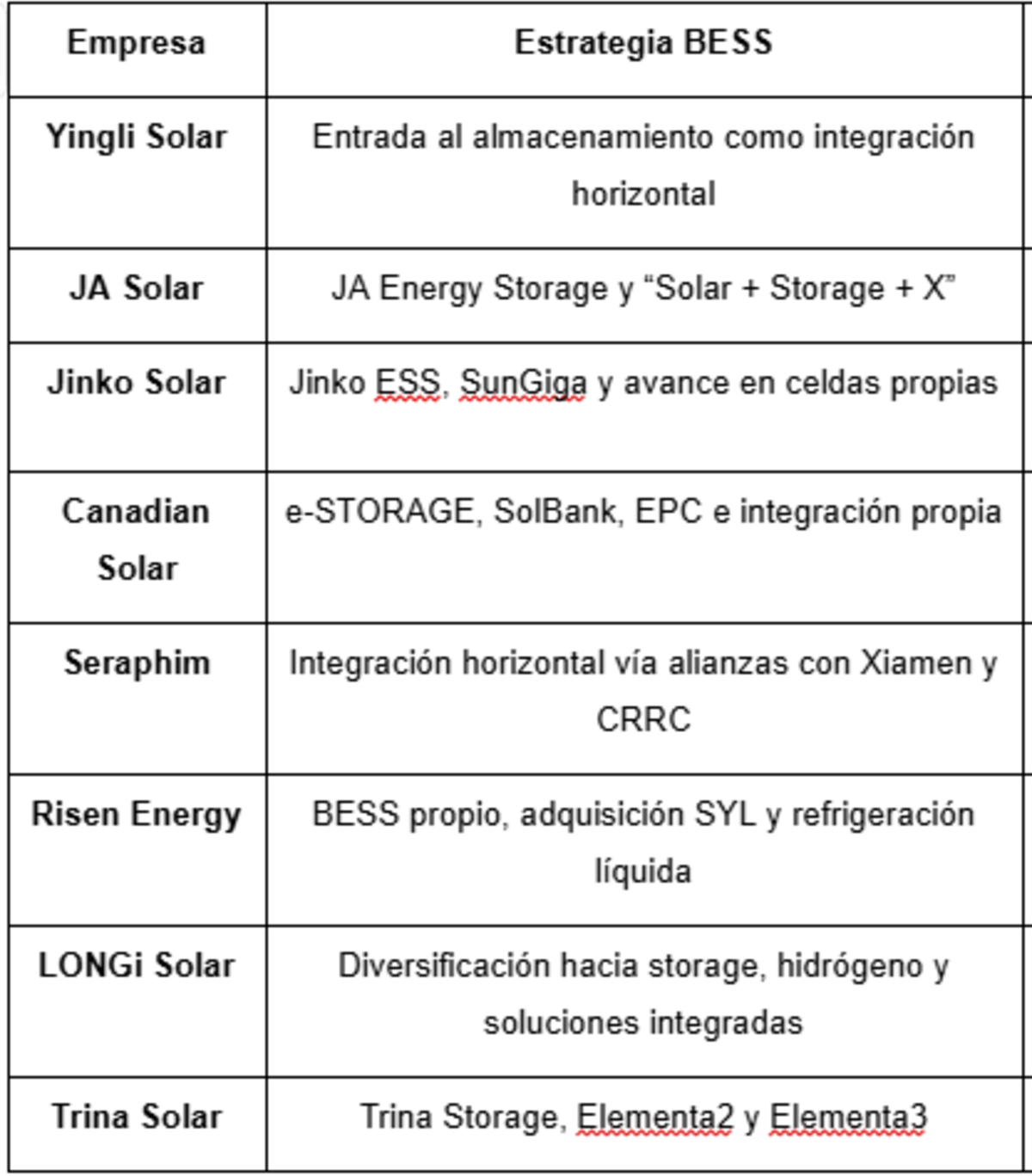
JA Solar is advancing its strategy through JA Energy Storage , under the concept of “Solar + Storage + X” . The company seeks to leverage its photovoltaic expertise, with 14% global market share and 300 GW of shipments , towards integrated generation and storage solutions.
Their competitive advantage lies in offering a unified contract proposal with cross-guarantees between panels and batteries. The goal is to reduce uncertainty, improve access to financing, and facilitate better conditions for projects.
In technical terms, the company works with bifacial TOPCon modules and storage systems for different segments: 260 kWh parallelizable units for C&I and 5 MWh containers for utility scale . Its product lines include JAGalaxy, JAPlanet, JAStar, and JANebula .
Continue reading
Jinko Solar , meanwhile, is moving forward with Jinko ESS , a division focused on C&I and utility applications. Its strategy relies on vertical integration and the manufacture of its own battery cells, aiming to gain better control of the supply chain amidst rising lithium costs.
One of its core products is the SunGiga G1 , a compact, 215 kWh plug-and-play system for the commercial and industrial sectors, featuring LFP chemistry, integrated PCS, advanced cooling, and fire suppression systems. The company is already actively trading on markets such as the Iberian Peninsula.
Canadian Solar demonstrates one of the most mature strategies through e-STORAGE , its subsidiary specializing in the design, manufacturing, and integration of BESS systems, as well as EPC services. Its SolBank platform, based on LFP chemistry, is primarily positioned in the utility-scale market, although it also offers solutions for C&I.
The company already operates large-scale contracts, including projects of up to 2.5 GWh using hundreds of containerized solar cells. In Latin America, its focus appears to be on Colombia, Peru, and Argentina.
Trina Solar , through Trina Storage , is consolidating its presence in large-scale projects with an integrated cell-to-AC solution designed to reduce risks at utility scale. Its Elementa 2 platform, with up to 5.015 MWh per container , and the upcoming Elementa 3 , with 6.25 MWh , reinforce this commitment.
In the region, Trina is targeting contracts for almost 2 GWh and projections of 2.5 GWh for 2026 , with Chile as one of the most important markets.
Alliances, acquisitions and hydrogen: other routes to integration
Not all manufacturers follow the same path. Seraphim opts for a horizontal integration strategy based on technological and logistical alliances. Its agreements with CRRC Corporation and Xiamen New Energy Company allow it to add power electronics and BESS to its solar offering, with a focus on Latin America and the Dominican Republic.
Risen Energy took a different approach: acquiring battery manufacturer SYL . With this move, it aims to accelerate its technological leap and reinforce the idea that energy storage should no longer be seen solely as backup power, but as a flexible tool capable of unlocking new business models. Its portfolio includes next-generation liquid-cooled systems for residential, C&I, and utility applications.
LONGi Solar is going even further than BESS. The company is diversifying its strategy to include storage, integrated solutions, and green hydrogen, leveraging its technological leadership in back-contact and the development of alkaline electrolyzers. Its goal is to build a complete energy ecosystem, offering greater added value than the traditional sale of modules.
From panel to BESS: manufacturers are changing their dashboards
Yingli Solar's entry into storage reflects a fundamental change: photovoltaic manufacturers are no longer just looking to sell modules, but to integrate solutions capable of managing energy and capturing more value.
“ All utility plants will have storage facilities, there’s no question about it. Storage has revolutionized the market and changed the perspective ,” Contreras noted.
Although it recognizes the importance of the utility scale, Yingli will start with the commercial and industrial (C&I) segment.
“ We have to grow little by little ,” he stated.
This focus is on industries with high electricity consumption, exposure to fluctuating prices, or a need for operational continuity. In markets like Honduras, the maquiladora and textile industries are already beginning to see batteries as a way to move beyond being just consumers and become "small IPPs" (Industrial Production Plants).
 By Emilia Lardizabal



 By Ailén Pedrotti
 By Florencia Guglielmetti